

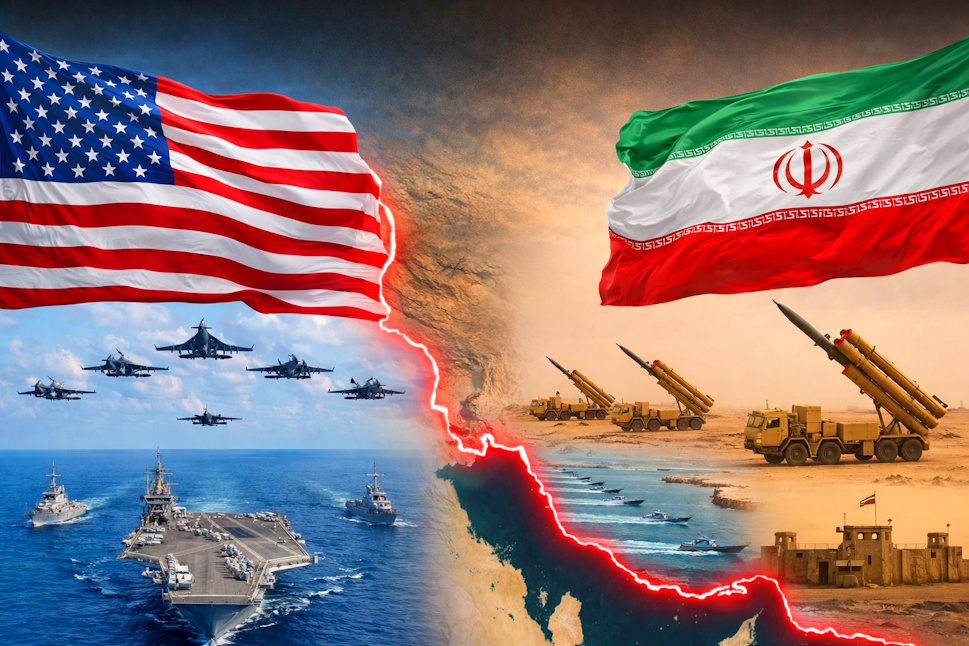
Tehran — Iran has presented a new peace proposal to the United States that calls for an end to hostilities across the region, including Lebanon, the withdrawal of US military forces from areas near Iranian borders, and financial reparations for damage caused during the recent US-Israeli military campaign, Iranian state media reported Tuesday.
The proposal marks Tehran’s latest effort to end months of escalating regional conflict and reopen diplomatic channels with Washington after one of the most dangerous confrontations between the two countries in decades.
In Tehran’s first official comments on the offer, Iranian Deputy Foreign Minister Kazem Gharibabadi said the proposal also demands the immediate lifting of US economic sanctions, the release of billions of dollars in frozen Iranian assets held abroad, and an end to what he described as Washington’s “maritime blockade” restricting Iranian trade routes.
According to Iran’s state-run IRNA news agency, the terms largely mirror Tehran’s previous proposal, which US President Donald Trump dismissed last week as “garbage,” saying it failed to address Washington’s central concerns over Iran’s nuclear ambitions and regional military activities.
Trump Pauses Planned Strikes
Despite publicly rejecting Tehran’s earlier offer, Trump revealed Monday that he had paused plans for renewed military strikes after receiving what he described as a “serious new proposal” from Tehran.
Speaking to reporters at the White House, Trump said there was now “a very good chance” that negotiators could reach an agreement restricting Iran’s nuclear program and avoiding a return to open warfare.
“There seems to be a very good chance they can work something out,” Trump said. “If we can do that without bombing the hell out of them, I would be very happy.”
Reuters could not independently confirm whether US military preparations for renewed attacks had been finalized before Trump’s decision to halt escalation.
The conflict, which Trump initiated in late February with coordinated strikes alongside Israel, triggered widespread destruction across Iranian territory and prompted retaliatory missile and drone attacks targeting Israel and several Gulf states.
Pressure to Reopen the Strait of Hormuz
A central motivation for Washington’s urgency appears to be growing international pressure to reopen the Strait of Hormuz, one of the world’s most strategically important oil shipping routes.
The closure and disruption of maritime traffic through the strait has shaken global energy markets, raising fears of supply shortages and major price shocks.
Trump acknowledged in a social media post that the leaders of Qatar, Saudi Arabia, and the United Arab Emirates had personally urged him to delay renewed strikes.
“They believe a deal will be made,” Trump wrote, adding that any agreement would be “very acceptable to the United States of America, as well as all countries in the Middle East and beyond.”
Regional Gulf powers, heavily exposed to economic fallout from prolonged instability, have increasingly pressed both Washington and Tehran to settle the crisis diplomatically.
Pakistan Acting as Intermediary
A Pakistani official confirmed that Islamabad had delivered Tehran’s latest proposal to Washington.
Pakistan has emerged as a key intermediary since hosting the only formal round of direct peace talks between US and Iranian officials last month.
However, diplomatic sources say progress remains fragile.
“The sides keep changing their goalposts,” the Pakistani source said. “We don’t have much time.”
Signs of Softening US Position
Although neither Washington nor Tehran has publicly announced concessions, Iranian officials suggest the US may be showing greater flexibility.
A senior Iranian source said Washington has tentatively agreed to release approximately one-quarter of Iran’s frozen overseas assets—worth tens of billions of dollars—as a confidence-building measure.
Iran insists that all blocked funds must be released as part of any final settlement.
The same source said the US has also signaled openness to allowing limited peaceful nuclear activity under supervision of the International Atomic Energy Agency (IAEA).
Washington has not confirmed these claims.
A US official, speaking anonymously, denied reports by Iran’s Tasnim news agency that sanctions on Iranian oil exports would be temporarily waived during negotiations.
Human Cost of the Conflict
The war has inflicted severe damage across the region.
US-Israeli bombing campaigns killed thousands in Iran before a ceasefire took hold in early April.
In Lebanon, Israel’s expanded offensive against Hezbollah has displaced hundreds of thousands and caused heavy civilian casualties.
Iranian missile and drone strikes targeting Israel and neighboring Gulf states have also killed dozens and heightened fears of broader regional war.
Although the ceasefire with Iran has largely held, tensions remain high. Recent drone launches from Iraq toward Gulf states including Saudi Arabia and Kuwait reportedly carried out by Iran-aligned militias have raised concerns that proxy escalation could derail negotiations.
Strategic Objectives Unfulfilled
Trump and Israeli Prime Minister Benjamin Netanyahu justified the war as necessary to:
- Dismantle Iran’s nuclear program
- Destroy Iran’s missile arsenal
- Sever Tehran’s support for regional proxy militias
- Create internal pressure capable of toppling Iran’s clerical leadership
Yet analysts say those objectives remain largely unmet.
Iran retains significant stockpiles of near-weapons-grade enriched uranium, substantial missile and drone capabilities, and influence over allied armed groups across the Middle East.
Meanwhile, despite facing major anti-government protests earlier this year, Iran’s clerical leadership has survived the conflict without signs of organized internal collapse.
Uncertain Road Ahead
The coming days are expected to determine whether diplomacy can succeed where military pressure has failed.
For Tehran, any agreement must include tangible economic relief and recognition of war damages.
For Washington, preventing Iran from obtaining nuclear weapons remains the non-negotiable core demand.
With regional allies urging restraint and global markets closely watching developments in the Strait of Hormuz, the stakes for both sides and for the wider Middle East could hardly be higher.
Our Pashto-Dari Website

Support Dawat Media Center
If there were ever a time to join us, it is now. Every contribution, however big or small, powers our journalism and sustains our future. Support the Dawat Media Center from as little as $/€10 – it only takes a minute. If you can, please consider supporting us with a regular amount each month. Thank you
DNB Bank AC # 0530 2294668
Account for international payments: NO15 0530 2294 668
Vipps: #557320

Comments are closed.