

NATO on Tuesday rolled out a sweeping package of military projects worth billions of dollars, in a high-stakes bid to convince U.S. President Donald Trump and skeptical allies at home that European member states are finally translating their pledged defense spending into tangible, battlefield-ready firepower.
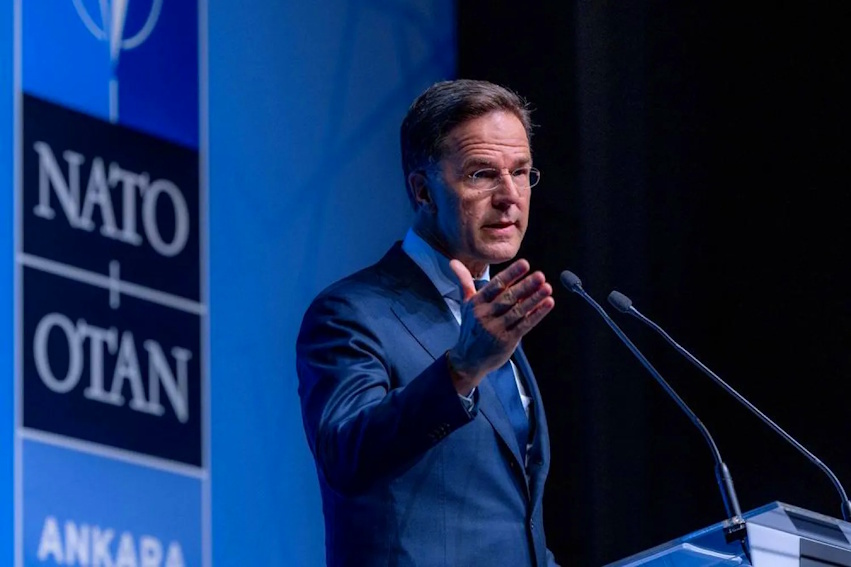
“It’s money well spent,” declared an energized NATO Secretary-General Mark Rutte, addressing government ministers and defense industry executives on the sidelines of a summit in Türkiye. Speaking at a defense industry forum billed as NATO’s “big reveal,” Rutte’s words were amplified by thrumming techno music and a slick, cinematic video display showcasing jets, drones, and naval assets a production clearly designed to project strength and unity.
The timing was deliberate. Trump, who was scheduled to arrive in Ankara later Tuesday, has repeatedly dismissed NATO as a “paper tiger” an alliance hollowed out by decades of underinvestment, overly reliant on American weaponry, leadership, and resolve. For Rutte and other European leaders, Tuesday’s announcements were not just about procurement; they were about political survival and transatlantic credibility.
The Hardware: Replacing an Aging Backbone
Though NATO as an organization does not own combat weapons those remain the property of its 32 member nations it does operate a shared fleet of 14 AWACS early warning radar surveillance planes, now approximately 50 years old, alongside a smaller number of newer surveillance drones. That aging backbone has long symbolized the alliance’s technological stagnation.
On Tuesday, that symbol was finally retired. Swedish manufacturer Saab will supply up to 10 new GlobalEye surveillance aircraft for a 10-nation consortium, Sweden’s Prime Minister Ulf Kristersson announced. “It’s a moment of great pride,” Kristersson said, emphasizing that the twin-engine, state-of-the-art aircraft would be “made within the alliance for all the alliance” a pointed nod to reducing dependence on non-European suppliers.
In addition, representatives from 15 nations gathered on a vast podium under the NATO logo to announce a multinational effort to purchase air-to-air refueling and transport planes from Airbus. Shortly after, Rutte unveiled a four-country initiative to acquire as many as five new Triton surveillance drones, expanding NATO’s modest unmanned aerial fleet. “These are genuinely made in NATO, and they’re creating jobs on both sides of the Atlantic,” Rutte emphasized, offering a rare olive branch to American manufacturers and workers.
The Price Tag and the Fine Print
Rutte had told reporters on the eve of the two-day summit that “we will announce tens of billions in new contracts that will provide the crucial kit we need to deter and defend.” Yet at Tuesday’s event, no specific dollar figures were attached to the new agreements, and several projects showcased had actually been agreed upon months or even years earlier raising questions about whether the spectacle outpaced the substance.
Some of the initiatives will be financed through a European Union defense-loan system, which can raise up to $170 billion on capital markets at favorable rates. “We need to ensure that we are translating our economic might into military capabilities putting the cash to work, from defense plans to drones, from money to missiles and interceptors,” Rutte said, his tone urgent.
Trump’s Shadow: Loyalty Over Billions
The defense industry splash came just weeks after Rutte attempted to ease U.S. concerns with a carefully crafted chart labeled the “Trump Trillion,” showing $1.2 trillion in additional defense spending by European allies and Canada since 2017. The message was clear: Europe is paying its fair share.
But Trump appeared unmoved. In a characteristically blunt rejoinder, he dismissed the financial argument, pointing instead to what he sees as a deeper deficit: political loyalty. “We don’t need their money we don’t need anything,” Trump said. “I just want loyalty.” His frustration was sharpened by the fact that several NATO allies had refused to join the Iran war, which Trump had launched alongside Israel without prior consultation with the alliance a unilateral move that deepened transatlantic mistrust.
A Summit of Strategic Recalibration
The official theme of the summit is “a stronger Europe for a stronger NATO,” but behind that slogan lies a stark ultimatum from the Pentagon. The Trump administration has made clear that European allies must eventually handle their own continental security, as the United States pivots its military focus toward China and the Indo-Pacific. The Pentagon is actively promoting what it calls “NATO 3.0” a vision where Europe assumes primary responsibility for conventional defense, freeing U.S. forces for great-power competition.
Yet turning that vision into reality is politically fraught. Raising defense spending to the new, higher target of 3.5% of GDP means either hiking taxes or diverting resources from healthcare, education, and social welfare a bitter pill for many European governments already struggling with sluggish growth and rising populism.
The political cost became painfully evident last month when UK Defense Secretary John Healey unexpectedly resigned, citing the government’s unwillingness to commit to accelerated spending amid growing threats. His departure sent shockwaves through London and beyond, underscoring the fragility of the consensus behind rearmament.
Russia’s Shadow and Britain’s Crossroads
Meanwhile, concern is mounting among northern and central eastern European states that Russia may be preparing a hybrid attack on the continent a sinister blend of conventional military pressure, cyberwarfare, disinformation, and energy blackmail as President Vladimir Putin struggles to secure a decisive victory in Ukraine. Intelligence briefings at the summit reportedly painted a grim picture of Russian sabotage operations targeting undersea cables, satellite networks, and critical infrastructure.
Against this backdrop, British Prime Minister Keir Starmer who announced his resignation on June 22 is expected to use what may be his final foreign trip to push for “a stronger and more European NATO.” His office confirmed he would be “focused on building that vision,” though critics at home have been unforgiving. Military leaders, opposition politicians, and even some members of his center-left party have accused Starmer of moving too slowly on defense.
His government has formally committed to reaching the NATO budget target of 3.5% of GDP by 2035, but it lacks a concrete roadmap to get there. The current spending trajectory would see defense outlays hit just 2.7% of GDP by 2029 a gap that Starmer’s successor will almost certainly have to address with painful choices.
The Bottom Line
Tuesday’s display in Türkiye was as much about theater as it was about hardware. NATO leaders are racing to prove to Trump and to their own publics that the alliance is not just a collection of reluctant spenders, but a credible, modernized fighting force. Yet the gap between announced ambition and delivered capability remains wide. The billions pledged are significant, but they are also overdue; the projects are impressive, but many were already in motion.
As Rutte himself acknowledged, the real test lies ahead: “We have the money. We have the plans. Now we must have the will to spend, to build, and to stand together. Because loyalty, in the end, is not shown in words. It is shown in steel.”
Our Pashto-Dari Website

Support Dawat Media Center
If there were ever a time to join us, it is now. Every contribution, however big or small, powers our journalism and sustains our future. Support the Dawat Media Center from as little as $/€10 – it only takes a minute. If you can, please consider supporting us with a regular amount each month. Thank you
DNB Bank AC # 0530 2294668
Account for international payments: NO15 0530 2294 668
Vipps: #557320

Comments are closed.