
Spain Rejects Trump’s ‘Board of Peace’, Reaffirms Commitment to UN and Multilateral Solutions

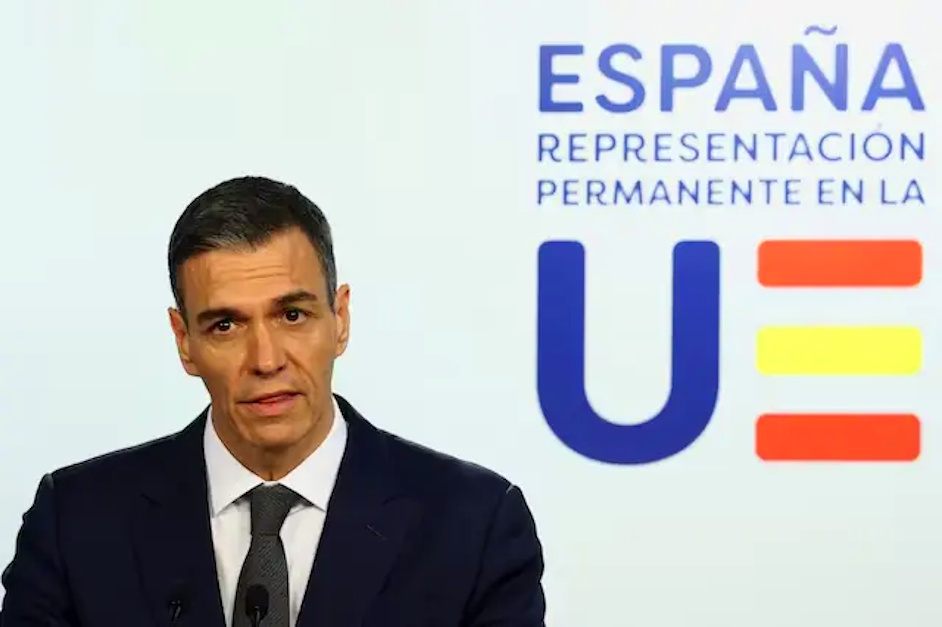
In a firm rebuke of unilateral diplomatic initiatives, Spain has officially declined to participate in the “Board of Peace” unveiled by former U.S. President Donald Trump. The decision, announced by Prime Minister Pedro Sánchez, underscores a deepening transatlantic divide over conflict resolution and the future of global governance.
A Clear Multilateral Stance
Following the European Union summit in Brussels, Prime Minister Sánchez stated plainly, “We appreciate the invitation, but we decline.” He framed Spain’s rejection as a principled stand, rooted in Madrid’s unwavering commitment to international law, the United Nations system, and multilateral diplomacy.
“True and lasting peace,” Sánchez elaborated, “is not brokered by selective boards but built through inclusive international institutions where all voices, especially those of the affected parties, are heard.”
The Board’s Contested Vision
The “Board of Peace,” launched at a ceremony during the World Economic Forum in Davos, Switzerland, is presented by its proponents as a mechanism to broker ceasefires, organize security arrangements, and coordinate post-war reconstruction. The concept originates from Trump’s previously outlined peace plan for Gaza.
However, its composition and launch have drawn significant skepticism. Notably absent from the ceremony were traditional U.S. allies including Canada, the United Kingdom, and all European Union member states except Hungary and Bulgaria. The board’s membership, which includes Israel and Arab nations such as Qatar, Saudi Arabia, and the United Arab Emirates, has also been criticized for excluding the Palestinian Authority—a point Sánchez highlighted as a critical flaw.
European and Global Skepticism
Spain’s refusal aligns with broader European reservations. EU diplomats, speaking on background, express concern that the board could undermine established UN-led processes and fragment coordinated international efforts. The absence of major Western powers suggests the initiative may struggle to gain legitimacy as a neutral arbiter.
Analysts note that the board reflects Trump’s preference for transactional, state-to-state deal-making over institutional frameworks. “This is classic disruptive diplomacy,” said Dr. Elena Valderrama, a Madrid-based foreign policy expert. “It seeks quick, visible wins but often at the cost of comprehensive, sustainable solutions that require broad consensus.”
Implications for Diplomacy
The Spanish decision highlights a potential strategic friction point within NATO, pitting the U.S.’s unilateral or minilateral tendencies against Europe’s institutionalist preferences. For Madrid, a nation that has consistently advocated for a strengthened EU foreign policy, the choice reaffirms its diplomatic identity.
The board’s future efficacy is now in question. Without participation from major European powers, its ability to implement or monitor agreements in conflicts beyond its immediate regional membership appears limited. The move signals that for many traditional U.S. partners, the primacy of the UN and rule-based international order remains non-negotiable.
Looking Ahead
As global conflicts persist, the rift exemplified by Spain’s rejection points to a larger debate: whether the 21st-century world order will be shaped by inclusive multilateral bodies or by ad-hoc coalitions of the willing. For now, Spain has planted its flag firmly on the side of the former, leaving Trump’s “Board of Peace” to navigate a landscape still deeply anchored in the institutions created after the last world war.
Our Pashto-Dari Website


Support Dawat Media Center
If there were ever a time to join us, it is now. Every contribution, however big or small, powers our journalism and sustains our future. Support the Dawat Media Center from as little as $/€10 – it only takes a minute. If you can, please consider supporting us with a regular amount each month. Thank you
DNB Bank AC # 0530 2294668
Account for international payments: NO15 0530 2294 668
Vipps: #557320

Comments are closed.