
Thousands in Indonesia Await Aid After Deadly Quake Kills 54, Overshadowing Independence Day Celebrations

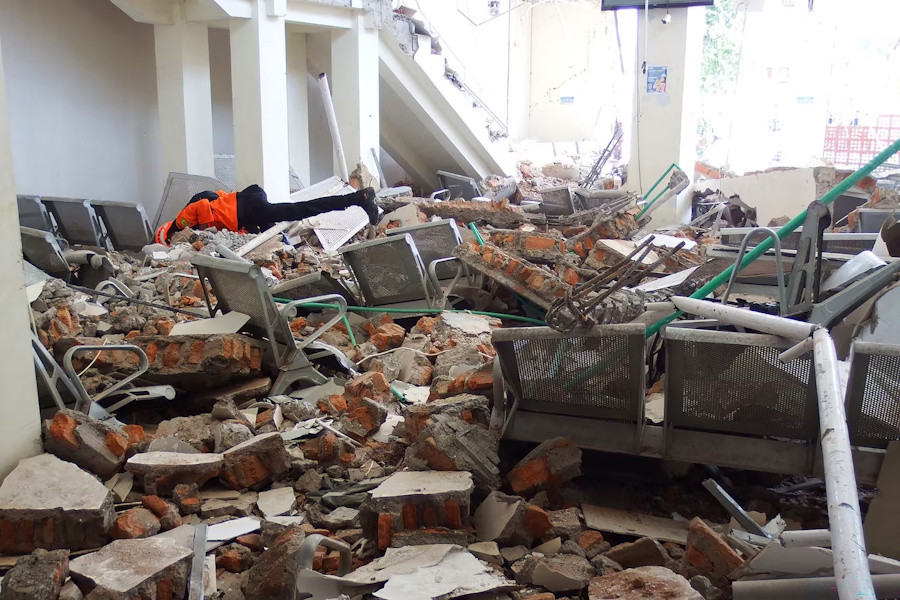
As Indonesia marked its 81st Independence Day on Monday, thousands of residents on the island of Flores remained in desperate need of food, medicine, and shelter days after a powerful earthquake killed at least 54 people, injured dozens more, and reduced hundreds of homes and public buildings to rubble. What should have been a day of national pride and festivity instead became a somber occasion marked by mourning, frantic searches for the missing, and anxious waits for relief supplies that have yet to reach many isolated communities.
The 6.2-magnitude quake struck East Nusa Tenggara province in the early hours of Saturday morning, just before 6 a.m. local time, at a shallow depth of 10 kilometers (6 miles), according to the U.S. Geological Survey. The tremor sent panicked residents fleeing their beds and rushing to higher ground as tsunami warnings were issued though they were later lifted. Since then, authorities have recorded at least 995 aftershocks, 46 of which were strong enough to be felt, keeping survivors on edge and forcing many to sleep outdoors under flimsy tarpaulin tents for fear of further collapses.
The National Disaster Management Agency (BNPB) reported that more than 1,300 homes were damaged across the province, with nearly 250 destroyed on Flores alone. Approximately 5,000 people have been displaced and are now living in temporary shelters, while 135 others have sustained injuries ranging from broken bones to severe lacerations. In response, the province’s governor declared a 14-day state of emergency on Sunday, mobilizing over 3,500 military and police personnel to the disaster zone. Some 275 tons of aid including instant noodles, bottled water, blankets, and medical supplies have been dispatched, but logistical hurdles, including blocked roads and damaged bridges, have severely hampered distribution to the hardest-hit areas.
On-the-ground reports paint a grim picture of devastation. An Associated Press photojournalist traveling across the island witnessed fallen trees obstructing vital routes, massive boulders hurled down hillsides by landslides, and entire neighborhoods reduced to splintered wood and twisted metal. In the coastal village of Reo, the epicenter of the destruction in Manggarai regency, parked cars were crushed under the weight of collapsing buildings, and residents sifted through debris with their bare hands, salvaging what little they could.
“My house is just rubble now,” said Rasyid Jafar, a clothing trader in Reo, his voice heavy with exhaustion. “We need food, medicine, and clean water urgently. We have nothing left.” His plea was echoed by Mariana Tewu, another villager, who questioned the absence of basic relief infrastructure: “Why isn’t there a public kitchen? We can’t even cook what little we have.”
For many older residents, the catastrophe revived haunting memories of the 1992 Flores earthquake and tsunami, which claimed roughly 2,500 lives. That disaster, etched into local memory, has made the current crisis feel all the more personal and terrifying, as families now grapple with the fear of history repeating itself.
While some aid has begun to trickle in mostly in the form of ready-to-eat meals and bottled water survivors say it is not nearly enough. Medical teams are stretched thin, treating injuries in makeshift clinics while also bracing for potential outbreaks of waterborne diseases. Children, the elderly, and pregnant women are particularly vulnerable, with many spending Monday Indonesia’s Independence Day not waving flags or watching parades, but huddled in evacuation centers, their faces etched with grief and uncertainty.
Indonesia, an archipelago of more than 17,000 islands, sits squarely on the Pacific “Ring of Fire,” a horseshoe-shaped zone of intense seismic activity where tectonic plates collide. This geographic reality has made the nation no stranger to deadly quakes and volcanic eruptions. In 2018, a magnitude 7.5 earthquake on the island of Sulawesi generated a tsunami that killed more than 4,400 people. In 2004, a catastrophic magnitude 9.1 quake off Sumatra unleashed an Indian Ocean tsunami that claimed nearly 230,000 lives across a dozen countries about 170,000 of them in Aceh province alone.
As evening fell on Flores, the sounds of Independence Day celebrations in faraway Jakarta fireworks, patriotic songs, and official ceremonies felt worlds away. Here, the only sounds were the hum of generator-powered lights, the cries of infants, and the quiet prayers of those waiting, still waiting, for help to arrive. The government has pledged to accelerate relief efforts, but for thousands of displaced residents, the question remains not when the nation was born, but when their own survival will be secured.
Our Pashto-Dari Website

Support Dawat Media Center
If there were ever a time to join us, it is now. Every contribution, however big or small, powers our journalism and sustains our future. Support the Dawat Media Center from as little as $/€10 – it only takes a minute. If you can, please consider supporting us with a regular amount each month. Thank you
DNB Bank AC # 0530 2294668
Account for international payments: NO15 0530 2294 668
Vipps: #557320

Comments are closed.