

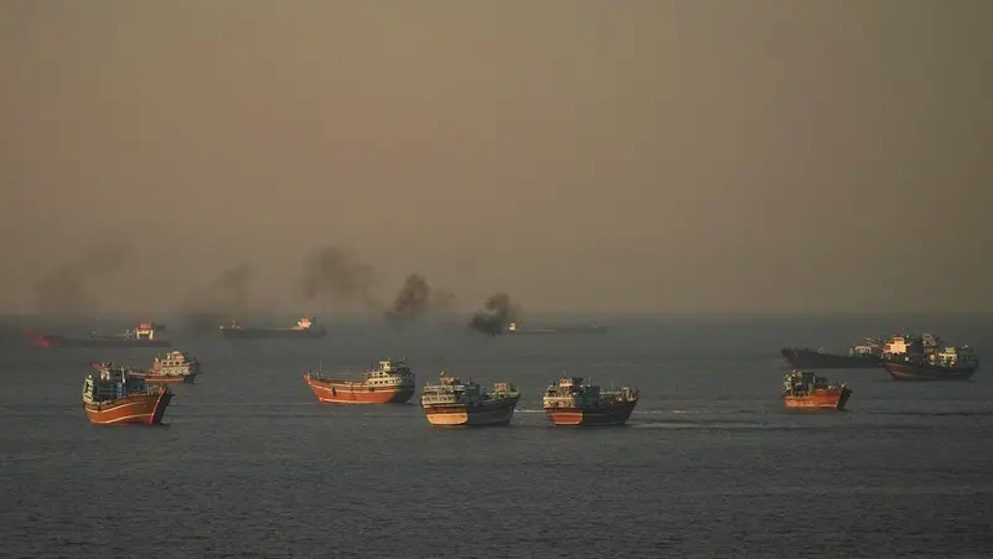
The United Nations has called for the sustained reopening of the Strait of Hormuz under the principle of freedom of navigation, urging all parties to uphold their commitments and avoid actions that could further destabilize one of the world’s most strategically vital maritime chokepoints.
U.N. spokesperson Stéphane Dujarric said on Friday that the organization hopes to see “a sustainable and continuous reopening” of the waterway, stressing that all sides should respect any agreements reached and prioritize both regional and global stability. He underscored that the return to pre-conflict norms is not merely a matter of military calm, but of restoring full, safe, and unhindered transit for commercial and civilian vessels.
“It is very important that all parties keep in mind the broader interests of regional stability, global stability, and the safety and security of seafarers,” Dujarric told reporters at the regular noon briefing in New York. He added that thousands of sailors remain directly affected by the ongoing disruption, many of whom have faced prolonged delays, rerouting, and hazardous conditions. He noted that global supply chains depend heavily on their work to transport essential goods ranging from food and medicine to energy products and that any protracted closure would carry severe humanitarian and economic consequences.
The comments come as diplomatic efforts intensify to reduce tensions following the recent conflict involving Iran, Israel, and the United States, which severely disrupted commercial shipping and heightened concerns over the security of the Persian Gulf. While a ceasefire has eased immediate military hostilities, governments and shipping companies remain cautious amid persistent uncertainty over the durability of the truce and the trajectory of negotiations between Washington and Tehran. Analysts warn that without a broader political framework, even a temporary reopening could prove fragile.
The Strait of Hormuz remains a central point of concern for global energy markets and international trade. Roughly one-fifth of the world’s oil supply some 17 million barrels per day passes through the narrow 21-mile-wide waterway, making any disruption to maritime traffic capable of swiftly driving up energy prices, spiking insurance premiums, and rippling through interconnected economies worldwide. International aviation and maritime authorities have continued issuing security advisories, urging vessels to exercise extreme caution as they monitor shifting military postures and the potential for asymmetric threats, including mines, drone attacks, and naval harassment.
The United Nations has repeatedly emphasized the importance of complying with international maritime law, particularly the 1982 United Nations Convention on the Law of the Sea (UNCLOS), which enshrines the right of transit passage through straits used for international navigation. Dujarric reiterated the Secretary-General’s call for diplomatic engagement among Iran, Gulf Arab states, the United States, and other stakeholders to reduce the risk of further escalation and to build confidence measures that can outlast the current ceasefire. He also hinted at the possibility of U.N.-facilitated technical talks on maritime safety, deconfliction mechanisms, and environmental protection, should the parties show willingness to engage.
Looking ahead, the U.N. stressed that a durable resolution will require more than a return to the status quo ante—it will demand sustained dialogue, transparent communication channels, and a collective commitment to upholding the rules-based order at sea. As one senior diplomat put it privately, “The Strait is a lifeline for the world, and its stability cannot be left to chance or coercion.” For now, the international community watches closely, hoping that the current lull in hostilities translates into lasting cooperation rather than a prelude to the next confrontation.
Our Pashto-Dari Website

Support Dawat Media Center
If there were ever a time to join us, it is now. Every contribution, however big or small, powers our journalism and sustains our future. Support the Dawat Media Center from as little as $/€10 – it only takes a minute. If you can, please consider supporting us with a regular amount each month. Thank you
DNB Bank AC # 0530 2294668
Account for international payments: NO15 0530 2294 668
Vipps: #557320

Comments are closed.