
US-Iran Talks in Switzerland Postponed Amid Regional Turmoil and Israeli Strikes on Lebanon

Geneva/Washington – Planned high-stakes negotiations between the United States and Iran, scheduled to take place in Switzerland this weekend, have been abruptly postponed, casting fresh uncertainty over the durability of a fragile ceasefire and the broader diplomatic roadmap for the Middle East.
Switzerland’s Foreign Ministry confirmed on Friday that the talks set to involve U.S., Iranian, Qatari, and Pakistani delegations at the mountaintop resort of Bürgenstock would not proceed as planned. While Swiss authorities did not specify reasons for the delay, they reiterated their readiness to continue facilitating dialogue between the parties.
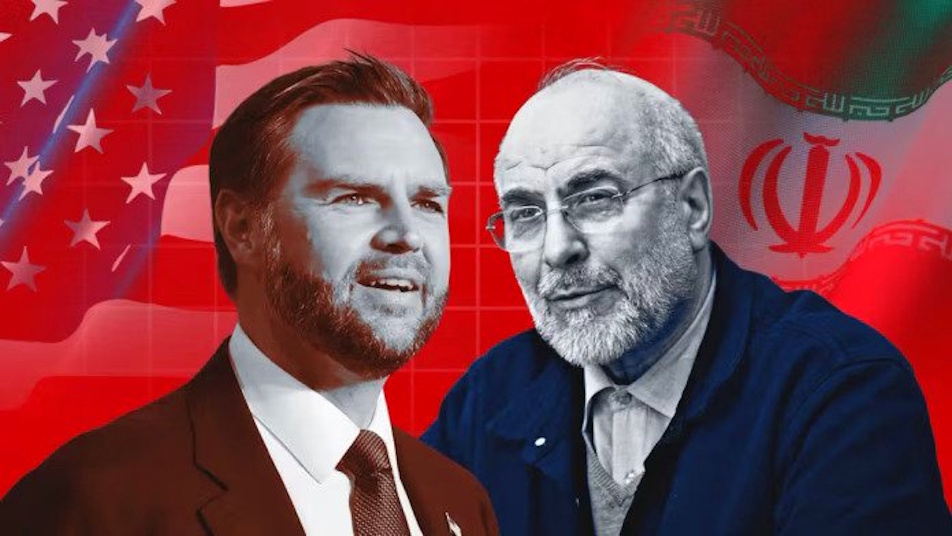
The postponement came shortly after the White House announced that U.S. Vice President JD Vance had scrapped plans to travel to Geneva to lead the American delegation. A White House spokesperson cited unresolved logistical and technical issues, stating: “The logistics of these negotiations have never been simple or predictable. The Vice President and the U.S. delegation had been ready to depart as soon as plans were finalized.”
A Fragile Accord Under Strain
The delay follows the electronic signing of the 14-point “Islamabad Memorandum of Understanding” earlier this week by U.S. President Donald Trump and Iranian President Masoud Pezeshkian. That preliminary accord—brokered through Swiss and Omani intermediaries extended a tenuous ceasefire by at least 60 days and established a framework for broader negotiations on regional security, maritime access, sanctions relief, and economic cooperation.
However, doubts about the agreement’s viability have mounted almost immediately. Iran’s semi-official Tasnim news agency, reporting before Vance’s announcement, suggested that Tehran’s negotiators would first need to see tangible signs of U.S. implementation of the interim deal before committing to travel. Iran’s Foreign Ministry had also cast doubt on the need for a formal signing ceremony in Switzerland, deeming it unnecessary after both presidents had already endorsed the pact electronically.
Supreme Leader Ayatollah Mojtaba Khamenei struck a defiant tone in a public message, describing Trump’s willingness to sign as an act of “desperation.” He signaled that forthcoming talks over Iran’s nuclear program one of Trump’s stated casus belli for launching hostilities would be arduous: “If the American side wants to be too demanding, we will not accept it.”
Israel Intensifies Military Campaign in Lebanon
As diplomatic efforts falter, Israel has escalated its military operations across southern Lebanon, launching a new wave of airstrikes that Lebanese state media say have killed at least 15 people. The Israeli military described the attacks as targeting Hezbollah positions, but the strikes have raised alarm over civilian casualties and the displacement of over one million people in Lebanon since the conflict widened.
The intensification of Israeli operations has exposed one of the most significant rifts between Washington and Tel Aviv in decades. President Trump, who had previously given Israel broad latitude in its campaign against Iranian-aligned militias, has now become openly critical of Israel’s actions in Lebanon. The U.S.-Iran ceasefire deal explicitly calls for a “permanent termination” of hostilities in Lebanon, yet Israel has signaled it has no intention of withdrawing from newly expanded occupation zones, publishing maps that suggest a prolonged military footprint.
Analysts warn that this disconnect could undermine the entire diplomatic framework. “The United States cannot credibly broker a regional truce while its closest ally continues to expand its military operations outside the agreed parameters,” said a senior European diplomat familiar with the negotiations, speaking on condition of anonymity.
The Cost of War and Domestic Political Pressures
The war, which began on February 28 with coordinated U.S. and Israeli air strikes on Iran, has exacted a devastating human and economic toll. At least 7,000 people have been killed, energy prices have surged, and global markets have been rattled by the disruption of shipping lanes.
In Washington, the escalating financial burden is drawing scrutiny. The Pentagon has reportedly informed lawmakers that it requires an additional $80 billion to cover war-related costs and associated expenditures, according to the Wall Street Journal. With mid-term elections looming in November, some of Trump’s Republican allies in Congress have begun questioning whether the administration conceded too much in exchange for a cessation of hostilities—particularly given Trump’s earlier vow to secure only Iran’s “UNCONDITIONAL SURRENDER.”
The memorandum signed with Iran instead offers significant economic concessions: relief from secondary sanctions, the unfreezing of tens of billions of dollars in Iranian assets, and immediate waivers for Iranian oil exports. In return, Iran has reiterated its longstanding position against pursuing nuclear weapons—a pledge previously doubted by successive U.S. administrations—and agreed to on-site “down-blending” of its highly enriched uranium stockpile, alongside inspections by the International Atomic Energy Agency (IAEA). Crucially, Tehran rejected Trump’s demand to remove nuclear material from the country.
Maritime Tensions and Global Energy Markets
Despite the ceasefire, Iran has asserted that it will continue to exercise control over the Strait of Hormuz in partnership with Oman, its neighbor across the critical waterway. Tehran has also indicated it intends to impose service fees on commercial vessels transiting the strait a levy that did not exist before the war though it has agreed to suspend such charges during the 60-day negotiation window.
The U.S. Central Command (CENTCOM) has lifted its blockade on Iranian ports, and tankers have begun moving through the reopened strait, which had carried nearly a fifth of global crude oil and liquefied natural gas supplies before the conflict. Oil prices dipped on Friday as traders priced in the prospect of renewed supply flows, though analysts caution that the market remains highly sensitive to any resurgence in hostilities.
A Delicate Path Forward
Despite the postponement, neither Washington nor Tehran has indicated that the diplomatic process has been abandoned. Officials from both sides have continued to express support for negotiations, while emphasizing that significant differences remain particularly regarding the scope of Iran’s nuclear program, its missile capabilities, and the future of U.S. sanctions relief.
Switzerland, which has long served as a neutral intermediary for sensitive U.S.-Iran contacts, remains prepared to host future rounds. But with Israeli strikes intensifying, domestic political pressures mounting in Washington, and Tehran signaling hardline positions, the path to a comprehensive agreement appears increasingly fraught.
For now, the Bürgenstock resort remains empty of delegations a quiet symbol of a peace process that has hit its first major roadblock, even as the guns have not yet fallen silent across the region.
Our Pashto-Dari Website

Support Dawat Media Center
If there were ever a time to join us, it is now. Every contribution, however big or small, powers our journalism and sustains our future. Support the Dawat Media Center from as little as $/€10 – it only takes a minute. If you can, please consider supporting us with a regular amount each month. Thank you
DNB Bank AC # 0530 2294668
Account for international payments: NO15 0530 2294 668
Vipps: #557320

Comments are closed.