
US Launches Second Night of Strikes on Iran as Tehran Targets US Bases in Kuwait, Bahrain, and Qatar

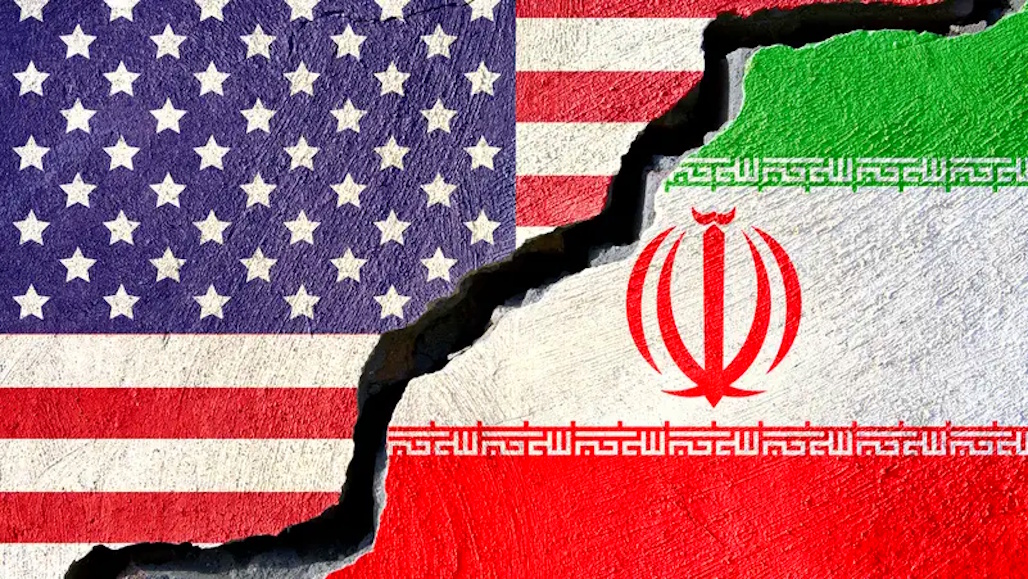
The United States has carried out a second consecutive night of airstrikes against Iranian targets, with the Pentagon confirming that approximately 90 sites were hit across the country. The strikes come amid a sharp escalation in hostilities, as Tehran reportedly launched retaliatory attacks against US military installations in Kuwait, Bahrain, and Qatar.
Iranian state media reported explosions along the country’s southern coastline and on Iranian-controlled islands in the Gulf, which have been used for military and naval operations. Iran’s health ministry confirmed that at least 14 people have been killed over the past two nights, though casualty figures are expected to rise as more details emerge from affected areas.
In response, multiple Gulf nations have reported Iranian missile and drone strikes targeting US bases in the region. Tehran has acknowledged the operations, stating they were aimed at American military positions in Qatar, Kuwait, and Bahrain—hosting some of the largest US troop contingents and air command infrastructure in the Middle East.
Iran’s Top Negotiator Warns US Over “Bullying” Tactics
Mohammad Bagher Ghalibaf, Iran’s chief nuclear and security negotiator with the United States, issued a sharp rebuke to Washington, stating that “America still hasn’t learned that bullying and breaking promises are no longer cost-free.” His remarks signal that Tehran views the current confrontation not as an isolated incident but as a turning point in its broader posture toward US engagement.
Trump’s Mixed Signals on Diplomacy
Former President Donald Trump, who authorized the strikes, offered conflicting statements on the possibility of de-escalation. “Iran wants to make a deal, but I don’t know if they’re worthy,” Trump told reporters, less than 24 hours after dismissing any potential negotiations as a “waste of time.” The mixed messaging has fueled confusion among allies and raised concerns about the coherence of US strategy moving forward.
Escalation Triggered by Maritime Incidents
Tuesday’s initial wave of US airstrikes was launched in response to attacks on three commercial vessels transiting the Strait of Hormuz, according to US Central Command. The Pentagon characterized those strikes as defensive measures to protect international shipping lanes and deter further aggression against civilian maritime traffic.
Fresh Strikes Near Ahvaz and Chabahar
On Thursday, media reports indicated that US forces conducted additional strikes near the southwestern Iranian city of Ahvaz, in Khuzestan Province. Al Jazeera reported that the attack occurred early Thursday morning, killing at least three people and injuring several others. Emergency medical teams were deployed to the site, though Iranian officials have not disclosed the specific nature of the target or the identities of the victims.
Simultaneously, explosions were reported in the southeastern port city of Chabahar marking what would be the first known US strike on that location since the collapse of the US-Iran ceasefire. Iranian state media said the attacks caused power outages in several neighborhoods and prompted the rapid deployment of rescue crews. No official casualty figures for Chabahar have been released.
If confirmed, the Chabahar strike would represent a significant expansion of US military operations. The port, located on the Gulf of Oman, is Iran’s only ocean-facing commercial harbor and serves as a vital gateway for maritime trade bypassing the Strait of Hormuz. It is also a critical transit hub for landlocked Central Asian nations, Afghanistan, and Indian Ocean trade routes making it a linchpin of Iran’s economic and strategic diversification efforts.
Strategic Importance of Targeted Regions
Khuzestan Province, home to Ahvaz, contains the bulk of Iran’s oil fields, refineries, pipelines, and key military installations, making it one of the most heavily fortified and economically vital regions in the country. Strikes there are likely intended to degrade Iran’s energy export capacity and logistical networks.
Chabahar, by contrast, holds unique geopolitical value. Iran has invested heavily in developing the port as an alternative to Gulf shipping routes, particularly in partnership with India and Afghanistan. Any disruption to Chabahar could reverberate beyond Iran, affecting regional trade and aid corridors, especially for landlocked Afghanistan.
Tehran Warns of Broader Retaliation
Iranian leaders have vowed to respond forcefully to any further US aggression. Senior officials have cautioned that continued attacks could destabilize the entire Gulf region and jeopardize maritime navigation in waters critical to global energy supplies. Tehran has also signaled that it may reconsider its commitments to regional de-escalation agreements if strikes persist.
As the situation intensifies, international observers are urging restraint, with the United Nations and several European allies calling for an emergency Security Council meeting. Meanwhile, Gulf states have heightened military alert levels, and commercial shipping companies are rerouting vessels away from the Strait of Hormuz and the Gulf of Oman amid fears of further attacks.
With neither side showing signs of backing down, the region appears to be hurtling toward a wider confrontation one that could draw in additional actors and threaten the fragile stability of the Middle East.
Our Pashto-Dari Website

Support Dawat Media Center
If there were ever a time to join us, it is now. Every contribution, however big or small, powers our journalism and sustains our future. Support the Dawat Media Center from as little as $/€10 – it only takes a minute. If you can, please consider supporting us with a regular amount each month. Thank you
DNB Bank AC # 0530 2294668
Account for international payments: NO15 0530 2294 668
Vipps: #557320

Comments are closed.