


-The Anatomy of Betrayal: An Introduction
Afghanistan today burns in a fire bornfrom mismanagement, and the systematic destruction of the country’s defensive backbone. Every time Afghan soil has trembled, every time a home was destroyed, every time a child clung to its mother in terror, part of that wound was inflicted by internal hands. Hands that should have been a shield became a dagger.
When a country is left defenseless, when its sky goes unanswered, when its borders are ownerless this is not just the result of an external enemy. It is the consequence of selling the weapons and ammunition of the national army to Pakistan; it is the result of decisions rooted in ignorance, fanaticism, and dependence. History bears witness to how certain figures, under the banner of religion and brotherhood, broke the spine of the country’s defense and left Afghanistan defenseless before every threat.
If Afghanistan’s sky has been shaken by Pakistani jets over Paktia, if its soil is wounded, if its people breathe in anxiety this pain does not come from outside alone. It comes from the betrayal of those who should have been a shield but sold the shield instead. This betrayal is not merely political; it is against humanity, against the nation, against the blood of those who gave their lives defending this soil. The Afghan people have the right to ask: who left this land undefended? Who broke the pillars of the national army? Who left this country vulnerable to every threat?
Afghanistan must rise again, but rising without recognizing the betrayal is impossible.
-The Latest Atrocity: June 2026 Airstrikes
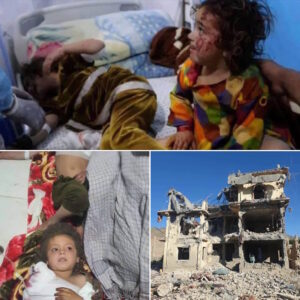
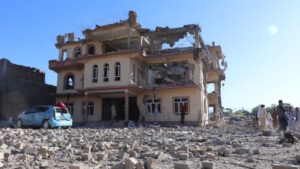
On the night of June 28, 2026, Pakistani forces launched a coordinated ground and aerial assault across the border into eastern Afghanistan. What Islamabad described as “precision strikes” against militant hideouts in Paktia, Paktika, and Kunar provinces became, by Afghan accounts, a massacre of civilians in their homes .
The attack came less than twenty-four hours after militants struck the regional headquarters of the Pakistan Rangers in Karachi, killing three soldiers . The group Jamaat-ul-Ahrar, a splinter faction of the Pakistani Taliban (TTP), claimed responsibility . Rather than containing the threat within its own borders, Pakistan projected its military power externally, striking Afghan soil.
The Toll
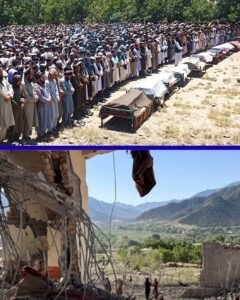
The civilian toll is devastating and contested. Afghanistan’s Taliban-led government reported that Pakistani airstrikes killed at least 36 civilians and wounded 163 others, including women and children . Pakistan’s Information Minister Attaullah Tarar claimed the strikes killed 25 militants and destroyed three targets, with an additional four fighters killed in ground operations .
The deadliest strike occurred in Mandokhail village in Paktia’s Chamkani district. According to Taliban deputy spokesperson Hamdullah Fitrat, Pakistani fighter jets first bombed a civilian residence, killing an elderly man and a child. Then, “when local residents gathered to conduct rescue operations, the area was bombed for a second time, resulting in the martyrdom of 28 villagers and injuries to 158 others” . This “double-tap” strike pattern striking rescuers responding to an initial attack would constitute a war crime under the Geneva Conventions .
In neighboring Paktika province, six civilians, mostly women and children, were killed when a house in Walust village was struck. A third strike destroyed a civilian residence in Kunar province, though no casualties were reported there .
The Pattern
This exchange has become a grim script. Pakistan’s response follows a familiar pattern: a major attack takes place inside Pakistan, airstrikes across the Afghan border follow within hours, Islamabad issues warnings, Kabul condemns civilian casualties, and the cycle repeats. Pakistan has carried out multiple cross-border strikes since last year, accusing the Taliban government of sheltering TTP militants .
-The Scale of the Humanitarian Crisis
The June 2026 strikes are not an isolated incident but part of a sustained campaign of cross-border violence that has claimed hundreds of Afghan lives.
In March 2026, a Pakistani missile strike hit a drug rehabilitation facility in Kabul, causing significant casualties . In early June, Pakistani airstrikes killed 13 people, including 11 children, in Kunar, Khost, and Paktika provinces . The United Nations recorded at least 372 Afghan civilian deaths and 397 injuries in the first three months of 2026 alone .
The cumulative effect is devastating. Since October 2025, cross-border violence has killed hundreds and displaced thousands. Paktia, Paktika, Khost, Kunar, Kandahar, and Helmand provinces have seen the highest casualty rates. Yet the international response has been muted at best.
The Double-Tap as War Crime
The “double-tap” strike in Mandokhail village attacking rescuers who rushed to help survivors of the initial bombing represents a clear violation of international humanitarian law. Under the principle of distinction, warring parties must always distinguish between civilians and combatants. Striking civilians engaged in rescue operations constitutes a war crime under the Geneva Conventions .
The UN Security Council, largely paralyzed by geopolitical vetoes, has not convened an emergency session on the Afghanistan-Pakistan conflict. The UN Human Rights Council and the International Criminal Court should conduct formal inquiries into these attacks. States supplying Pakistan with military aircraft and precision munitions bear legal obligations not to facilitate violations of international humanitarian law.
-Why the Taliban Cannot Act Strongly: The Silence Explained
The source text rightly points to the Taliban’s military and diplomatic impotence, but the reality is layered and requires elaboration.
Military Limitations
When the Taliban took power in August 2021, they inherited the wreckage of a disintegrating national army. The Afghan Air Force, which had been the principal deterrent against any aerial threat, essentially ceased to exist. American contractors who maintained the aircraft departed, and most serviceable jets were flown to neighboring countries or fell into disrepair.
The Taliban have since attempted to reconstitute some air capability. Afghanistan’s Ministry of Defense claimed to have carried out airstrikes on Pakistani military sites, but Pakistani officials stated that attempts to strike using small drones were foiled using anti-drone systems. Pakistan, by contrast, operates a modern air force with F-16s and JF-17s capable of precision strikes at stand-off ranges.
Diplomatic Isolation
The Taliban’s refusal to permit girls’ education beyond primary school and their exclusion of women from public life have made formal international recognition impossible. Every government that might otherwise support Afghanistan diplomatically or militarily against Pakistani aggression faces the political cost of appearing to endorse the Taliban’s gender policies.
This isolation is not merely diplomatic; it is strategic. Afghanistan lacks international representation in global forums and cannot effectively advocate for its sovereignty. The world’s silence in the face of Pakistani airstrikes is interpreted by Islamabad not as disapproval but as tacit permission.
The TTP Dilemma
The Afghan Taliban’s relationship with the Pakistani Taliban (TTP) is the crux of the conflict and the most significant obstacle to any Afghan diplomatic counteroffensive. While the Afghan Taliban and TTP share ideology, culture, and ethnic composition, they differ fundamentally in their stance toward Islamabad: the TTP aims to undermine Pakistan’s authority, whereas the Afghan Taliban seeks cooperation with Pakistan.
Yet the Taliban cannot or will not sever ties with the TTP, because the bonds of ideology and kinship are too deep. This gives Pakistan perpetual justification for its strikes, however false the specific targeting claims may be.
The Narrative Paradox
Ironically, Pakistan’s airstrikes may be strengthening the Taliban’s domestic standing. Afghan journalist and expert Sami Yousafzai noted that the civilian toll is reshaping public opinion: “Even Afghans who were critical of Taliban policies on women’s education, for instance, are now saying: Set that aside, let us talk about Pakistani aggression. Pakistan is essentially handing the Taliban a narrative, and the Taliban are cashing in on it very effectively.”
-The Forced Deportation of Afghans: A Parallel Crime
The source text alludes to the weaponization of Afghan refugees by Pakistan, but the scale of the crisis deserves independent documentation.
In 2026 alone, more than 146,000 Afghans have been deported from Pakistan, adding to more than one million forcibly returned in 2025. Since the reopening of the Torkham border on March 31, Pakistan has expedited deportations as part of its “Illegal Foreigners’ Repatriation Plan,” launched in October 2023 .
Pakistani police have arrested Afghans while they were shopping, going to school, and seeking day labor confiscating phones and cash and demanding bribes for release. Those unable to pay have been detained and expelled. Many are at serious risk upon return, including journalists, human rights defenders, and others because of their past involvement with the former Afghan government.
Most Afghan refugees including those holding Proof of Registration cards or Afghan Citizen Cards have resided in Pakistan for generations, having never set foot in Afghanistan. Forcibly returning them uproots them from the only home many have known.
Between September 2023 and February 2025, Pakistan forcibly deported at least 844,499 Afghan nationals back to Afghanistan, where many face real risks of persecution by the Taliban including journalists, human rights defenders, women activists, artists, and former government officials.
Legal Violations
Pakistan’s forced returns and expulsions may violate Pakistan’s obligations as a party to the UN Convention Against Torture and the customary international law prohibition against refoulement—the forced return of anyone to a place where they face a genuine risk of persecution, torture, or a threat to their life. Pakistan is not a signatory to the 1951 Refugee Convention, which creates a legal gap that Islamabad exploits.
Advocacy organizations including Refugees International, Human Rights Watch, Amnesty International, and UNHCR have all called for an immediate halt to the deportations. Amnesty International noted that about 60 percent of those returned to Afghanistan are women and children, and that despite facing some of the worst gender-based discrimination in the world amounting to the crime against humanity of gender persecution women and girls are being deported to Afghanistan in large numbers. Without a binding enforcement mechanism, the deportations continue.
-The Strategic Calculus: Pakistan’s Military Impunity
The Pakistani military has systematically treated Afghanistan as a “managed battlefield” an arena to be penetrated, pressured, and periodically punished so that no Afghan government can fully control its sovereignty or pursue an independent regional policy. This doctrine is usually packaged in the language of “strategic depth,” “counterterrorism,” or “security” .
Several factors enable this cycle of aggression:
1. Pakistan’s Internal Crisis and External Projection
Recent security failures across Balochistan, Khyber Pakhtunkhwa, and now Kashmir have left Pakistan’s military flustered and out of control. Public confidence in the military’s ability to guarantee security has collapsed. Shifting blame for internal insecurity onto the Afghan Taliban is the cheapest and most convenient escape route one the Pakistani military has repeatedly used.
2. International Validation
Pakistan’s military leadership interprets diplomatic engagement with Western powers as a green light for aggression. When Pakistan’s top military leadership receives strong validation in Washington particularly during heightened regional tensions Rawalpindi interprets it as diplomatic cover to act more aggressively against Afghanistan while still projecting itself as a cooperative partner .
3. The Silence of the International Community
The world’s silence in the face of civilian casualties is being interpreted by Islamabad as global indifference or, worse, approval. That silence only encourages Pakistan to repeat its crimes.
-The Nuclear Dimension: A Shared Western Concern
One motivation for America’s invasion of Afghanistan in 2001 was concern over Pakistan’s nuclear arsenal. The West has always feared that extremist groups might gain control of Pakistan’s “Islamic bomb.” In the current climate of insecurity, that risk is growing.
On nuclear disarmament and security, Afghanistan could find a common strategic denominator with Western nations. The rise of a system in Afghanistan and Khyber Pakhtunkhwa that closes schools and universities to girls under a Taliban interpretation of Sharia troubles the world. Resolving this concern is possible through forming an Islamic government reconciled with modern world standards.
-The Path Forward: Strategic Options and Necessary Reforms
Diplomatic Engagement
In complete diplomatic isolation, the Taliban cannot confront Pakistan’s military machine. The Durand Line dispute must be raised within a strategic framework engaging relevant regional and extra-regional powers. India, Russia, and to some extent Iran are countries that would benefit in the long run from Pakistan’s fragmentation provided Islamist extremists do not take control of Khyber Pakhtunkhwa and Balochistan.
International Legal Accountability
Under international humanitarian law, the principle of distinction requires that warring parties always distinguish between civilians and combatants. The double-tap strike pattern described in Paktia bombing rescuers after an initial strike constitutes a war crime under the Geneva Conventions. The UN Human Rights Council and the International Criminal Court should conduct formal inquiries. States supplying Pakistan with military aircraft and precision munitions bear legal obligations not to facilitate violations of international humanitarian law.
Normalization with Washington
The Taliban’s only recourse against American-enabled Pakistani pressure is to work toward normalizing relations with Washington which means accepting American conditions that are also the will of the Afghan people: open schools and universities to girls, and govern within a constitutional framework.
A United Afghan Response
Pakistan’s airstrikes may be strengthening the Taliban’s domestic standing by uniting Afghans against a common enemy. But this national unity, however useful in the short term, cannot substitute for effective defense capabilities or international diplomatic engagement.
-Conclusion: The Compound Crisis
What the data confirms analytically is that Afghanistan faces a compound crisis with interlocking causes: Pakistan’s military impunity, enabled by international silence and the Taliban’s own diplomatic self-isolation; the systematic expulsion of millions of Afghans from Pakistan under conditions that violate international law; and the Taliban’s structural inability ideological, military, and diplomatic to mount a credible response.
The world’s silence is not neutral. It is a signal. Until the international community disaggregates its legitimate concern about Taliban governance from its legal obligation to protect Afghan civilians from bombardment, that signal will continue to license Pakistan’s next airstrike.
The Afghan people have the right to ask: who left this land undefended? Who broke the pillars of the national army? Who left this country vulnerable to every threat? These questions demand answers not from Afghanistan alone, but from an international community that has, through its silence, become complicit in the systematic violation of Afghan sovereignty and the killing of Afghan civilians.
Pakistan has long been regarded by many Afghans as a principal adversary of Afghanistan and the Afghan people, making genuine reconciliation and good-neighborly relations seem impossible from this perspective. Therefore, every Afghan should recognize what is seen as this destructive threat and fulfill their patriotic and national responsibility to protect Afghanistan’s sovereignty and interests. Afghanistan will rise again, but lasting progress is impossible without recognizing both domestic and foreign threats, as well as those who act as foreign agents against the country’s interests.
Our Pashto-Dari Website

Support Dawat Media Center
If there were ever a time to join us, it is now. Every contribution, however big or small, powers our journalism and sustains our future. Support the Dawat Media Center from as little as $/€10 – it only takes a minute. If you can, please consider supporting us with a regular amount each month. Thank you
DNB Bank AC # 0530 2294668
Account for international payments: NO15 0530 2294 668
Vipps: #557320

Comments are closed.