

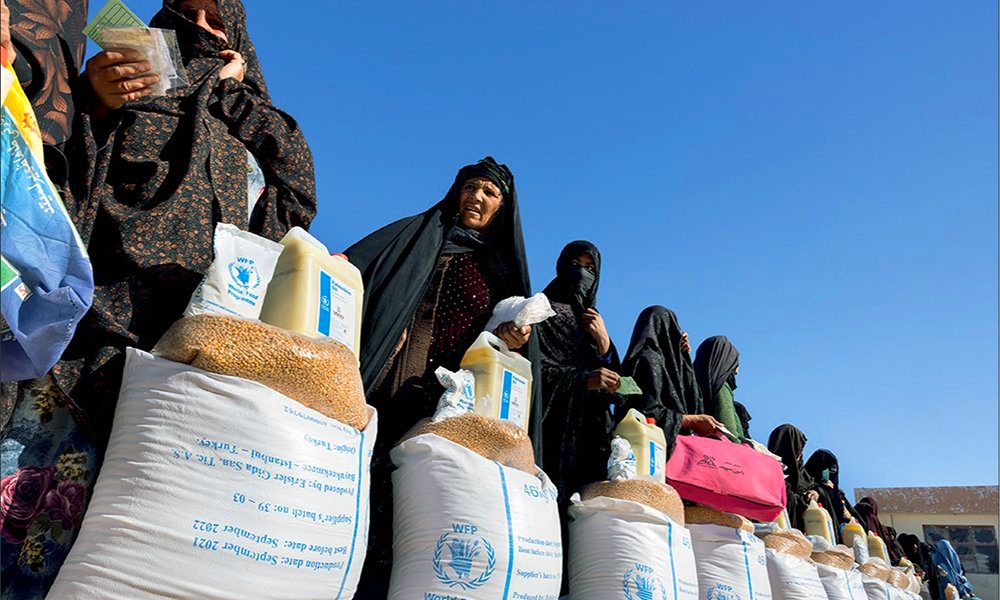
The United Nations Office for the Coordination of Humanitarian Affairs (OCHA) has allocated $18 million from its Central Emergency Response Fund (CERF) to support life-saving humanitarian assistance in Afghanistan, as the country continues to face severe funding shortages.
OCHA said the allocation comes at a critical time, with 21.9 million people in Afghanistan expected to require humanitarian assistance in 2026. The UN’s 2026 Humanitarian Needs and Response Plan indicates that this figure represents nearly half of the country’s population and reflects continuing vulnerabilities linked to food insecurity, economic hardship, natural disasters, and population displacement.
The funding is part of a broader $160 million CERF allocation approved for 12 of the world’s most underfunded humanitarian crises. Afghanistan, the occupied Palestinian territory, and Yemen are the largest recipients, with $18 million each. The remaining $10 million will support efforts to make humanitarian assistance more accessible to people with disabilities across the affected crises.
Tom Fletcher, the UN Under-Secretary-General for Humanitarian Affairs and Emergency Relief Coordinator, said the allocation is part of a wider effort to reach 87 million people facing the most severe humanitarian needs this year. He stressed that funding alone would not be enough and called for unimpeded humanitarian access, the removal of administrative obstacles, and greater support for aid operations.
OCHA’s funding data indicates that Afghanistan’s $1.71 billion humanitarian response plan for 2026 remained only about 31 percent funded at the end of September, highlighting the scale of the shortfall despite the new CERF allocation.
The UN has warned that Afghanistan’s humanitarian needs remain deeply entrenched. UNICEF estimates that 11.6 million children are among those requiring humanitarian assistance this year, while reduced funding has already contributed to the closure of hundreds of health facilities and increased pressure on essential services.
The latest CERF allocation is therefore expected to provide urgently needed support to vulnerable Afghans, but UN officials have emphasized that sustained funding and reliable humanitarian access will be essential to prevent further deterioration of the crisis.
Context and Implications
The allocation reflects growing international concern over Afghanistan’s deteriorating humanitarian situation, which has been compounded by a combination of natural disasters, economic instability, and restrictive policies affecting aid delivery. The country remains highly dependent on external assistance, with millions of people facing acute food insecurity and limited access to basic services such as healthcare and education.
The CERF, established in 2006, is designed to enable rapid and coordinated humanitarian action in emergencies. It pools contributions from UN member states and allocates funds to underfunded crises, aiming to ensure that vulnerable populations are not neglected. The 2026 allocation cycle has prioritized countries where humanitarian response plans are significantly underfunded, with Afghanistan among the most critically affected.
Despite the new funding, humanitarian organizations continue to face significant operational challenges in Afghanistan, including bureaucratic impediments, restrictions on female aid workers, and security concerns. These factors have hindered the delivery of assistance, particularly to women and girls, who are disproportionately affected by the crisis.
UN officials have reiterated that while emergency funding is vital, it cannot substitute for a comprehensive and sustained international response. They have called on donor countries to increase their contributions to the 2026 Humanitarian Response Plan and to engage with relevant authorities to ensure that aid reaches those most in need.
The situation in Afghanistan remains one of the world’s most severe humanitarian crises, and without continued support, the gains made in recent years could be reversed, leading to further suffering and instability. The international community’s ability to respond effectively will depend not only on financial resources but also on diplomatic efforts to secure humanitarian space and uphold the principles of neutrality, impartiality, and independence in aid delivery.
Our Pashto-Dari Website
Support Dawat Media Center
If there were ever a time to join us, it is now. Every contribution, however big or small, powers our journalism and sustains our future. Support the Dawat Media Center from as little as $/€10 – it only takes a minute. If you can, please consider supporting us with a regular amount each month. Thank you
DNB Bank AC # 0530 2294668
Account for international payments: NO15 0530 2294 668
Vipps: #557320

Comments are closed.