

Strategic Route Through the Wakhan Corridor Opens, Promising Economic and Political Benefits
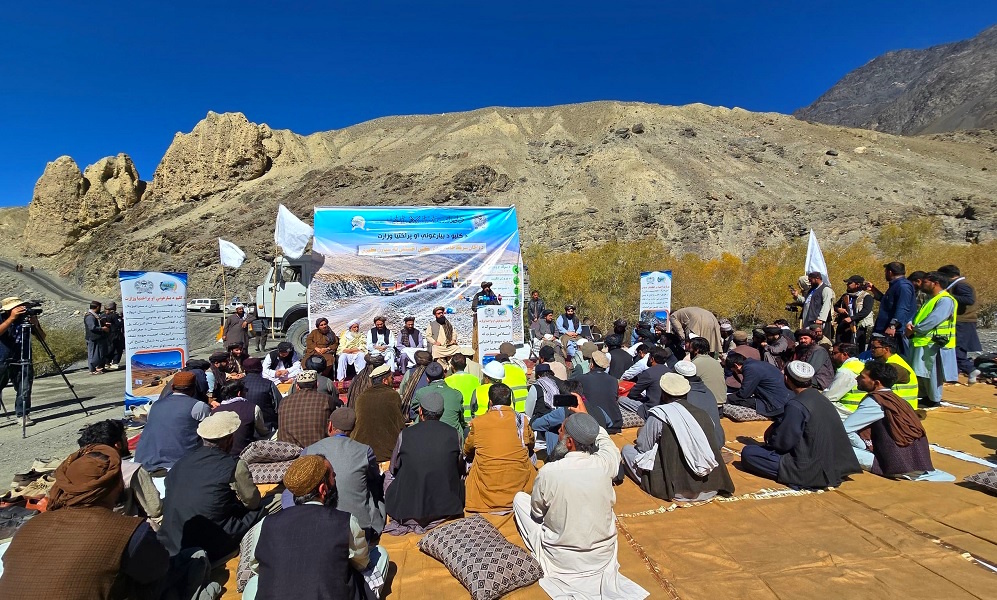
Sarhad-e Broghil, Badakhshan — A 121-kilometer gravel road stretching from Sarhad-e Broghil in the Wakhan district of Badakhshan province to the Chinese border was officially inaugurated on Sunday, October 4, marking a significant infrastructure milestone for Afghanistan.
The road, which winds through the remote and mountainous Wakhan Corridor, includes 66 culverts and four major bridges, according to officials. Additionally, a total of 3,100 meters of retaining walls have been constructed along vulnerable sections of the route to ensure stability and durability.
Investment and Funding
Abdul Latif Mansour, Minister of Rural Rehabilitation and Development, announced at the inauguration ceremony that 365 million afghanis from the Islamic Emirate’s development budget were allocated for the construction and gravelling of the road. The project represents a substantial investment in one of Afghanistan’s most isolated regions.
Strategic Significance
Mansour characterized the project as politically, strategically, and economically important. The road is expected to enhance connectivity between Afghanistan and China, potentially opening new trade routes and fostering economic ties with Beijing. The Wakhan Corridor, a narrow strip of territory in northeastern Afghanistan, shares a short border with China’s Xinjiang region and has historically served as a key geographic link between Central and South Asia.
Security Assurances
Rahmatullah Najib, governor of Badakhshan, also spoke at the ceremony, stating that security has been ensured across the province and that there are no security problems in any part of Badakhshan. His remarks aimed to reassure stakeholders and potential investors about the safety of the route and the region at large.
Regional Implications
The completion of this road could signal a new chapter in Afghanistan’s regional connectivity, offering a direct overland route to China and potentially reducing reliance on traditional trade corridors through Pakistan and Iran. However, questions remain about the road’s long-term maintenance, its capacity to handle commercial traffic, and the broader geopolitical implications of closer Afghan-Chinese infrastructure cooperation.

Support Dawat Media Center
If there were ever a time to join us, it is now. Every contribution, however big or small, powers our journalism and sustains our future. Support the Dawat Media Center from as little as $/€10 – it only takes a minute. If you can, please consider supporting us with a regular amount each month. Thank you
DNB Bank AC # 0530 2294668
Account for international payments: NO15 0530 2294 668
Vipps: #557320

Comments are closed.