
Afghanistan’s National Disaster Management Authority Warns of Landslide Risk in Kabul’s Chehel Sotoun Area

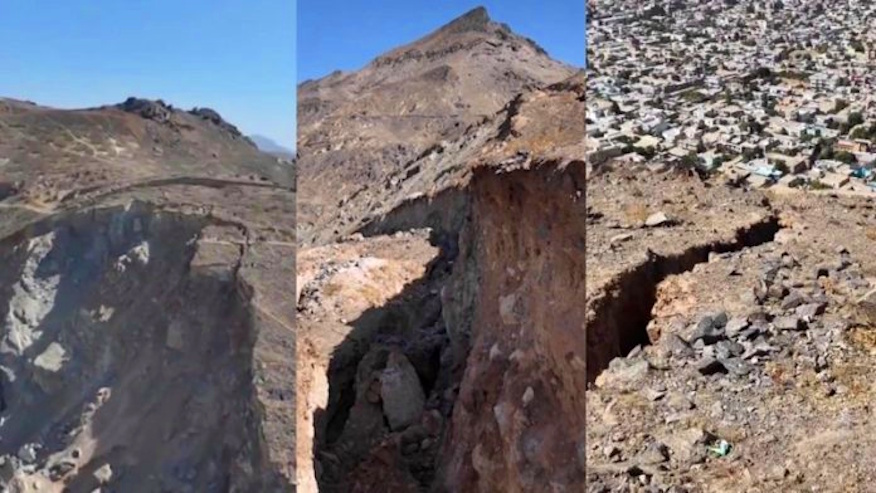
Afghanistan’s National Disaster Management Authority (ANDMA) has warned that hundreds of homes in Kabul are at risk of evacuation after part of Chehel Sotoun Hill in the city’s District 7 showed signs of a potentially dangerous landslide.
Mohammad Yousuf Hamad, spokesman for ANDMA, said authorities had completed an initial assessment of the hillside and identified approximately 300 homes in the surrounding area as being vulnerable to landslides and falling rocks. He said preparations are underway to relocate families living in the highest-risk zones to safer locations.
Officials said inspectors discovered widening cracks near the historic Chehel Sotoun monument overlooking southern Kabul. The authority warned that rainfall or additional ground movement could trigger further instability, increasing the risk to densely populated neighborhoods built along the hillside.
Akhtar Mohammad, head of ANDMA’s Disaster Risk Reduction Department in Kabul, said preliminary investigations indicate that unregulated excavation and stone extraction on the slopes have weakened the mountain’s stability. According to the official, some residents had been removing rock for construction materials without engineering oversight, contributing to erosion and structural damage.
Chehel Sotoun is one of Kabul’s oldest residential areas, where many houses have been constructed on steep hillsides over several decades, often without modern geotechnical standards or retaining infrastructure. Urban planners and geologists have repeatedly warned that informal hillside construction has increased landslide risks in several parts of the capital.
Environmental expert Najibullah Sadid called for an immediate halt to stone extraction around Chehel Sotoun and urged authorities to conduct detailed geological surveys before the next rainy season. He said preventive engineering measures are needed to stabilize the slope and reduce the risk of a large-scale collapse.
International organizations have previously identified landslides as one of Afghanistan’s most persistent natural hazards, particularly in mountainous urban areas where rapid population growth has pushed residential construction onto unstable terrain. Kabul has experienced repeated incidents of rockfalls and hillside collapses in recent years, especially during periods of heavy rain and snowmelt.
Expanded Report
Afghanistan’s National Disaster Management Authority (ANDMA) has issued an urgent warning that hundreds of homes in the capital, Kabul, may need to be evacuated after a section of Chehel Sotoun Hill in District 7 exhibited signs of a potentially catastrophic landslide. The alert has raised fresh concerns about the growing risks posed by unregulated construction and environmental degradation in one of the city’s oldest and most densely populated hillside communities.
According to Mohammad Yousuf Hamad, a spokesman for ANDMA, authorities have completed an initial technical assessment of the hillside and identified approximately 300 homes in the surrounding area as vulnerable to landslides and falling rocks. He stated that preparations are already underway to relocate families living in the highest-risk zones to safer locations, though the timeline and logistics of the evacuation remain under discussion.
Officials reported that inspectors discovered widening cracks near the historic Chehel Sotoun monument, which overlooks southern Kabul. The monument, a landmark in one of the capital’s oldest residential districts, now stands near the center of a rapidly deteriorating geological situation. ANDMA warned that rainfall or additional ground movement could trigger further instability, sharply increasing the danger to the densely populated neighborhoods that have grown along the hillside over the past several decades.
Akhtar Mohammad, head of ANDMA’s Disaster Risk Reduction Department in Kabul, said preliminary investigations indicate that unregulated excavation and stone extraction on the slopes have significantly weakened the mountain’s stability. According to the official, some residents had been removing rock for use as construction material without any engineering oversight, a practice that has contributed to erosion, loss of slope support, and structural damage across the hillside.
Chehel Sotoun is one of Kabul’s oldest residential areas, where many houses have been built on steep hillsides over several decades, often without modern geotechnical standards or retaining infrastructure. Urban planners and geologists have repeatedly warned that informal hillside construction has increased landslide risks in several parts of the capital. The absence of proper drainage systems, building codes, and slope stabilization measures has left many communities exposed to natural hazards that are compounded by rapid, unplanned urbanization.
Environmental expert Najibullah Sadid called for an immediate halt to stone extraction around Chehel Sotoun and urged authorities to conduct detailed geological surveys before the next rainy season. He said preventive engineering measures are needed to stabilize the slope and reduce the risk of a large-scale collapse. Sadid also emphasized that short-term evacuations alone will not solve the underlying problem unless construction practices and land-use regulations are enforced more rigorously.
International organizations have previously identified landslides as one of Afghanistan’s most persistent natural hazards, particularly in mountainous urban areas where rapid population growth has pushed residential construction onto unstable terrain. Kabul has experienced repeated incidents of rockfalls and hillside collapses in recent years, especially during periods of heavy rain and snowmelt. The situation at Chehel Sotoun reflects a broader pattern of environmental and urban governance challenges that leave thousands of families across the capital exposed to preventable disasters.
As authorities weigh the difficult task of relocating vulnerable families, the incident serves as a stark reminder of the urgent need for coordinated action among disaster management agencies, municipal authorities, urban planners, and environmental experts. Without immediate and sustained interventions, the risk of a major landslide in Kabul will continue to grow, threatening lives, homes, and the city’s already fragile infrastructure.

Support Dawat Media Center
If there were ever a time to join us, it is now. Every contribution, however big or small, powers our journalism and sustains our future. Support the Dawat Media Center from as little as $/€10 – it only takes a minute. If you can, please consider supporting us with a regular amount each month. Thank you
DNB Bank AC # 0530 2294668
Account for international payments: NO15 0530 2294 668
Vipps: #557320

Comments are closed.