

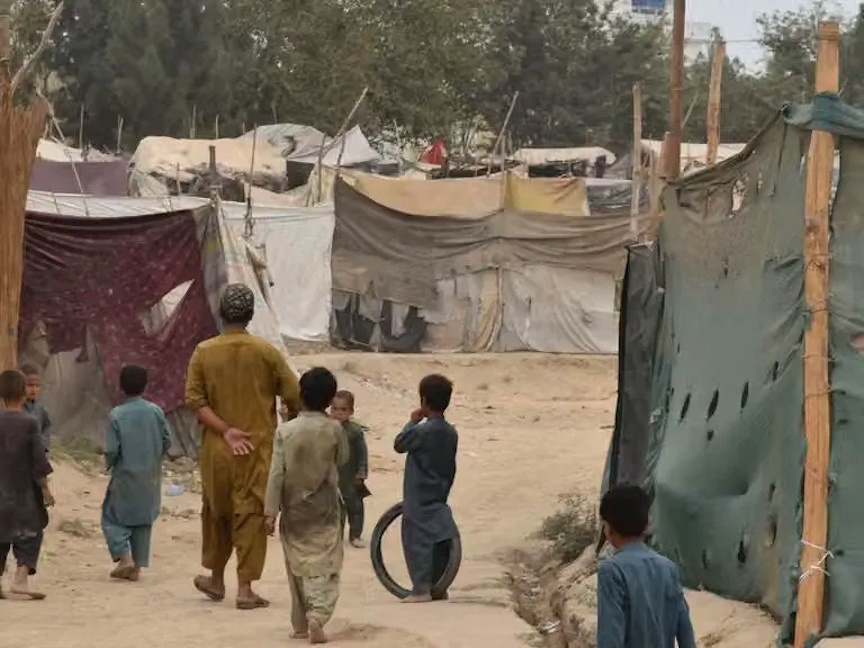
Kabul — More than half of displaced children in Afghanistan have less food to eat after leaving their homes, while two in five report worsening health, according to a new report by Save the Children. The findings paint a stark picture of the toll that displacement is taking on the country’s youngest and most vulnerable citizens.
The Children on the Move report, based on interviews with more than 800 children and caregivers across seven provinces, highlights how displacement is worsening hunger, disrupting education and exposing children to serious protection risks. The organisation said girls and children with disabilities face particularly high protection risks during displacement and after resettlement.
Key Findings
The data reveals widespread deprivation among displaced families:
-
55% of children have less food to eat following displacement
-
41% report deteriorating health
-
One-third of caregivers say access to education has worsened
-
Fewer than one in ten children surveyed had received any form of assistance, despite widespread needs
Nearly 70% of children surveyed had experienced at least two crises in the past three years, including droughts, floods, earthquakes and conflict. More than one in ten also reported exposure to risks such as child labour, violence and early marriage.
A Growing Crisis
The report comes as more than 6.67 million Afghans have returned from Pakistan and Iran since September 2023, placing additional pressure on communities already facing poverty and food insecurity. Around seven million people were internally displaced within Afghanistan in 2025, according to the report.
Economic hardship was the main driver of displacement, with 49% of children saying their families could not find work or earn enough money. Food shortages were another major factor, while others cited deportation or pressure to leave another country.
Displacement Does Not Guarantee Safety
Save the Children Afghanistan Country Director Ashish Damle warned that displacement does not necessarily mean children reach safety. Many families arrive in new communities where they struggle to afford food, healthcare and education, leaving children worse off than before they fled.
“Displacement does not mean children reach safety,” Damle said. “Many arrive in new communities where families struggle to afford food, healthcare and education.”
He called for sustained humanitarian funding to protect displaced children and ensure access to essential services, warning that without continued support, the situation for Afghanistan’s displaced children will only deteriorate further.
A Call to Action
The report’s authors urged the international community to scale up humanitarian assistance and prioritise the needs of displaced children, particularly girls and those with disabilities, who face heightened risks of exploitation and exclusion. With needs far outstripping available support, they warned that the gap between what displaced families require and what they receive remains dangerously wide.
Our Pashto-Dari Website

Support Dawat Media Center
If there were ever a time to join us, it is now. Every contribution, however big or small, powers our journalism and sustains our future. Support the Dawat Media Center from as little as $/€10 – it only takes a minute. If you can, please consider supporting us with a regular amount each month. Thank you
DNB Bank AC # 0530 2294668
Account for international payments: NO15 0530 2294 668
Vipps: #557320
