
Families in Afghanistan’s Ghor Province Forced to Sell Children Amid Deepening Poverty, BBC Reports

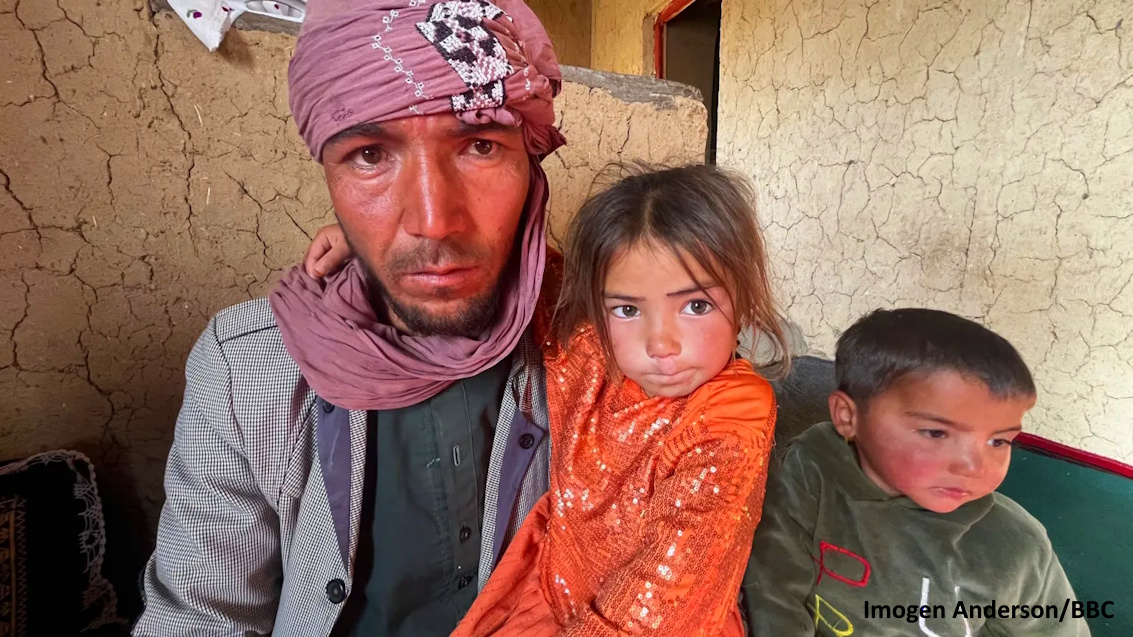
FIROZKOH, Afghanistan — Extreme poverty and rising unemployment in Afghanistan’s remote Ghor province are forcing desperate families to sell their children in order to survive, while severe maternal malnutrition is contributing to a growing number of infant deaths, according to a recent BBC report.
The report paints a grim picture of daily life in Firozkoh (formerly Chaghcharan), the provincial capital, where hundreds of men gather before dawn at dusty roadside labor markets hoping to secure work that will determine whether their families eat that day.
For most, those opportunities never come.
Forty-five-year-old Juma Khan told the BBC he had managed to find only three days of work in the past six weeks, earning between 150 and 200 Afghanis ($2.35–$3.13) per day.
“My children went to bed hungry three nights in a row,” he said. “My wife was crying, so were my children. So I begged a neighbour for some money to buy flour. I live in fear that my children will die of hunger.”
His suffering is far from unique.
According to the United Nations, nearly three-quarters of Afghanistan’s population cannot meet basic daily needs. The country is facing record levels of food insecurity, with an estimated 4.7 million people more than one-tenth of the population one step away from famine.
Ghor is among the hardest-hit provinces.
Fathers Facing Impossible Choices
For some families, desperation has reached the point of making unimaginable decisions.
Abdul Rashid Azimi, a father living in Ghor, told the BBC he is considering selling one of his seven-year-old twin daughters because he can no longer feed his family.
“I’m poor, in debt, and helpless,” he said while holding his daughters close.
“My children come to me saying, ‘Baba, give us some bread.’ But what can I give? Where is the work?”
Azimi said selling one daughter either for marriage or domestic work could provide enough money to feed the rest of his children for several years.
“It breaks my heart, but it’s the only way.”
Another resident said he had already sold his five-year-old daughter to relatives in order to pay for urgent medical treatment after being unable to afford healthcare costs.
Hunger Driving Infant Deaths
Medical workers in Ghor say poverty-related infant deaths have sharply increased.
A nurse at the provincial hospital told the BBC that newborn mortality in the province has reached nearly 10 percent, with maternal malnutrition and lack of medicine among the main causes.
Many infants die shortly after birth because their mothers are too malnourished to sustain healthy pregnancies or provide proper care.
Mohammad Hashem, a grieving father, said his 14-month-old daughter recently died after the family could not afford treatment.
“My child died of hunger and a lack of medicine,” he said. “When a child is sick and hungry, it is obvious they will die.”
Local elders report a noticeable rise in child deaths over the past two years, although no formal records are kept. Observations from local graveyards suggest that children’s graves now significantly outnumber those of adults.
Aid Cuts Worsen Crisis
The humanitarian crisis has been intensified by severe reductions in international assistance.
Until recently, millions of Afghan families received food aid including flour, cooking oil, lentils, and nutritional supplements. However, international contributions have dropped sharply.
The United States, once Afghanistan’s largest donor, significantly reduced aid following the Taliban’s return to power in 2021. Other major donors, including the United Kingdom, have also scaled back assistance.
Current UN figures show humanitarian funding for Afghanistan is approximately 70 percent lower than in 2025.
At the same time, severe drought has affected more than half of Afghanistan’s provinces, worsening food shortages and unemployment.
Taliban and Donor Disputes
The Taliban administration blames Afghanistan’s current economic hardship on the collapse of what it calls an “artificial economy” created during two decades of foreign military presence.
“After the end of the invasion, we inherited poverty, hardship, unemployment and other problems,” Taliban deputy spokesman Hamdullah Fitrat told the BBC.
The Taliban says it is working to reduce poverty through infrastructure and mining projects, but humanitarian organizations argue those efforts are insufficient to address immediate survival needs.
International donors have also cited Taliban restrictions on women and girls as a key factor behind reduced engagement.
The Taliban rejects that criticism, insisting humanitarian aid should not be politicized.
A Nation on the Brink
Afghanistan remains one of the world’s worst humanitarian emergencies.
The United Nations warns that millions remain dependent on emergency food assistance, while economic collapse, widespread unemployment, shrinking foreign aid, and political restrictions continue to place enormous pressure on families and the healthcare system.
For many in Ghor, survival now depends on whether a stranger stops to offer a day’s labor or whether impossible sacrifices must be made to keep the rest of the family alive.

Support Dawat Media Center
If there were ever a time to join us, it is now. Every contribution, however big or small, powers our journalism and sustains our future. Support the Dawat Media Center from as little as $/€10 – it only takes a minute. If you can, please consider supporting us with a regular amount each month. Thank you
DNB Bank AC # 0530 2294668
Account for international payments: NO15 0530 2294 668
Vipps: #557320

Comments are closed.