
Former President Karzai Urges Education for All Afghan Children on Independence Day, Warns of National Decline Without Unity

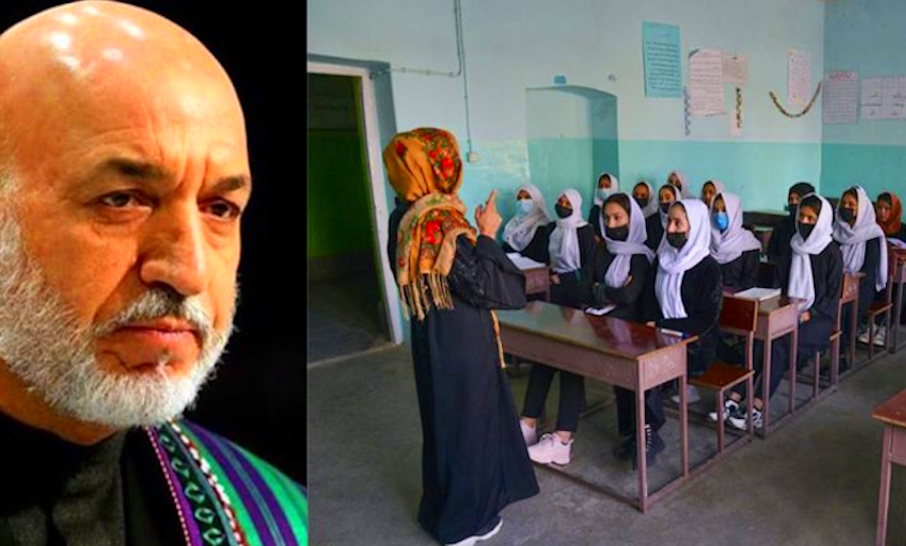
As Afghanistan marked the 106th anniversary of its independence from British rule, former President Hamid Karzai issued a solemn call for national renewal, emphasizing that the country’s hard-won sovereignty can only translate into meaningful progress if it is underpinned by peace, unity, and above all universal access to education.
In a public message released on August 19, Afghanistan’s Independence Day, Karzai honored the memory of those who fell in the struggle for freedom, particularly during the Third Anglo-Afghan War of 1919, which secured the nation’s control over its foreign affairs. He described their sacrifices as an enduring source of national pride and a reminder of the responsibilities that come with self-determination.
But Karzai was careful to distinguish between the act of achieving independence and the longer, more arduous task of preserving and capitalizing on it. “Independence is not an endpoint,” he said, “but a foundation one that demands we build a resilient nation capable of standing on its own human and natural resources.” He argued that without sustained peace, internal cohesion, and a well-educated populace, Afghanistan risks squandering the very liberty for which its ancestors fought.
Central to his address was a pointed and timely emphasis on education. Karzai insisted that Afghanistan cannot cultivate a skilled workforce or a competitive economy unless educational opportunities are extended to every child regardless of gender. “Both girls and boys must have equal access to learning,” he stated, framing access to schooling not as a social luxury but as a strategic imperative for national survival and growth. His remarks carried particular weight given the current restrictions imposed by the de facto authorities, which have barred most Afghan girls from secondary schools and universities—a policy that has drawn widespread international condemnation and deepened the country’s isolation.
Karzai also underscored the importance of national unity as a precondition for strength. He called on Afghans across political, ethnic, and regional divides to cultivate a shared sense of ownership over the country’s future. “True cohesion,” he said, “comes from a common vision not imposed from above, but forged through collective understanding and mutual responsibility.” He warned that without this internal solidarity, Afghanistan would remain vulnerable to external pressures and unable to assert its sovereignty effectively on the world stage.
The former president’s message arrives at a moment of profound crisis for Afghanistan. More than three years after the collapse of the Western-backed republic, the country continues to grapple with a devastating humanitarian emergency. Poverty is near-universal, unemployment is rampant, and the banking system remains paralyzed. Meanwhile, international aid once the lifeblood of the economy has been drastically curtailed, in part due to disputes over governance and human rights. The restrictions on women and girls, in particular, have not only drawn global rebuke but have also paralyzed key sectors of the economy, including healthcare and education, where female participation is essential.
Karzai’s speech, while measured in tone, served as an implicit critique of the current trajectory. By linking independence to inclusivity, and sovereignty to schooling, he offered a vision of Afghan self-reliance that stands in stark contrast to the present reality one in which a generation of girls is being systematically excluded from classrooms, and the country’s future hangs in the balance.
As Afghanistan marks its Independence Day each year, the anniversary serves both as a celebration of past triumphs and a mirror to present failures. Karzai’s words, delivered against this backdrop, were less a nostalgic tribute than a urgent plea: that Afghanistan’s independence will mean little if its children especially its daughters are left behind.
Our Pashto-Dari Website

Support Dawat Media Center
If there were ever a time to join us, it is now. Every contribution, however big or small, powers our journalism and sustains our future. Support the Dawat Media Center from as little as $/€10 – it only takes a minute. If you can, please consider supporting us with a regular amount each month. Thank you
DNB Bank AC # 0530 2294668
Account for international payments: NO15 0530 2294 668
Vipps: #557320

Comments are closed.