

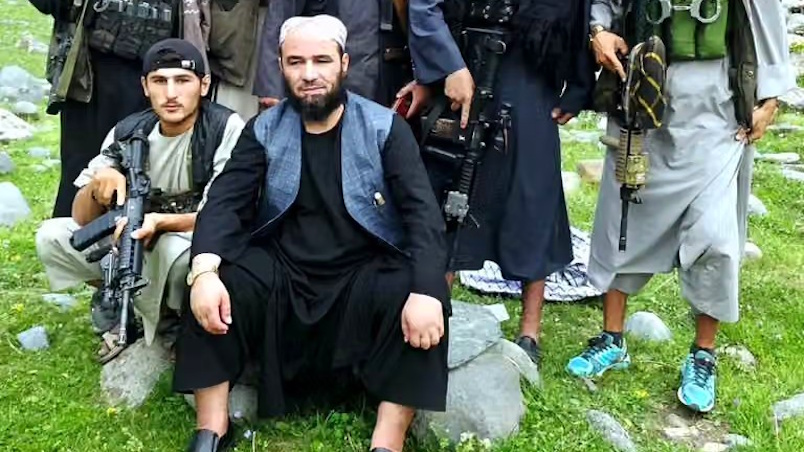
Jumakhan Fateh, a prominent local commander in the Darwaz region of northeastern Badakhshan province, has surrendered to Afghanistan’s Ministry of Defense forces following nearly a week of intense clashes between his armed followers and Taliban units, a senior Taliban official confirmed.
The official, speaking to the BBC on condition of anonymity due to the sensitivity of the matter, stated that Fateh surrendered unconditionally. He was subsequently transported by helicopter to Faizabad, the provincial capital, where he is reportedly being held pending further arrangements. A source close to Fateh also verified the surrender, although details about his current status remain scarce.
The hostilities first erupted in the Nusay district and quickly escalated, spreading to adjacent areas within Badakhshan, according to local residents and security sources. The fighting pitted Fateh’s loyalists against specialized forces from the Defense Ministry, and eyewitnesses reported heavy exchanges of fire. Both sides are said to have sustained casualties, and the unrest forced a number of families to flee their homes, seeking refuge in safer parts of the province or across the border.
The surrender came on the heels of negotiations between Fateh and a high-level Taliban delegation headed by Fasihuddin Fitrat, the army chief of staff. Fitrat had traveled to the region several days prior to assess the volatile security situation and mediate an end to the confrontation. His presence underscored the Taliban leadership’s concern over the standoff, which threatened to destabilize a strategically sensitive border area.
According to sources cited by the BBC, Fateh and his armed supporters had recently descended from their mountain strongholds following a tentative agreement. Some reports suggest that Fateh has since been integrated into the Taliban’s local military command structure, though this has not been officially confirmed.
The precise terms of the agreement have not been made public. However, security officials indicated that the complete disarmament of Fateh’s forces was a central and non-negotiable condition. It remains unclear whether Fateh himself will face further questioning, detention, or reassignment, and whether any of his followers will be absorbed into the Taliban’s formal security apparatus or demobilized entirely.
This incident highlights the persistent challenges facing the Taliban administration in consolidating authority over regional power brokers and armed factions. Although the group has effectively governed Afghanistan since August 2021, tensions with local commanders many of whom retain autonomous militias and deep-rooted tribal loyalties continue to surface, particularly in remote provinces like Badakhshan. The resolution of Fateh’s case may set a precedent for how the Taliban handles similar disputes in the future, balancing coercion with co-optation in its ongoing effort to centralize military control across the country.
Our Pashto-Dari Website

Support Dawat Media Center
If there were ever a time to join us, it is now. Every contribution, however big or small, powers our journalism and sustains our future. Support the Dawat Media Center from as little as $/€10 – it only takes a minute. If you can, please consider supporting us with a regular amount each month. Thank you
DNB Bank AC # 0530 2294668
Account for international payments: NO15 0530 2294 668
Vipps: #557320

Comments are closed.