
UNAMA Renews Urgent Call for Reopening Girls’ Schools and Universities in Afghanistan

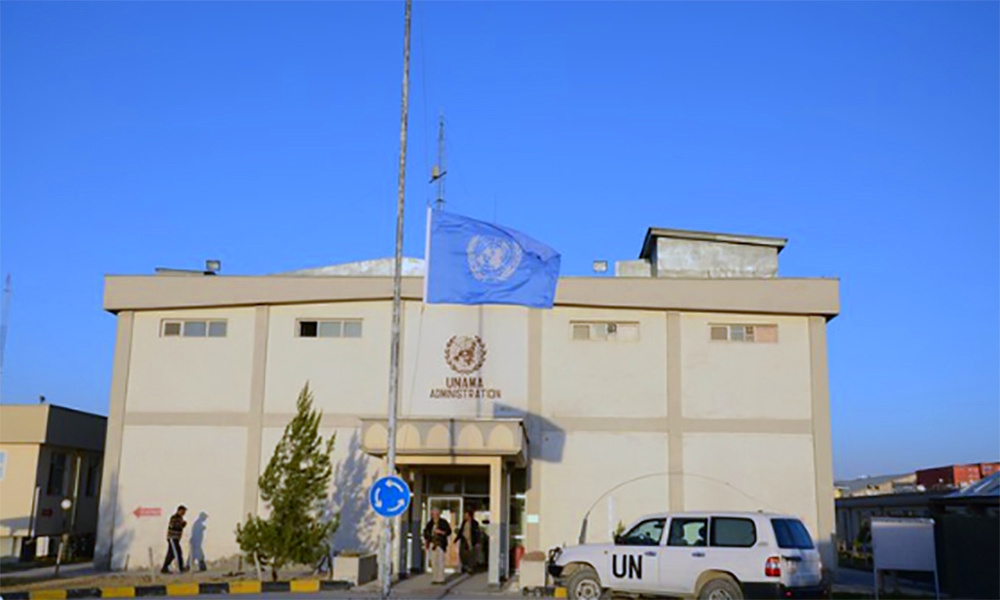
The United Nations has once again urged Afghanistan’s de facto authorities to immediately reopen secondary schools and universities to girls, reaffirming that all women and girls in the country must have unrestricted access to education at every level from primary through higher education.
The appeal was made by Georgette Gagnon, the acting head of the UN Assistance Mission in Afghanistan (UNAMA), during a field visit to Istalif, a historic district north of Kabul. There, she toured a girls’ primary school that has been equipped with computers through a UN Development Programme-supported initiative, highlighting how technology can expand learning opportunities even in constrained settings. Gagnon emphasized the transformative power of digital literacy for young girls and explicitly called on the Taliban authorities to dismantle all policies that bar girls from continuing their education beyond the primary cycle.
Afghanistan remains the only country in the world where secondary and higher education is formally prohibited for girls and women a distinction that international bodies have repeatedly condemned as a systematic violation of human rights. In a joint statement issued in January, UNESCO and UNICEF reported that approximately 2.2 million adolescent girls have been excluded from secondary school as a direct result of these restrictions. However, the full scale of the crisis is far more alarming. During a June 2026 briefing to the UN Security Council, Gagnon revealed that an estimated 3.8 million girls aged 7 to 18 are currently out of school, including more than 2.6 million adolescent girls. She further warned that roughly 250,000 additional girls are permanently shut out of secondary education each year, compounding the crisis with every passing cohort.
The ramifications of this prolonged exclusion extend well beyond classroom walls. UNESCO and UNICEF have cautioned that barring girls from education is systematically eroding Afghanistan’s future workforce, exacerbating critical shortages in professions such as teaching, medicine, nursing, and public administration fields already strained by years of conflict and underinvestment. Without female professionals, essential public services, particularly those serving women and children, face collapse.
Moreover, UNESCO’s 2025 education report paints a grim picture of the broader learning crisis. In 2024, more than 2.13 million primary-school-age children were out of school, and learning outcomes remain dire: over 90% of 10-year-olds are unable to read and comprehend a simple text. This foundational deficit threatens to produce a generation of young Afghans both boys and girls ill-equipped to participate in or rebuild their country’s economy and civic life.
The UN has repeatedly stressed that education is not a privilege but a fundamental right, enshrined in international law and essential to Afghanistan’s long-term social cohesion and economic recovery. Gagnon and other senior UN officials have warned that the continued exclusion of women and girls carries generational consequences not only depriving individuals of their futures but also entrenching poverty, dependency, and instability across the nation.
The latest appeal comes amid growing international consensus that the restrictions are not merely a humanitarian concern but a strategic liability. Diplomats and aid organizations have cautioned that if the current trajectory persists, Afghanistan risks losing an entire generation of educated women, severely undermining the country’s capacity to staff its health, education, and governance sectors for decades to come. The UN has reiterated its readiness to support inclusive educational policies and programs, but insists that the primary responsibility lies with the authorities in Kabul to reverse course and honor Afghanistan’s own commitments to universal education.
Our Pashto-Dari Website

Support Dawat Media Center
If there were ever a time to join us, it is now. Every contribution, however big or small, powers our journalism and sustains our future. Support the Dawat Media Center from as little as $/€10 – it only takes a minute. If you can, please consider supporting us with a regular amount each month. Thank you
DNB Bank AC # 0530 2294668
Account for international payments: NO15 0530 2294 668
Vipps: #557320

Comments are closed.