

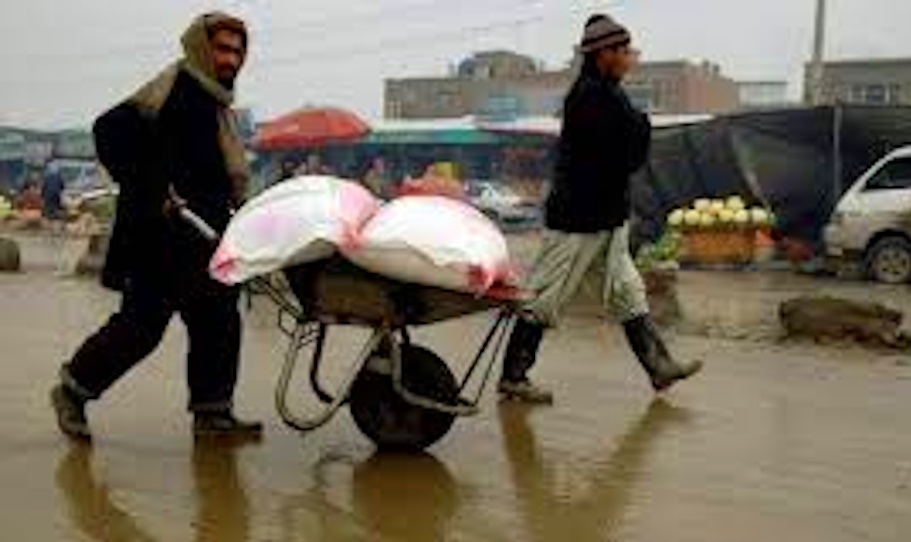
Afghan workers both inside the country and abroad observed International Labour Day this year not with celebrations, but with widespread complaints over unemployment, meager wages, and rapidly deteriorating living conditions. The annual day of labor solidarity came against the backdrop of a staggering humanitarian and economic crisis.
According to recent United Nations reports, unemployment in Afghanistan has reached a devastating 75 percent, while more than 90 percent of the population now lives below the poverty line. These figures mark one of the world’s deepest economic collapses.
Despite claims by the Taliban-led administration that job opportunities are improving, key economic indicators tell a different story. Afghanistan’s GDP has continued to fall, per capita income has dropped sharply, and the flow of humanitarian aid once a lifeline for millions has significantly diminished. The result, analysts say, is a worsening crisis with no immediate relief in sight.
For young Afghans, stable formal employment has become a rarity. Most workers survive on low, irregular wages through precarious and informal jobs such as daily labor, street vending, or seasonal agricultural work that offer no security or benefits.
Since the Taliban’s return to power in 2021, the economy has contracted sharply. The abrupt reduction of international aid, coupled with the freezing of Afghan central bank assets and limited private sector growth, has deepened both unemployment and poverty across urban and rural areas alike.
In response to the lack of domestic opportunities, hundreds of thousands of young Afghans have migrated abroad often undertaking dangerous journeys to neighboring countries or Europe. Many end up in low-paid, physically demanding jobs under difficult and sometimes exploitative conditions.
Workers on the ground say that economic hardship has forced countless families into survival mode, prioritizing daily food and shelter over any long-term planning. For the country’s growing young population, hopes for stable, long-term employment remain bleak.
One Afghan worker now living in France wrote on social media: “Life after the political changes in Afghanistan has forced many of our youth into labor abroad. Our futures are being reshaped under harsh conditions, far from home.” His words echo a generation’s displacement.
Meanwhile, a refugee in the United Kingdom expressed solidarity with Afghan workers worldwide, praising their resilience in the face of poverty, unemployment, and severely limited opportunities under the current administration.
Another Afghan youth based in the UK added: “Workers both inside Afghanistan and abroad carry the same burden building economic stability for their families and communities. We are exhausted, but we keep going.”
In a symbolic move, the Taliban-led Kabul administration has removed Labour Day from the official national calendar, along with other public observances such as Mother’s Day and commemorations related to Afghanistan’s former independence days. The erasure of Labour Day, in particular, has been seen by many as a further dismissal of workers’ rights and public expression.
As Afghanistan faces one of the world’s most severe employment crises, International Labour Day served not as a celebration of progress, but as a somber reminder of how far the country has fallen and how much its workers continue to endure.
Our Pashto-Dari Website

Support Dawat Media Center
If there were ever a time to join us, it is now. Every contribution, however big or small, powers our journalism and sustains our future. Support the Dawat Media Center from as little as $/€10 – it only takes a minute. If you can, please consider supporting us with a regular amount each month. Thank you
DNB Bank AC # 0530 2294668
Account for international payments: NO15 0530 2294 668
Vipps: #557320

Comments are closed.