
Afghanistan: Beyond Ethnic Labels and Toward the Rediscovery of a Nation
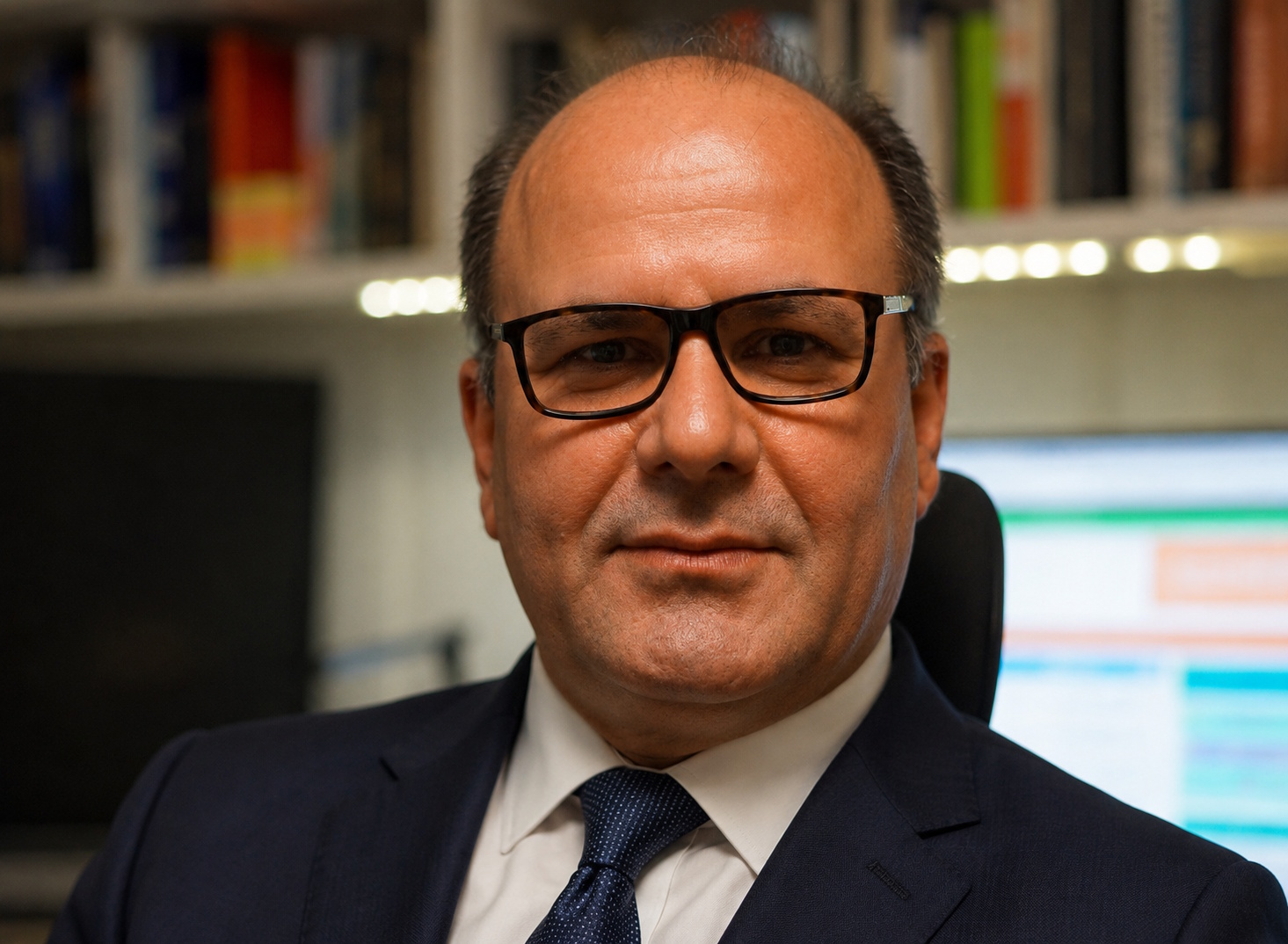
By: Mohammed Tariq Bazger

Our greatest tragedy may not be war itself.
Perhaps an even greater tragedy is that we have not yet learned how to think about, and live with, the consequences of war.
We continue to turn those who participated in violence into heroes, those who contributed to destruction into leaders, and those who violated the lives, dignity, freedoms, and rights of our people into figures from whom we expect salvation.
Our deepest pain is not merely that we have experienced war.
Our deeper pain is that we sometimes give the language of peace to the perpetrators of war.
The problem is not that Afghanistan contains ethnic, linguistic, religious, and regional differences.
The problem is that we have too often transformed these differences into criteria of loyalty rather than principles of justice.
I have no problem with Pashtuns, Tajiks, Hazaras, Uzbeks, or any other ethnic community of Afghanistan. Ethnicity neither makes a person a criminal nor a hero.
A human being must ultimately be judged by his or her actions.
If oppression is oppression when committed by someone from another community, then it must remain oppression when committed by someone from our own.
If a crime is a crime when committed by our political opponents, it must also be a crime when committed by those we admire.
This is where our political maturity is truly tested.
Before Every Other Identity: We Are Afghans
We must rediscover a simple yet profound truth:
Before our ethnic, linguistic, regional, political, or ideological identities, we are human beings who share a common destiny within Afghanistan.
Pashtuns, Tajiks, Hazaras, Uzbeks, Turkmens, Baloch, Nuristanis, Pashai, and all other communities of Afghanistan constitute parts of the country’s historical and social fabric.
Our differences should not become instruments for destroying our common home. They should become sources of richness within it.
We were not born merely to hide behind our ethnic identities.
We must develop a national identity within which ethnic identities are not instruments for eliminating one another, but components of a broader and shared Afghan identity.
Therefore, our foremost political and moral responsibility must be Afghanistan and the well-being of its people.
If an action benefits our particular ethnic group but harms Afghanistan as a whole, we must have the courage to ask ourselves:
Are we truly serving our community, or are we sacrificing the future of our country for a narrow interest?
Beyond the Philosophy of “Us” and “Them”
One of our deepest intellectual problems is that we often measure justice by two different standards.
We call the oppression of the “other” a crime, while searching for excuses when the same oppression is committed by “our own.”
We regard the crimes of our opponents as unforgivable, while explaining away the crimes of those within our own camp through history, political circumstances, necessity, or victimhood.
This is not justice.
It is group loyalty disguised as justice.
As long as our moral standards distinguish between “us” and “them,” we will continue to live with the mentality of war even after the guns have fallen silent.
A nation becomes a nation when the standards of law and morality apply equally to everyone.
History Should Be a School, Not a Tribunal
We must not forget our history. But neither should history become a tool for poisoning future generations.
The purpose of remembering history should not be revenge.
Its purpose should be understanding.
We should not teach our children:
“Your people are enemies of their people.”
Rather, we should teach them:
“Previous generations made mistakes. Learn from them, and do not repeat them.”
The greatest lesson of history is not simply to identify who our enemies were.
It is to ask:
Why did we become enemies? What did we lose? And how can we ensure that we never repeat those failures?
A nation that remembers only its victims while forgetting its own responsibilities constructs an incomplete history.
And a nation that sees only the crimes of others while refusing to acknowledge the crimes committed by its own people has not yet learned the meaning of justice.
Who Is a Hero?
We must reconsider what we mean by the word hero.
A hero is not simply someone whose name is widely celebrated.
A hero is not someone who merely evokes strong emotions within a particular group.
A hero is not someone whose political mythology is built upon a long history of conflict.
A hero is someone who values human life, stands against injustice, accepts the rule of law even when confronted with power, and places the common good above personal or group interests.
Likewise, a leader is not merely someone whom people call a leader.
A genuine leader is someone who:
- accepts responsibility;
- respects the rights of others;
- recognizes the humanity of political opponents;
- submits to the rule of law;
- accepts accountability for past actions;
- recognizes legitimate limits on power;
- and refuses to sacrifice the future of the country for personal authority.
Therefore, our first question should not be:
“Who is he?”
It should be:
“What has he done?”
Afghanistan Does Not Belong to Politicians
Afghanistan is not the private property of a leader, a political party, an ethnic group, a region, or an ideology.
Afghanistan is the common home of millions of human beings.
The farmer working in a village, the teacher educating children, the student struggling to build a future, the entrepreneur contributing to the economy, the mother raising her children, and the young person dreaming of a better country these are among Afghanistan’s greatest assets.
Politics in Afghanistan should exist for the sake of people’s lives.
People’s lives should not exist for the sake of politics.
We need a political culture that asks:
How can we protect and improve human life?
Not one that constantly asks:
How can we preserve power?
From Emotional Loyalty to Rational Patriotism
Patriotism does not mean defending every mistake committed by one’s country.
True patriotism means having the courage to acknowledge a country’s weaknesses in order to reform it.
If we genuinely love Afghanistan, we must be honest about Afghanistan’s shortcomings.
If there is injustice in our society, we must call it injustice.
If there is corruption, we must call it corruption.
If there is ethnic discrimination, we must call it discrimination.
If a political leader we admire commits a wrong, we must evaluate the action rather than surrender our judgment to the person’s name or reputation.
Patriotism is not blind defense; it is responsibility.
From Slogans to Practical Responsibility
An idea becomes meaningful only when it is translated into action.
The transformation can begin with each of us.
1. Judge people by their character and conduct rather than by their ethnicity.
2. Apply the same moral and legal standards to our own side as we apply to others.
3. Stop glorifying individuals whose actions have contributed to the violation of people’s rights.
4. Replace emotionally driven historical narratives with evidence-based and plural perspectives on the past.
5. Teach our children the values of coexistence, law, responsibility, and human dignity rather than ethnic hatred.
6. Before sharing provocative ethnic or political content on social media, ask whether it contributes to building Afghanistan or further divides it.
7. Evaluate political leaders according to their policies, record, competence, integrity, and accountability—not merely according to their slogans or affiliations.
8. Contribute, within our individual capacities, to education, economic development, social service, the rule of law, civic participation, and other legitimate efforts that can help create a more stable, just, and prosperous Afghanistan.
Our Choice: The Repetition of History or the Creation of a New Future?
We have two paths before us.
One is to continue asking the old questions:
“Which ethnic group do you belong to?”
“Who is your leader?”
“Who are our enemies?”
“Who are our people?”
The other is to ask fundamentally different questions:
“What are you doing for Afghanistan?”
“How accountable is your leader?”
“Is our real enemy another ethnic group, or is it injustice?”
“Does every person in Afghanistan deserve equal dignity and equal rights?”
Afghanistan’s future will not be built solely through weapons, political agreements, or changes in government.
Before Afghanistan can transform politically, it must transform intellectually.
For if our underlying way of thinking remains unchanged, leaders may change while politics remains the same.
Slogans may change while political culture remains unchanged.
Flags may change while the logic of domination survives.
We must raise a generation that does not define the dignity of its own community through the humiliation of another; that does not defend its leaders at the expense of truth; and that does not confuse patriotism with hostility toward others.
The Final Principle
Before anything else, we are Afghans.
Our ethnic identities are part of our history, but they must never become prisons for our future.
Our past is part of our identity, but it must not become the destiny of our children.
Our leaders are part of our political life, but they must never occupy the place of our conscience.
Our political movements are parts of our society, but Afghanistan must never become the possession of any political movement. Rather, every political movement must remain accountable to Afghanistan.
Let our guiding principles therefore be:
Human dignity before political loyalty;
justice before faction;
law before power;
Afghanistan before narrow group interests;
and humanity before politics.
We do not need to invent another enemy in order to save our country.
We need to transform the way we think.
For nations are not built by geography alone.
Nations are built through shared values, shared responsibility, and a shared vision of the future.
And if we truly want Afghanistan to become once again a common home for all Afghans, we must begin not with the question:
“What can I do for my ethnic group?”
but with a greater question:
“What can I do for Afghanistan and for all the people of Afghanistan?”
That is the beginning of the journey from ethnic loyalty to national responsibility.
That is the beginning of leaving behind the mentality of past wars and moving toward the Afghanistan of the future.
Pakistan’s Strategic Miscalculation: The Futility of Military Coercion in Afghanistan
Our Pashto-Dari Website

Support Dawat Media Center
If there were ever a time to join us, it is now. Every contribution, however big or small, powers our journalism and sustains our future. Support the Dawat Media Center from as little as $/€10 – it only takes a minute. If you can, please consider supporting us with a regular amount each month. Thank you
DNB Bank AC # 0530 2294668
Account for international payments: NO15 0530 2294 668
Vipps: #557320

Comments are closed.