

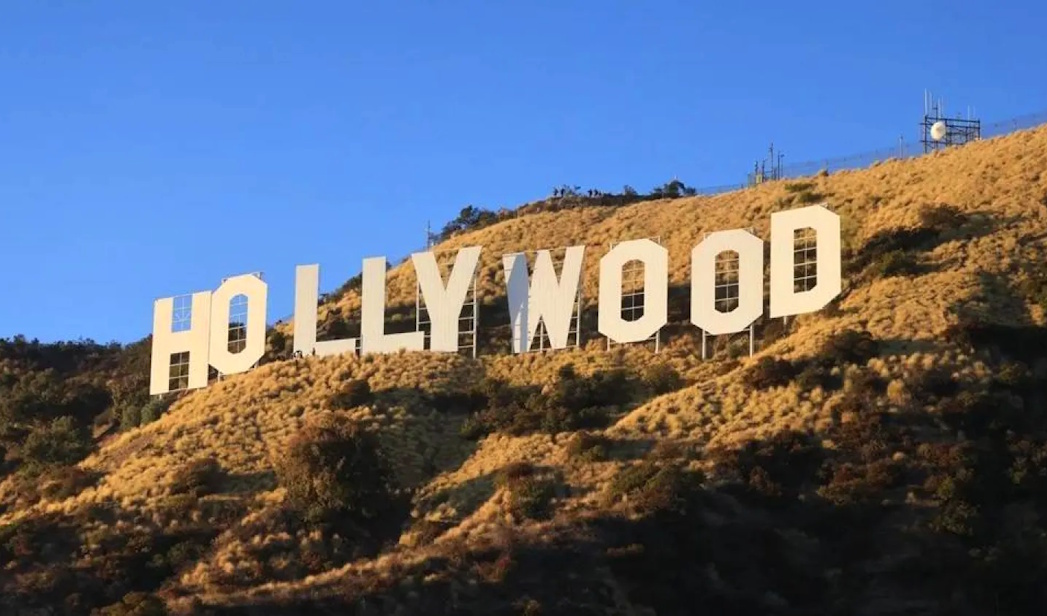
The Golden Trailer Awards, often described as Hollywood’s equivalent of the Oscars for movie previews, returned for their 26th annual ceremony on Thursday, celebrating the creative professionals responsible for crafting some of the film industry’s most memorable marketing campaigns.
While actors, directors, and producers regularly receive public recognition for their contributions to cinema, the talented editors, writers, sound designers, and creative teams who produce movie trailers have historically worked behind the scenes with little acknowledgment. The Golden Trailer Awards were established to change that.
The awards ceremony was founded in 1999 by Monica Brady and Evelyn Watters after they discovered how difficult it was to identify and hire professionals specializing in trailer production.
“Trailer editors, the people creating some of the most memorable moments of the moviegoing experience, were completely unrecognized,” Brady told AFP. “They weren’t credited on trailers, they weren’t credited in films, and there wasn’t even a directory to find them.”
What began as a modest industry event in New York has since evolved into a major annual celebration honoring excellence in film marketing. During the inaugural ceremony, Brady and Watters presented just 19 awards. Today, the event recognizes achievements across more than 100 categories, reflecting the growing importance and sophistication of movie trailers in modern entertainment.
Held this year in Los Angeles, the ceremony brought together some of the industry’s leading creative agencies and marketing professionals. The evening’s highest honor, the Best of Show award, was presented to the trailer for the highly anticipated science-fiction film Project Hail Mary, starring Ryan Gosling. The winning trailer was created by Wild Card Creative Group and was praised for its compelling storytelling, suspenseful pacing, and emotional impact.
What Makes a Great Trailer?
For audiences, a trailer is often their first introduction to a film. In just a few minutes, it must capture attention, spark curiosity, and persuade viewers to buy a ticket. According to co-founder Evelyn Watters, successful trailers share several essential ingredients.
“What makes a great trailer, first and foremost, is a great hook,” Watters explained.
She noted that award-winning trailers often feature a fresh storyline, memorable characters, emotional resonance, and a unique element that distinguishes them from countless other releases competing for audience attention.
“A winning trailer is a tempting appetizer,” she said. “It is not the whole meal.”
The challenge lies in revealing just enough of a story to intrigue viewers while withholding key plot details. The most effective trailers create anticipation rather than simply summarizing a film.
The Art of Trailer Editing
Taylor Engel, a creative director at Create Advertising Group, understands these challenges firsthand. His company received 16 nominations this year for its work on projects including Sinners, Tron: Ares, and the hit television series Only Murders in the Building.
According to Engel, creating a trailer is much like assembling a complex puzzle. The materials available at the beginning of a project can vary significantly.
“We get materials at the beginning of the project, and it could be anything,” Engel said. “Sometimes you get the movie, sometimes you get just dailies—the scenes that were shot.”
From those raw materials, editors must build a concise and engaging narrative by carefully selecting footage, music, sound effects, dialogue, and visual transitions. The goal is not always to replicate the exact experience of the film but sometimes to present it in a way that best highlights its appeal.
“The challenge is combining all those elements to tell maybe a different story or showcase the movie in some way,” Engel explained.
A Competitive and Evolving Industry
Movie trailers have undergone a dramatic transformation over the decades. Early trailers often relied on dramatic narration and lengthy plot summaries, while modern previews tend to emphasize cinematic visuals, rapid editing, emotional beats, and carefully synchronized music.
As streaming platforms, social media, and online video services have expanded, competition for audience attention has become more intense than ever. Studios increasingly rely on trailers to generate excitement and establish a film’s identity in a crowded entertainment marketplace.
In some cases, trailers become so effective that they generate more enthusiasm than the films they advertise. The Golden Trailer Awards even recognize this phenomenon through a unique category known as the “Golden Fleece,” awarded to trailers that outshine their corresponding movies.
Among this year’s nominees were trailers for the horror films Shell, starring Elisabeth Moss, and The Strangers: Chapter 3.
Creativity Over Artificial Intelligence
Despite the rapid adoption of artificial intelligence across many sectors of the entertainment industry, trailer production remains largely driven by human creativity.
Engel believes that the artistic decisions involved in trailer editing are difficult to replicate with automated tools.
“Every cut is very specific in why you pair a shot with a certain piece of music,” he said.
While AI technologies may become increasingly capable of analyzing patterns and recreating familiar styles, Engel argues that truly exceptional trailers depend on originality and creative intuition.
“AI tools may get better at recreating what’s been done in the past,” he noted, “but what’s exciting about trailers is when you see something that you’ve never seen before—when you see it done in a different way.”
For now, the heart of trailer-making remains a distinctly human craft, one that combines storytelling, emotion, music, and visual artistry into a few unforgettable minutes. As the Golden Trailer Awards continue to grow in prestige, they serve as a reminder that some of Hollywood’s most influential storytellers work not on the big screen itself, but in the previews that bring audiences into theaters.
Support Dawat Media Center
If there were ever a time to join us, it is now. Every contribution, however big or small, powers our journalism and sustains our future. Support the Dawat Media Center from as little as $/€10 – it only takes a minute. If you can, please consider supporting us with a regular amount each month. Thank you
DNB Bank AC # 0530 2294668
Account for international payments: NO15 0530 2294 668
Vipps: #557320

Comments are closed.