

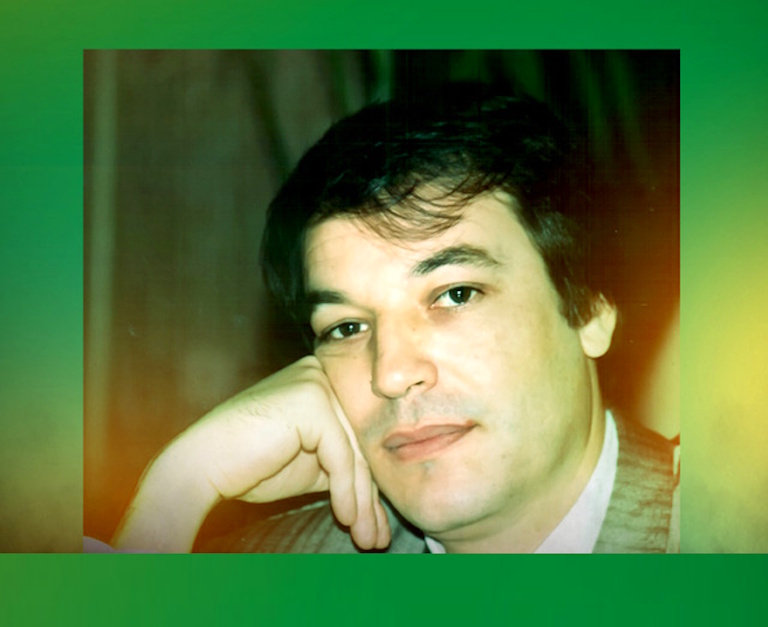
Afghan singer Wahid Saberi, whose musical journey began with improvised performances on classroom desks at a Kabul high school, has died in Tashkent, Uzbekistan. He was 70.
Saberi was found dead in his apartment on Saturday, November 21, after friends went to check on him following several unanswered calls. According to a journalist with Afghanistan International, Bahar Amada, who spoke with people close to the singer, his cup of tea was reportedly still full, suggesting he may have been dead for several days. The head of the Afghan community in Tashkent, Nematullah Rahmani, confirmed the news to VOA and Radio Azadi, adding that Saberi had been under doctors’ supervision for a heart condition for some time.
His death has prompted a widespread outpouring of tributes from Afghan musicians, writers, and fans, marking the loss of a familiar voice whose songs became part of the cultural memory of generations.
A Shining Star of Afghan Music
Wahid Saberi shone like a bright star in the sky of Afghanistan’s music over the past decades, particularly during the 1960s and 1970s, through his sweet and heartwarming songs. He was a key figure in the music group “Baran” (Rain), a collective that played a fundamental role in the development of Afghanistan’s contemporary folk music and brought together a number of talented artists, including Farhad Darya.
Saberi’s voice and art are tied to an important period in Afghanistan’s music that combined traditional colors with contemporary folk styles, making a significant contribution to the structure of the country’s modern music. His work helped bridge the gap between classical Afghan traditions and the emerging folk-pop sound that would come to define the era.
A Legacy of Lasting Memories
Saberi’s songs, including “Do Mawjud Ze Hasti Gerami-tar Ast” (Two Beings Are Dearer Than Life), “Abrha Agar Bibarand” (If the Clouds Rain), and “Yak Roz-e Boland-e Aftabi” (One Long Sunny Day), form an unforgettable part of the musical memories of different generations of Afghans. The song “Bahar Amad” (Spring Has Come), performed by the “Baran” group, is also considered one of his well-known artistic works.
His music resonated across generations and borders, blending poetic lyrics with melodies that captured both the joys and sorrows of Afghan life. For many, his songs served as a soundtrack to moments of national celebration and personal reflection alike.
From the Boxing Ring to the Recording Studio
Saberi’s path into music was unconventional. It began during his teenage years at Habibia High School in Kabul, where he would sing for classmates during school breaks, using classroom desks as makeshift drums. In a 2019 interview published by Hasht-e Subh, he recalled that while wealthier students spent their breaks at the school canteen, he and his friends gathered to make music and enjoy themselves. He described those informal performances as the beginning of his singing career.
Before pursuing music professionally, Saberi practised boxing and said he had won a championship in the 62-kilogram weight category. He later built a rudimentary drum kit from five-litre fuel containers and a washbasin, using it to accompany his singing.
He subsequently joined Kabul Group, led by musician Wahid Delawari, where he played percussion. His breakthrough came during an audition at Afghanistan’s national radio and television broadcaster. Although he had initially gone to take a test as a drummer, he seized an opportunity to sing Ahmad Zahir’s song “Az Ghamat Ey Nazanin.” Members of the audition panel initially mistook the recording for Zahir’s voice before learning it belonged to the young Saberi a moment that marked the discovery of a major new talent.
He recorded his first song for national radio and television in 1978. In the early 1980s, he joined the Baran music group, which included Farhad Darya, and became known for songs that remained popular with Afghan audiences. Saberi also performed internationally, including at the Red Carnation festival in Russia, where he reportedly won third place in a competition featuring artists from 28 countries.
A Life in Exile and a Continuing Legacy
Saberi left Afghanistan for Tajikistan in 1992 and later moved to Uzbekistan, where he continued his musical career. Over the years, he recorded more than 100 songs, according to his 2019 interview, and continued performing and recording music after his departure from Baran. His career also took him to several countries, including India, where he said he recorded songs with an Indian symphony orchestra.
Grief of Artists and Fans
The news of Wahid Saberi’s death has stirred deep sorrow and grief among the country’s artists and his countless fans. Numerous well-known singers and artists, including Farhad Darya, have shared messages of condolence, and social media users have also expressed their grief over his death.
Singer Farhad Darya, a former colleague in the Baran music group, wrote that his tears were falling like raindrops. Singer Aryana Sayeed said the news had broken her heart and urged people to value one another while they could.
Saberi’s death marks the loss of a beloved voice in Afghan music, whose songs became part of the cultural memories of generations. His career which began with classmates gathered around classroom desks in Kabul and grew into a body of work remembered by Afghan audiences at home and abroad stands as a testament to the enduring power of music to transcend displacement and time.
Support Dawat Media Center
If there were ever a time to join us, it is now. Every contribution, however big or small, powers our journalism and sustains our future. Support the Dawat Media Center from as little as $/€10 – it only takes a minute. If you can, please consider supporting us with a regular amount each month. Thank you
DNB Bank AC # 0530 2294668
Account for international payments: NO15 0530 2294 668
Vipps: #557320
