
The Secret Power of Your Spice Rack: How Black Pepper and Olive Oil Supercharge Nutrition

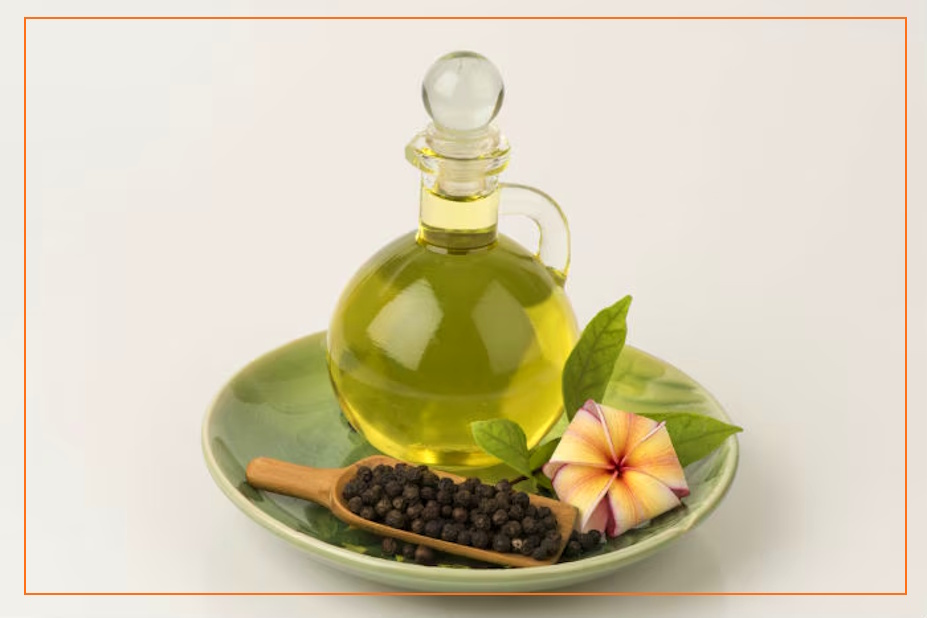
For millennia, black pepper has been a treasured commodity—first cultivated in India over 3,500 years ago and traded across ancient civilizations. Today, we casually sprinkle it on our meals, often unaware that this humble spice, alongside a drizzle of olive oil, may be quietly amplifying the nutritional value of everything on our plates.
Beyond Flavor: The Science of Nutrient Absorption
The journey from fork to bloodstream is more complex than we realize. Even the most nutrient-dense foods must navigate our digestive system, where vitamins and minerals can slip away unabsorbed. Consider sweetcorn: packed with fiber, protein, and potassium, yet its waxy outer casing often passes through undigested, locking nutrients inside.
“When you eat sweetcorn without adequate chewing, it passes all the way through and ends up in your toilet, with all the nutrients still trapped inside,” explains David Julian McClements, Professor of Food Science at the University of Massachusetts. This illustrates a fundamental principle: nutrients must first be liberated from food’s complex matrix—the intricate network of proteins, carbohydrates, and fats that gives food its structure.
The Fat-Soluble Dilemma
For vitamins A, D, E, and K—classified as fat-soluble—absorption presents a unique challenge. These vitamins cannot dissolve in water alone.
“If you eat them without any fat, they simply pass through your gastrointestinal tract,” says McClements. Fat triggers the formation of microscopic particles called micelles, which encapsulate the vitamins and ferry them through digestive fluids to intestinal cells for absorption.
This explains why populations consuming Mediterranean diets—rich in olive oil alongside vegetables—often show remarkable health outcomes. The oil isn’t just adding calories; it’s activating nutrients.
When Absorption Fails: The Medical Perspective
For some, nutrient absorption is a medical challenge. Conditions like Crohn’s disease, celiac disease, or chronic pancreatitis can damage the gut lining or impair enzyme production, hindering fat digestion and, consequently, fat-soluble vitamin uptake.
“Vitamin supplements should not be used universally,” cautions JoAnn Manson, Professor of Medicine at Harvard Medical School. “But for those with malabsorption syndromes, a multivitamin can be appropriate.”
Yet, supplements come with their own limitations: isolated vitamins are often poorly absorbed compared to those in whole foods.
Nano-Solutions: Science Mimics Tradition
To overcome this, researchers are engineering clever delivery systems. McClements and his team found that encapsulating beta-carotene (a vitamin A precursor) within nano-sized fat droplets increased its bioavailability by 20%.
Similarly, Canadian scientists at the University of Alberta boosted vitamin D absorption by encasing it in nanoparticles made from pea protein.
But the real breakthrough came when McClements recognized that science was merely rediscovering ancient wisdom.
The Black Pepper Revelation
When McClements added black pepper to salads with healthy fats, something remarkable happened: nutrient absorption surged further. The secret lies in piperine, a compound in pepper that blocks intestinal transporters which would otherwise eject certain nutrients back into the gut.
This mechanism explains why traditional Ayurvedic “golden milk”—turmeric simmered with milk and black pepper—has endured for centuries. McClements’ modern formulations, it turns out, echoed a thousand-year-old recipe.
“We compared all these delivery systems, and the best one was little lipid droplets that look a lot like milk,” he recalls. “Then I saw golden milk advertised—it was exactly the same formulation, but they did it 1,000 years ago.”
Your Kitchen, Optimized
So, what can we do daily to maximize nutrition?
-
Pair Smartly: Combine fat-soluble vitamin sources (like leafy greens, carrots, or tomatoes) with healthy fats. A spinach salad benefits enormously from an olive oil dressing.
-
Choose Your Fats Wisely: Not all fats are equal in aiding absorption. McClements’ research found olive oil nanoparticles significantly boosted carotenoid absorption, while coconut oil did nothing. “Carotene is too big to fit inside coconut oil’s small micelles,” he explains. “It’s like trying to get an elephant into a Mini Cooper.”
-
Embrace Seasoning: Don’t underestimate black pepper. Its piperine enhances absorption of curcumin (in turmeric) and various vitamins.
-
Mind Antinutrients: Plants contain compounds like oxalates (in spinach) or glucosinolates (in broccoli) that can bind minerals. Variety in your plant intake ensures these don’t hinder overall nutrition.
-
Supplement with Meals: If you take supplements, consume them with a meal containing healthy fats—like yogurt or milk—to improve uptake.
The Bigger Picture
This intersection of ancient culinary tradition and modern science reveals a profound truth: how we eat is as important as what we eat. The sprinkle of pepper, the drizzle of oil—these aren’t mere embellishments. They are amplifiers of nourishment, honed through millennia and now validated in laboratories.
In a world obsessed with superfoods and supplements, perhaps the real secret lies in the symbiotic relationships on our plates. As McClements’ work suggests, sometimes the most advanced nutritional technology is already in our pantry, waiting to be rediscovered.
Our Pashto-Dari Website


Support Dawat Media Center
If there were ever a time to join us, it is now. Every contribution, however big or small, powers our journalism and sustains our future. Support the Dawat Media Center from as little as $/€10 – it only takes a minute. If you can, please consider supporting us with a regular amount each month. Thank you
DNB Bank AC # 0530 2294668
Account for international payments: NO15 0530 2294 668
Vipps: #557320

Comments are closed.