

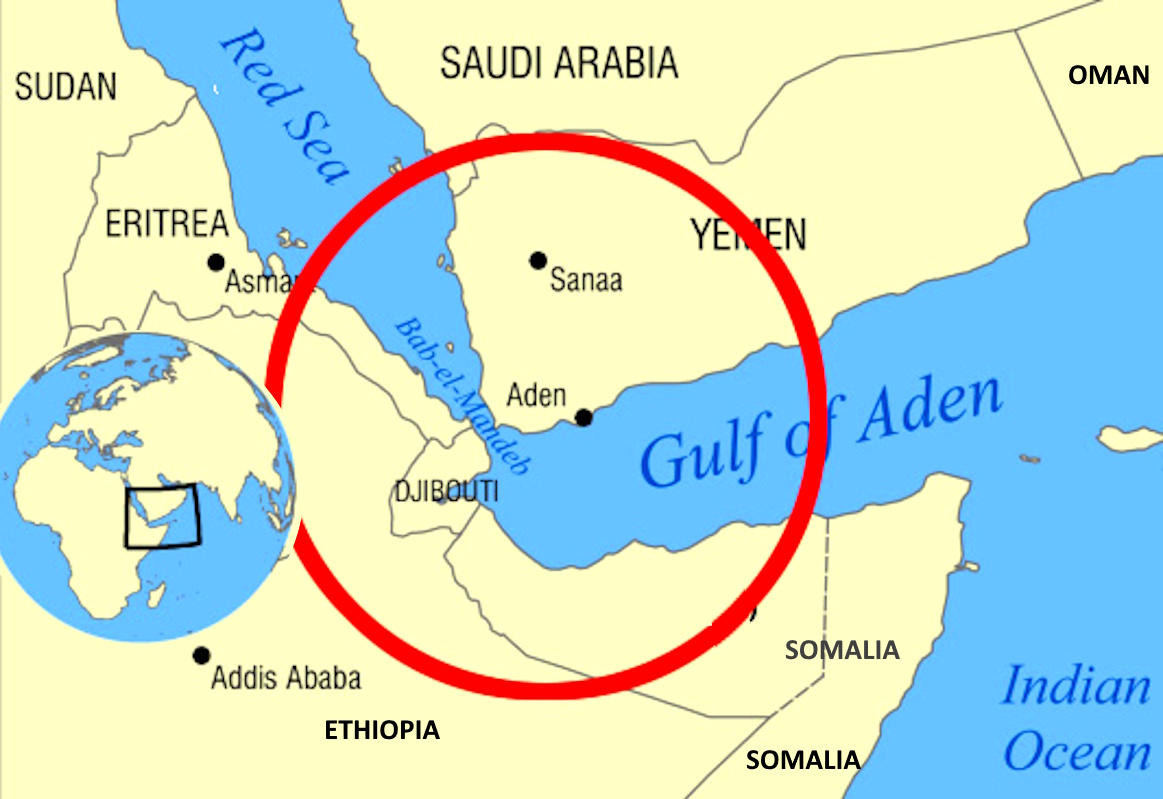
SANA’A / JERUSALEM — Yemen’s Iran-backed Houthis confirmed on Saturday that they have launched their first missile attack on Israel since the outbreak of the current US-Israeli war against Iran. The dramatic escalation marks the group’s formal entry into the widening conflict, raising the specter of a multi-front regional war and renewed threats to one of the world’s most critical maritime chokepoints.
The Israeli military stated early Saturday that it had identified a missile launch from Yemeni territory—the first such launch since the war began. The Israeli Air Force intercepted a single missile; there were no reports of casualties or damage. Sirens had sounded in the southern city of Beersheba and near Israel’s main nuclear research center, areas that have been repeatedly targeted by Iran and Hezbollah in recent days.
The Houthis’ military spokesperson, Brigadier-General Yahya Saree, announced the attack on the rebels’ Al Masirah satellite television channel, stating that a barrage of ballistic missiles had been fired at what he described as “sensitive Israeli military sites” in southern Israel. Saree framed the operation as a direct response to ongoing strikes against infrastructure in Iran, Lebanon, Iraq, and the Palestinian territories.
“Our operations will continue until the declared objectives are achieved and until the aggression against all fronts of the resistance ceases,” Saree said.
The attack came just hours after the Houthis signaled on Friday that they were prepared to act if what they termed an “escalation” against Iran and the “axis of resistance” continued. While Friday’s statement was vague, Saturday’s missile barrage made clear that the group—which has controlled Yemen’s capital, Sana’a, since 2014—is now a direct participant in the conflict.
A ‘Significant’ Expansion of the War
The Houthis’ entry into the war dramatically widens the battlefield. Iran-aligned factions in Lebanon and Iraq have already been engaged in hostilities triggered by US and Israeli strikes on Tehran four weeks ago. The addition of the Houthis, however, introduces a unique strategic threat due to their proven ability to launch long-range strikes and disrupt global shipping.
“This is very significant,” said Mohamad Elmasry, a professor of Media Studies at the Doha Institute for Graduate Studies. “We have seen over the past two and a half years that the Houthis have significant power. If they decided to move to shut down the Bab al-Mandeb strait and the Red Sea, we would have two major choke points [closed] along with the Strait of Hormuz. These are major international shipping waterways.”
The Bab al-Mandeb strait, a narrow passage at the southern tip of the Red Sea, is a critical artery for global trade. During the Israel-Hamas war, the Houthis launched a sustained campaign against commercial shipping in the Red Sea, attacking more than 100 merchant vessels with missiles and drones between November 2023 and January 2025. That campaign sank two ships, killed four sailors, and forced major shipping lines to reroute around the Cape of Good Hope, adding significant costs and delays.
Mohammed Mansour, the Houthis’ deputy information minister, hinted at a return to such tactics, telling local media on Saturday, “We are conducting this battle in stages, and closing the Bab al-Mandeb strait is among our options.” Al Jazeera’s Yousef Mawry, reporting from Sana’a, noted that a renewed naval blockade on Israel-linked ships would deal a severe blow to Israel’s economy, as roughly 30 percent of its imports transit the Red Sea.
Strategic Implications and Risks of Escalation
The Houthis’ involvement also complicates US naval deployments in the region. The aircraft carrier USS Gerald R. Ford recently docked in Crete for repairs. If it is redeployed to the Red Sea, it could face the same high-tempo, persistent drone and missile attacks that plagued the USS Dwight D. Eisenhower in 2024 and the USS Harry S. Truman during the 2025 American campaign against the Houthis.
Ibrahim Jalal, a senior researcher on Yemen and the Gulf, described the renewed threat to shipping as “very alarming, especially when it’s compounded by a coordinated multi-strait blockade. This is exactly the theatre that Iran has been preparing for from what we have seen in the past few years with the Houthis.”
For Israel, the opening of a third front—in addition to ongoing hostilities with Iran and Hezbollah—is likely to intensify domestic scrutiny of the government’s military strategy. “The opening of a new front raises further questions in Israel on the viability of the operations and the way the government is conducting its war,” said Al Jazeera’s Nida Ibrahim, reporting from the occupied West Bank. “We are expecting Israel to retaliate to this attack, as we have seen them do time and again when Yemen joined the battle during the war in Gaza.”
Our Pashto-Dari Website

Support Dawat Media Center
If there were ever a time to join us, it is now. Every contribution, however big or small, powers our journalism and sustains our future. Support the Dawat Media Center from as little as $/€10 – it only takes a minute. If you can, please consider supporting us with a regular amount each month. Thank you
DNB Bank AC # 0530 2294668
Account for international payments: NO15 0530 2294 668
Vipps: #557320

Comments are closed.