

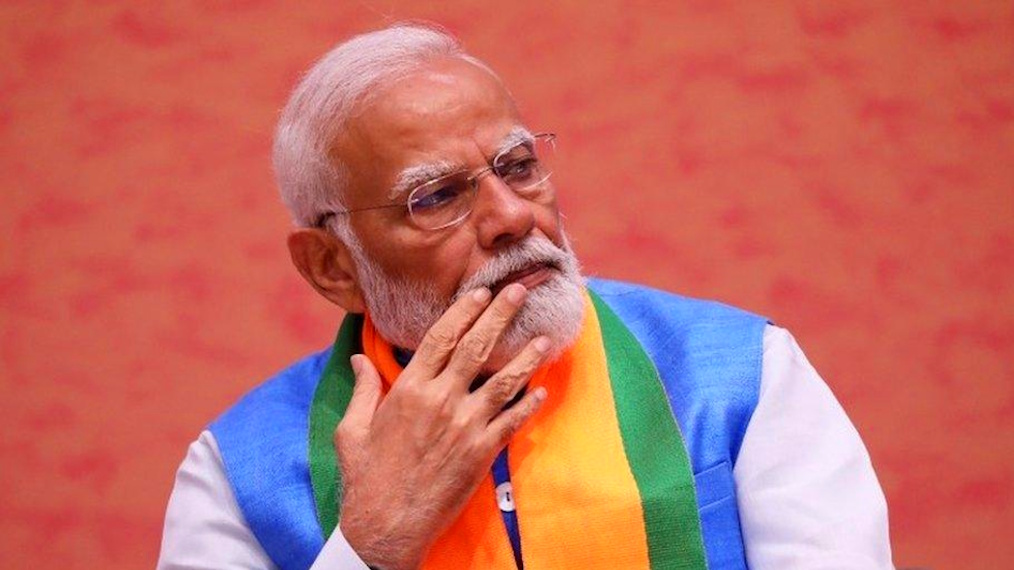
Trade, green technology, Arctic cooperation and shifting global geopolitics dominate talks as Indian Prime Minister Narendra Modi visits Oslo for the third India-Nordic Summit.
Oslo, Norway — Indian Prime Minister Narendra Modi is in Oslo for the third India-Nordic Summit, as India and the five Nordic nations seek to expand strategic cooperation in trade, clean energy, innovation, and Arctic affairs amid growing global economic uncertainty.
The summit brings together Norway’s Jonas Gahr Støre, Denmark’s Mette Frederiksen, Finland’s Petteri Orpo, Iceland’s Kristrún Frostadóttir, and Sweden’s Ulf Kristersson.
The meeting comes months after India and the European Union signed a landmark free trade agreement and a year after India concluded a trade and economic partnership deal with the European Free Trade Association (EFTA), comprising Norway, Iceland, Switzerland and Liechtenstein.
Modi’s visit is historic the first by an Indian prime minister to Norway in more than four decades, since Indira Gandhi visited in 1983.
A Strategic Agenda
Leaders are expected to focus on:
- Expanding bilateral trade and investment
- Green transition and renewable energy cooperation
- Emerging technologies and digital innovation
- Maritime security and the blue economy
- Defence and industrial collaboration
- Arctic governance and scientific cooperation
- Global security challenges, including Russia’s war in Ukraine and instability in the Middle East
India’s Ministry of External Affairs said the summit aims to add “a more strategic dimension” to India’s partnerships with Nordic countries, particularly in sustainability, defence, space and Arctic research.
Trade between India and Nordic nations reached $19 billion in 2024, underlining growing commercial ties.
Major Nordic companies already have significant footprints in India, including Nokia, Volvo and IKEA. Meanwhile, Indian shipyards are building vessels representing nearly 11 percent of Norway’s current commercial ship order book.
Experts say India sees Nordic countries as valuable partners due to their leadership in green innovation and advanced industrial technologies.
“The Nordics are global leaders in clean energy, sustainability and digital transformation — all areas aligned with India’s development priorities,” analysts say.
Energy Security in Focus
The summit takes place against the backdrop of mounting global instability.
Russia’s war in Ukraine, former US President Donald Trump’s tariffs on global imports, and the economic shockwaves from the US-Israel-Iran conflict have disrupted global supply chains and energy markets.
For India, heavily reliant on imported energy, diversification has become urgent.
Nordic expertise in offshore wind, hydropower, geothermal systems and energy-efficient industrial systems could help India accelerate its clean-energy transition while reducing strategic vulnerabilities.
India’s Arctic Ambitions
One of the summit’s most closely watched discussions concerns India’s growing Arctic strategy.
Although India has no Arctic border, it has maintained scientific engagement there for more than a century through the Svalbard Treaty, which grants signatory nations access to research and commercial activity in Norway’s Arctic territory of Svalbard.
India established its Arctic research station Himadri Research Station in 2008 and later deployed IndARC, its first underwater Arctic observatory.
New Delhi is now reportedly seeking an India-Nordic Arctic cooperation mechanism, leveraging Nordic membership in the Arctic Council.
India’s 2022 Arctic policy describes the region as an emerging arena of global strategic competition, particularly as Russia expands military infrastructure and China advances its “Polar Silk Road” ambitions.
India is also exploring Arctic-linked trade routes through its proposed Eastern Maritime Corridor, connecting Indian ports with Russia’s Far East.
Managing Differences Over Russia
The Nordic states remain among Europe’s strongest critics of Moscow’s invasion of Ukraine, while India has maintained longstanding defence and energy ties with Russia.
India has repeatedly called for peace but has avoided directly condemning Moscow and sharply increased imports of discounted Russian oil during the war.
Still, New Delhi has recently moved to diversify suppliers following US tariff pressure and shifting geopolitical calculations.
Analysts say while differences remain, both India and Nordic nations are prioritising broader strategic convergence.
Modi’s Broader European Push
Oslo is part of Modi’s wider diplomatic push across Europe.
In Norway, India upgraded ties to a Green Strategic Partnership.
In Sweden, Modi and Kristersson agreed to pursue a doubling of bilateral trade and investment within five years.
In the Netherlands, India’s Tata Electronics signed a semiconductor cooperation agreement with Dutch chipmaking giant ASML.
The visit also drew criticism over concerns about minority rights and press freedom in India, raised publicly by Dutch officials.
Modi is expected to conclude his European tour in Rome with talks with Italian Prime Minister Giorgia Meloni.
Why This Summit Matters
For India, the summit is about far more than diplomacy.
It reflects New Delhi’s strategy to diversify economic partnerships, secure energy resilience, gain access to advanced technologies, and strengthen influence in emerging strategic theatres like the Arctic.
For Nordic countries, India represents one of the world’s fastest-growing major economies and an increasingly important partner in an era of global uncertainty.
As geopolitical fault lines deepen, Oslo may mark another step in reshaping Europe-India relations for the next decade.
Our Pashto-Dari Website

Support Dawat Media Center
If there were ever a time to join us, it is now. Every contribution, however big or small, powers our journalism and sustains our future. Support the Dawat Media Center from as little as $/€10 – it only takes a minute. If you can, please consider supporting us with a regular amount each month. Thank you
DNB Bank AC # 0530 2294668
Account for international payments: NO15 0530 2294 668
Vipps: #557320

Comments are closed.