

Catastrophic flooding in Istanbul was the worst in more than 80 years, Turkey’s interior minister said Friday as the death toll rose to four.
Istanbul, Turkey’s largest city with 16 million residents, was hit by more rain in the 48 hours up to Thursday morning than the combined historical average for September and October, the state-run Anadolu Agency reported.
“We are trying our best to help our citizens, but we are also experiencing the biggest flood disaster since 1942,” Interior Minister Mustafa Ciftci said during a visit to one of the areas hit hardest by Wednesday night’s downpour.
The body of a 66-year-old man was found Friday under a bridge in Istanbul’s Sariyer district. Three other deaths were previously reported, including a teenager who was electrocuted in the storm.
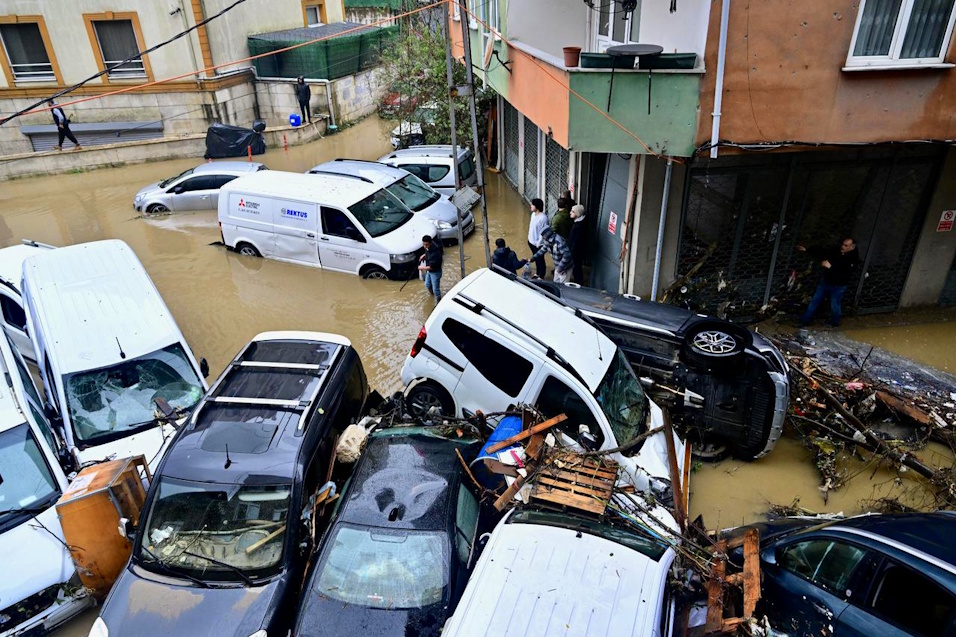
Homes and businesses were flooded as water covered streets and parks across the city. Vehicles were washed away and many ended up piled up at the bottom of hills.
Before the discovery of the body on Friday, Ciftci told reporters in Sariyer’s Ayazaga neighborhood that four people remained missing.
He said there were 9,850 reports of damage and other issues related to the floods and that 46,000 personnel were working to clean up debris and help residents in Istanbul.
Murat Kurum, the minister for the environment, urbanization and climate change, accompanied Ciftci to the flood-hit neighborhood.
Addressing concerns that the floods were exacerbated by urban development close to waterways, he said that dealing with the problem was “essential.”
Kurum, who will chair the UN climate change conference, COP31, next month in the Turkish city of Antalya, also linked the floods to the effects of climate change. “Combating climate change is not a choice, but a necessity,” he said.
Expanded Version
Istanbul’s Worst Floods in 80 Years Leave Four Dead as Climate Fears Mount
Catastrophic flooding in Istanbul was the worst in more than 80 years, Turkey’s interior minister said Friday as the death toll rose to four, with rescue teams still searching for missing residents and thousands displaced from their homes.
Istanbul, Turkey’s largest city with 16 million residents, was hit by more rain in the 48 hours up to Thursday morning than the combined historical average for September and October, the state-run Anadolu Agency reported. The torrential downpour turned streets into raging rivers, submerged underpasses, and paralyzed swaths of a metropolis that straddles both Europe and Asia.
“We are trying our best to help our citizens, but we are also experiencing the biggest flood disaster since 1942,” Interior Minister Mustafa Ciftci said during a visit to one of the areas hit hardest by Wednesday night’s downpour.
The body of a 66-year-old man was found Friday under a bridge in Istanbul’s Sariyer district. Three other deaths were previously reported, including a teenager who was electrocuted in the storm. At least four other people remained unaccounted for, according to officials.
Homes and businesses were flooded as water covered streets and parks across the city. Vehicles were washed away and many ended up piled up at the bottom of hills, while images broadcast on Turkish television showed residents wading through waist-deep water to salvage belongings. Power outages left entire neighborhoods in darkness, and several major roads and bridges were forced to close.
Before the discovery of the body on Friday, Ciftci told reporters in Sariyer’s Ayazaga neighborhood that four people remained missing. He said there were 9,850 reports of damage and other issues related to the floods and that 46,000 personnel were working to clean up debris and help residents in Istanbul.
The government has come under scrutiny over whether rapid urbanization and construction near waterways worsened the disaster. Critics argue that decades of unregulated development have narrowed natural drainage channels, leaving the city increasingly vulnerable to extreme weather.
Murat Kurum, the minister for the environment, urbanization and climate change, accompanied Ciftci to the flood-hit neighborhood. Addressing concerns that the floods were exacerbated by urban development close to waterways, he said that dealing with the problem was “essential.”
Kurum, who will chair the UN climate change conference, COP31, next month in the Turkish city of Antalya, also linked the floods to the effects of climate change. “Combating climate change is not a choice, but a necessity,” he said.
Scientists say that climate change is intensifying extreme rainfall events worldwide, as a warmer atmosphere is able to hold more moisture. Turkey has faced a string of climate-related disasters in recent years, including severe wildfires along its southern coast and deadly flash floods in the Black Sea region, both of which officials have attributed in part to global warming.
As cleanup efforts continued Friday, residents in affected districts expressed frustration over the speed of the response and questioned whether the city was prepared for future storms. Officials pledged to accelerate infrastructure improvements, including expanding drainage systems and relocating structures built in flood-prone areas.
Our Pashto-Dari Website

Support Dawat Media Center
If there were ever a time to join us, it is now. Every contribution, however big or small, powers our journalism and sustains our future. Support the Dawat Media Center from as little as $/€10 – it only takes a minute. If you can, please consider supporting us with a regular amount each month. Thank you
DNB Bank AC # 0530 2294668
Account for international payments: NO15 0530 2294 668
Vipps: #557320

Comments are closed.