
Saudi Arabia Vow to Deny Airspace for Military Action Against Iran Amid Regional Tensions

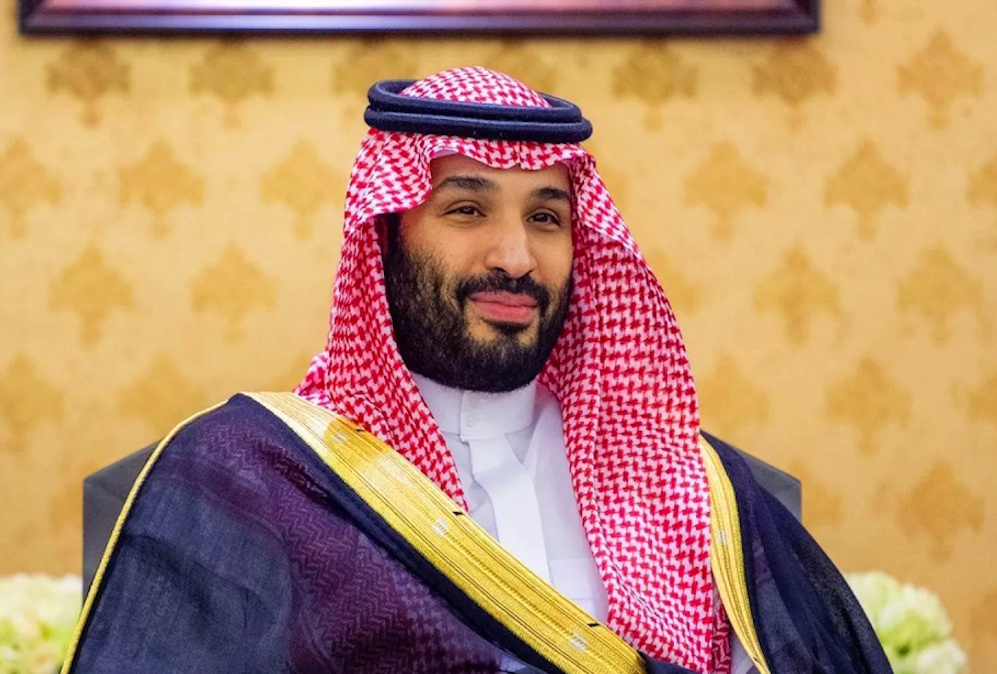
Saudi Arabia’s Crown Prince Mohammed bin Salman told Iranian President Masoud Pezeshkian on Tuesday that Riyadh will not permit its airspace or territory to be used for any military action against Tehran, the state news agency SPA reported. The move underscores a significant shift toward de-escalation between the two regional rivals.
In the phone call, the crown prince affirmed Saudi Arabia’s support for any “efforts that would resolve differences through dialogue” to enhance regional security and stability, according to Reuters. The conversation marks one of the highest-level diplomatic exchanges since the two countries restored ties last year after a seven-year rupture.
President Pezeshkian, for his part, told the crown prince that Tehran welcomes any process—within the framework of international law—that can prevent war, Iranian media reported. The call reflects a mutual, though cautious, effort to stabilize a region long fraught with proxy conflict and hostility.
Regional Alignment
The Saudi statement closely follows a similar declaration by the United Arab Emirates, which also said it would not allow its airspace or territorial waters to be used for military action against Iran. Together, the Gulf powers’ positions signal a growing regional reluctance to be drawn into a potential U.S.-Iran confrontation.
U.S. Posture and Iranian Unrest
Uncertainty over possible military action has lingered since U.S. President Donald Trump said last week that an “armada” was heading toward the region, though he added he hoped he would not have to use it. Trump’s warnings focused on Iran not killing protesters or restarting its nuclear program—issues that have dominated bilateral tensions.
On Monday, two U.S. officials told Reuters that an American aircraft carrier and supporting warships have arrived in the Middle East, enhancing Trump’s ability to defend U.S. forces and potentially undertake military action against Iran.
Domestic Context in Iran
Iran has faced widespread protests in recent months, during which human rights groups say security forces killed thousands, including bystanders. These groups describe the crackdown as the most severe since Shi’ite clerics took power in the 1979 revolution. Iranian authorities have blamed the violence on “terrorists and rioters” backed by exiled opposition groups.
While nationwide demonstrations have subsided in recent weeks, underlying social and economic grievances remain, and the threat of further unrest continues to shape Tehran’s domestic and foreign policy calculations.
Broader Implications
The Saudi and UAE announcements represent a strategic hedging against being entangled in an external military strike, while also reflecting a broader Gulf trend toward diplomatic engagement with Iran. The developments come amid ongoing talks—stalled but not abandoned—to revive the 2015 nuclear deal, which the Trump administration abandoned in 2018.
Analysts suggest that by publicly denying use of their territory for an attack, Riyadh and Abu Dhabi are not only safeguarding their own security but also positioning themselves as mediators rather than participants in any escalation. The phone call between bin Salman and Pezeshkian may thus mark a tentative step toward a new chapter in Gulf-Iranian relations, even as underlying tensions and external pressures persist.
Our Pashto-Dari Website

Support Dawat Media Center
If there were ever a time to join us, it is now. Every contribution, however big or small, powers our journalism and sustains our future. Support the Dawat Media Center from as little as $/€10 – it only takes a minute. If you can, please consider supporting us with a regular amount each month. Thank you
DNB Bank AC # 0530 2294668
Account for international payments: NO15 0530 2294 668
Vipps: #557320

Comments are closed.