

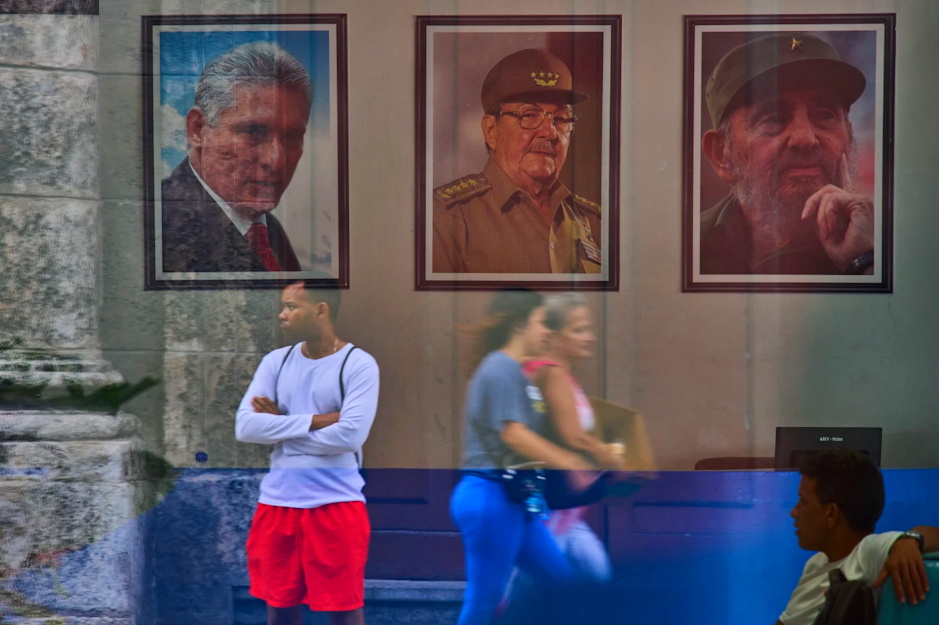
MIAMI (AP) — Federal prosecutors on Wednesday announced criminal charges against former Cuban leader Raúl Castro in connection with the 1996 shootdown of two civilian aircraft flown by Miami-based exile activists, as the U.S. administration intensified pressure on Cuba’s leadership.
The indictment, unsealed after being filed under seal by a grand jury in April, accuses Castro then Cuba’s defense minister of ordering the destruction of two small planes operated by the exile organization Brothers to the Rescue. The aircraft were shot down by Cuban forces on Feb. 24, 1996, killing four people. Prosecutors also charged five Cuban military pilots in the case.
Authorities said the charges include murder and destruction of aircraft, and represent the culmination of a decades-long investigation tied to one of the most politically sensitive incidents in U.S. Cuba relations.
“For nearly 30 years, the families of four murdered Americans have waited for justice,” acting Attorney General Todd Blanche said during a Miami ceremony marking the announcement. He described the victims as unarmed civilians conducting humanitarian flights over the Florida Straits to assist migrants.
Blanche added that a warrant had been issued for Castro’s arrest and suggested the U.S. expects him to appear in court voluntarily or otherwise, though he did not detail how that could be enforced given Castro’s location in Cuba.
Asked about the broader implications, President Donald Trump said the administration was “going to see” how events unfold and reiterated readiness to provide humanitarian aid to what he called a struggling nation.
Long-running tensions and political fallout
The move immediately heightened tensions between Washington and Havana. Cuban President Miguel Díaz-Canel strongly rejected the indictment, calling it politically motivated and accusing the United States of distorting the circumstances of the 1996 incident.
In a social media statement, Díaz-Canel argued that Cuban officials had repeatedly warned against what they described as unauthorized and provocative flights over Cuban territory, which Havana considered violations of its sovereignty.
Secretary of State Marco Rubio, speaking in a Spanish-language message, urged Cubans to push for economic and political change, saying the U.S. was prepared to begin a “new chapter” in relations if reforms were adopted.
Historical context: the 1996 shootdown
The case stems from a long-running confrontation between the Cuban government and the exile group Brothers to the Rescue, which conducted flights over the Florida Straits in the 1990s, including missions aimed at spotting migrants and dropping pro-democracy leaflets over Cuba.
On Feb. 24, 1996, Cuban MiG fighter jets shot down two unarmed Cessna aircraft north of Havana, killing all four men aboard. A third plane escaped. The Cuban government at the time defended the action as a response to repeated airspace violations.
The incident significantly worsened U.S. Cuba relations and contributed to tighter sanctions and diplomatic isolation of Havana during the late 1990s.
Legal stakes and enforcement challenges
Legal experts note that while the indictment is symbolically significant, its practical impact is uncertain. Castro, who is now 94, has not appeared in U.S. custody and is unlikely to voluntarily travel to the United States.
Still, prosecutors emphasized the seriousness of the charges, which carry potential life sentences or capital punishment if convictions were ever secured.
Reactions from victims’ families
Family members of those killed welcomed the announcement. Marlene Alejandre-Triana, whose father was among the victims, said the indictment represents long-awaited acknowledgment of responsibility.
She said she had spoken to investigators over the years and consistently pushed for charges against Castro and other senior Cuban officials, describing the development as overdue justice.
Castro’s role and Cuba’s response
Raúl Castro succeeded his brother Fidel Castro as Cuba’s president in 2006 and formally stepped down in 2018, transferring leadership to Díaz-Canel. While he officially retired from party leadership in 2021, observers believe he still retains influence within Cuba’s political structure.
Cuban officials have framed the indictment as part of a broader U.S. strategy aimed at destabilizing the government. Havana has accused Washington of using legal and economic pressure to justify long-standing efforts at regime change.
Broader geopolitical backdrop
The announcement comes amid renewed U.S. pressure on Cuba’s government and its regional allies. Analysts say the move reflects a more confrontational posture toward Havana, combined with economic measures and diplomatic messaging aimed at internal political change.
Peter Kornbluh, a Cuba specialist at the National Security Archive, said the indictment places additional personal pressure on Castro, even if enforcement remains unlikely, and signals continued escalation in U.S. Cuba relations.
Despite decades passing since the 1996 incident, the case remains one of the most emotionally charged episodes in Cuban exile history and continues to shape political narratives on both sides of the Florida Straits.
Our Pashto-Dari Website

Support Dawat Media Center
If there were ever a time to join us, it is now. Every contribution, however big or small, powers our journalism and sustains our future. Support the Dawat Media Center from as little as $/€10 – it only takes a minute. If you can, please consider supporting us with a regular amount each month. Thank you
DNB Bank AC # 0530 2294668
Account for international payments: NO15 0530 2294 668
Vipps: #557320

Comments are closed.