
Venezuela’s Interim Leader Signals Diplomatic Opening, Offers Framework for U.S. Cooperation

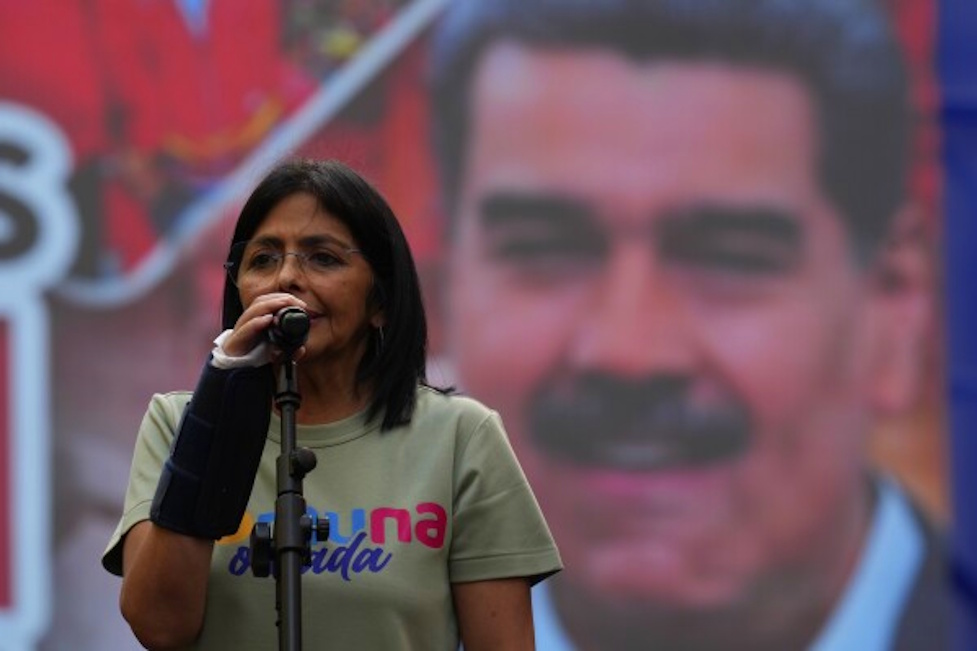
CARACAS, January 5 — In a striking departure from her previous defiant rhetoric, Venezuela’s Interim President Delcy Rodríguez announced on Sunday that her government is prepared to enter a phase of cooperation with the United States under a framework of “joint development,” marking the first conciliatory gesture from Caracas since the dramatic detention of former leader Nicolás Maduro.
The announcement, made via a statement on the social media platform Telegram, seeks to establish “a balanced and respectful relationship” with Washington and invites the U.S. to engage in bilateral cooperation based on international law. This overture represents a significant diplomatic shift, coming just days after Rodríguez denounced Maduro’s capture as an “atrocity” and “abduction” by U.S. special forces, insisting he remained Venezuela’s legitimate president.
A Swift and High-Stakes Transition
Rodríguez, who served as Maduro’s vice president since 2018, was elevated to the interim presidency by Venezuela’s Supreme Tribunal of Justice on Saturday. This followed a high-risk U.S. military operation that resulted in the capture of Maduro and his wife, Cilia Flores. The operation, one of the most audacious since the 2011 raid that killed Osama bin Laden, has plunged U.S.-Venezuela relations into a new and volatile phase.
In her initial televised address, Rodríguez’s fierce condemnation created an immediate rift with U.S. President Donald Trump, who had initially suggested U.S. officials were in communication with her. After Rodríguez labeled his administration “extremists,” Trump’s tone shifted abruptly from describing her as “gracious” to issuing direct threats.
“If she doesn’t do what’s right, she is going to pay a very big price, probably bigger than Maduro,” Trump told The Atlantic in an interview early Sunday, also refusing to rule out putting “boots on the ground” in Venezuela and authorizing further strikes.
Between Diplomacy and Deterrence
Rodríguez’s new proposal for “shared development” appears to navigate a path between domestic political necessity and profound economic pressure. Analysts suggest the overture likely reflects Venezuela’s urgent need to mitigate crippling economic strain and ease international isolation, particularly as access to global oil revenues remains critical for stabilizing its shattered economy.
The U.S. response to this opening remains conditioned on long-standing demands. Washington has consistently linked any normalization of relations to concrete democratic reforms, verifiable cooperation on counter-narcotics, and guarantees for foreign investment, especially in the energy sector. U.S. officials have portrayed Maduro’s capture as a law enforcement action related to pending criminal charges, including narcoterrorism conspiracy.
However, President Trump has cited broader motivations, including the flow of Venezuelan migrants to the U.S. and historical grievances over the nationalization of U.S. oil assets, hinting at a more expansive geopolitical agenda.
Legal Fronts and Regional Echoes
Separately, Rodríguez announced the formation of a commission, co-chaired by Foreign Minister Yvan Gil and her brother Jorge Rodríguez (President of the National Assembly), to seek the release of Maduro and Flores from U.S. detention. Maduro is scheduled to appear in a New York federal court on Monday to face charges.
His predicament draws inevitable comparisons to that of former Panamanian leader Manuel Noriega, who was captured by U.S. forces in 1990, tried on drug-related charges, and served a lengthy prison sentence—a precedent that looms large over Caracas.
The U.S. operation and Trump’s subsequent threats of potential military action against other Latin American nations have sparked international concern and protests, contradicting the President’s past critiques of foreign intervention and “endless wars.”
An Uncertain Path Forward
Rodríguez’s diplomatic gambit places the ball firmly in Washington’s court. Whether the U.S. will interpret her call for joint development as a credible opening for de-escalation or merely a tactical pause by a weakened government is the critical question now facing both capitals.
The coming days, marked by Maduro’s court appearance and the behind-the-scenes diplomatic maneuvers, will test whether this tentative opening can evolve into a dialogue or if the entrenched hostility between the two nations will reassert itself. The stability of Venezuela and the geopolitical balance in the region may hinge on the answer.
Our Pashto-Dari Website


Support Dawat Media Center
If there were ever a time to join us, it is now. Every contribution, however big or small, powers our journalism and sustains our future. Support the Dawat Media Center from as little as $/€10 – it only takes a minute. If you can, please consider supporting us with a regular amount each month. Thank you
DNB Bank AC # 0530 2294668
Account for international payments: NO15 0530 2294 668
Vipps: #557320

Comments are closed.