

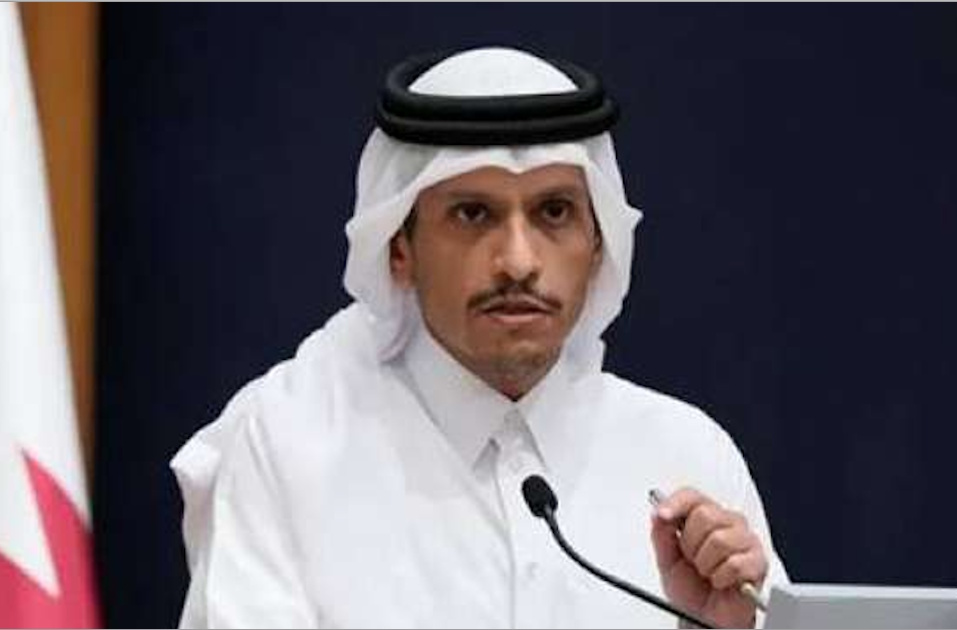
DOHA – The ongoing ceasefire in Gaza will remain fundamentally incomplete until Israeli forces fully withdraw from the Palestinian territory, Qatar’s Prime Minister declared Saturday, emphasizing a critical condition for advancing a U.S. and UN-backed peace plan.
Speaking at the annual Doha Forum conference, Sheikh Mohammed bin Abdulrahman Al Thani, whose nation has been a pivotal mediator, stated, “Now we are at the critical moment… A ceasefire cannot be completed unless there is a full withdrawal of the Israeli forces and there is stability back in Gaza.”
The nearly two-month-old truce, which took effect on October 10 and has largely halted two years of intense conflict between Israel and Hamas, was brokered through intensive diplomacy led by Qatar, Egypt, and the United States.
The Next Phase: Withdrawal and a Stabilization Force
The current ceasefire represents only the initial phase of a broader agreement. The pending second phase, which has yet to commence, outlines a tripartite process:
-
The complete withdrawal of Israeli forces from their positions in Gaza.
-
The handover of governance to an interim Palestinian authority.
-
The deployment of an international stabilization force (ISF).
This proposed force, however, faces significant hurdles. Arab and Muslim nations have expressed reluctance to participate in a mission that could involve confronting Palestinian militants. The role and composition of the ISF dominated discussions at the forum.
Turkish Foreign Minister Hakan Fidan, also addressing the conference, confirmed that talks on the force are ongoing but fraught with unresolved issues. “Critical questions remain as to its command structure and which countries would contribute,” he said. Fidan argued that the force’s primary objective “should be to separate Palestinians from the Israelis,” asserting that this separation must precede addressing other lingering disputes.
Hamas Disarmament: A Persistent Sticking Point
A further major obstacle is the disarmament of Hamas, as stipulated in the 20-point plan initially proposed by U.S. President Donald Trump. The plan offers militants who decommission their weapons a pathway to leave Gaza, but Hamas has consistently and vehemently rejected any demand to disarm.
Turkey’s potential involvement in the stabilization force adds another layer of complexity. While Ankara has indicated a willingness to contribute, its participation is viewed with deep suspicion in Israel, which accuses Turkey of maintaining overly close ties with Hamas leadership.
Mediators Push for a Lasting Solution
Despite the challenges, mediating nations are pressing to break the deadlock. Sheikh Mohammed noted that Qatar, along with fellow guarantor states Turkey, Egypt, and the U.S., were “getting together in order to force the way forward for the next phase.”
He cautioned, however, that this next phase is viewed as merely “temporary” by the mediators. Merely ending the recent cycle of violence, he argued, is insufficient.
“If we are… just resolving what happened in the last two years, it’s not enough,” the Qatari premier stated, calling for a renewed focus on a “lasting solution that provides justice for both peoples.”
Echoing this sentiment, Foreign Minister Fidan concluded, “I think the only viable way to finish this war is to engage faithfully and forcefully in peace talks.” The statements underscore the mediators’ view that the fragile calm in Gaza remains precarious without decisive political progress toward a comprehensive agreement.
Our Pashto-Dari Website

Support Dawat Media Center
If there were ever a time to join us, it is now. Every contribution, however big or small, powers our journalism and sustains our future. Support the Dawat Media Center from as little as $/€10 – it only takes a minute. If you can, please consider supporting us with a regular amount each month. Thank you
DNB Bank AC # 0530 2294668
Account for international payments: NO15 0530 2294 668
Vipps: #557320

Comments are closed.