

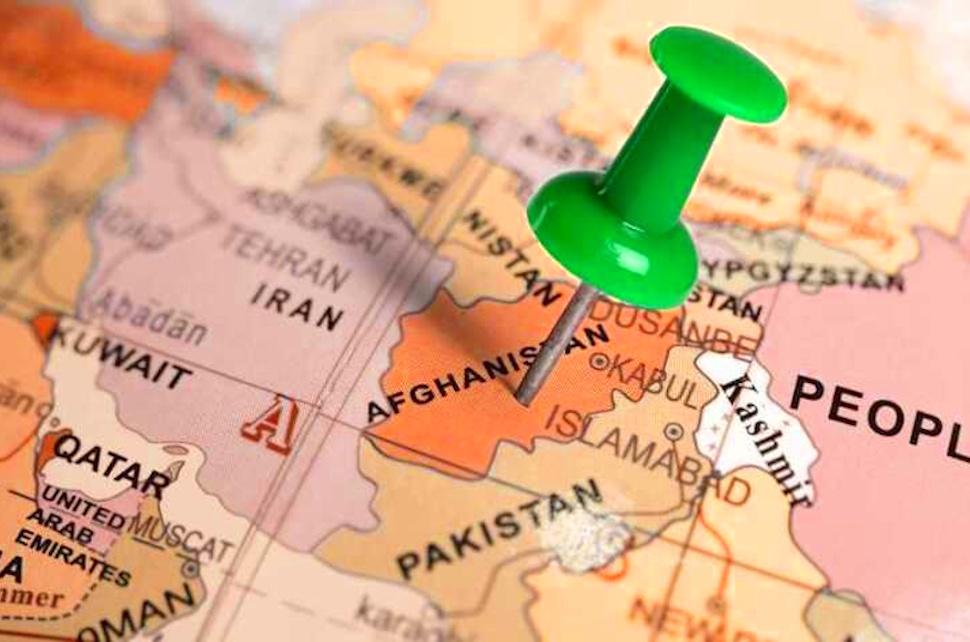
Most modern conflicts can be understood through economic interests and geopolitical theory. One classic framework divides the world into the “Heartland” (resource-rich, landlocked Russia and Central Asia) and the “Rimland” (coastal regions controlling global trade, where the U.S. holds sway). Emerging from this is the “Crossland” a pivot zone like Afghanistan, sitting at the intersection of these two spheres, poised to become a pathway for either cooperation or confrontation.
The U.S. aims to build a geopolitical wall around Russia and China, confining them to the Heartland. Iran is a critical chokepoint in this strategy. If the U.S. succeeds in controlling Iran, China and Russia would be encircled, restoring American dominance. If Iran holds firm, the wall cracks, granting Russia access to warm waters and China secure energy routes.
Amid this rivalry, two major plans are taking shape that directly impact Afghanistan. The first is Russia’s Eurasianist strategy, uniting Central Asia and the Caucasus to resist Western interventionism. The second is a proposed “Islamic NATO” an axis of Turkey, Pakistan, and possibly Iran responding to projects like “Greater Israel” and “Greater India.” However, this bloc faces serious obstacles, including internal divisions and opposition from the U.S. and Israel.
Afghanistan itself remains a source of profound uncertainty. Controlled by a regime lacking national and international legitimacy, it functions as a potential flashpoint. Currently a buffer state with no cohesion, it is neither part of a regional security belt nor the emerging coalitions around it.
If Afghanistan remains outside these new arrangements, it risks descending into a deeper security quagmire where external powers cancel each other out. Conversely, it could move toward regional integration, laying the groundwork for stability and development.
The war in Ukraine, the Iran-U.S. standoff, and Europe’s energy crisis all exert pressure on these dynamics. As a “Crossland” point on the fault line between the Heartland and the Rimland, Afghanistan has become one of the most sensitive and contested geographic spaces in the world. Its fate hinges not on its own actions, but on the outcome of the great-power rivalry encircling it.
Our Pashto-Dari Website
Support Dawat Media Center
If there were ever a time to join us, it is now. Every contribution, however big or small, powers our journalism and sustains our future. Support the Dawat Media Center from as little as $/€10 – it only takes a minute. If you can, please consider supporting us with a regular amount each month. Thank you
DNB Bank AC # 0530 2294668
Account for international payments: NO15 0530 2294 668
Vipps: #557320

Comments are closed.