
Karzai, Abdullah Condemn Deadly Pakistani Airstrikes in Eastern Afghanistan, Urge Dialogue Amid Spiraling Tensions

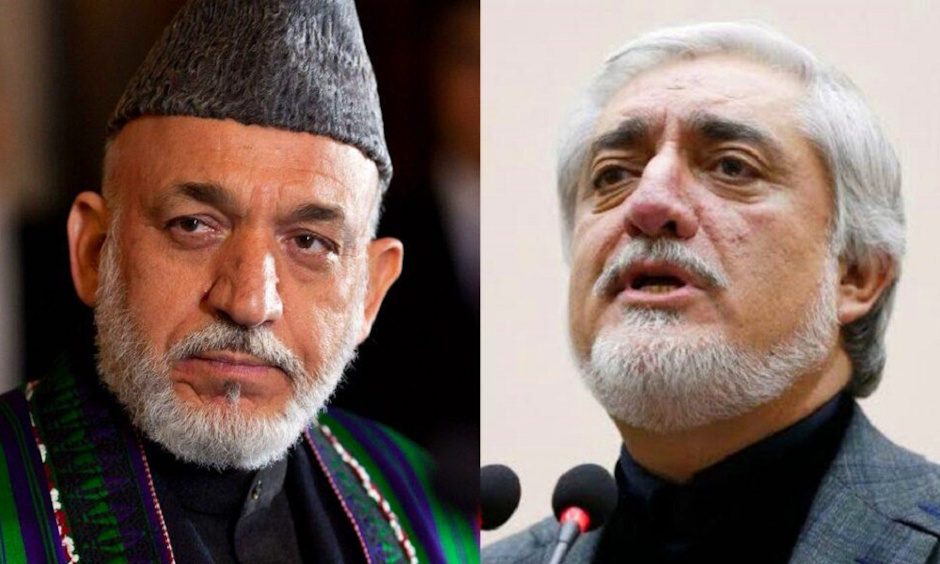
Former Afghan President Hamid Karzai and former Chairman of the High Council for National Reconciliation Abdullah Abdullah have strongly condemned reported Pakistani airstrikes in eastern Afghanistan, joining a growing chorus of domestic and international voices calling for restraint and dialogue as tensions between the two neighbours escalate sharply.
The airstrikes, which Pakistan reportedly conducted overnight, targeted residential areas in the eastern provinces of Paktia, Paktika and Kunar. According to Afghan officials, at least 36 civilians including women and children were killed and 163 others wounded in the bombardment. The deadliest single attack occurred in Mandokhail village in Paktia’s Chamkani district, where an initial strike reportedly hit a civilian home, followed by a second strike that allegedly targeted villagers who had rushed to the scene to rescue the wounded. Additional strikes were reported in Paktika’s Giyan district and Kunar’s Manogai district.
In a strongly worded statement, Karzai described the attacks as a flagrant violation of Afghanistan’s national sovereignty and a breach of international law and accepted norms. He extended his deepest condolences to the bereaved families, wished a swift recovery to the injured, and urged Pakistan to abandon what he termed “confrontational policies and double standards toward extremism.” Karzai emphasized that it is in Pakistan’s own long-term interest to pursue relations with Afghanistan grounded in good neighbourliness, mutual respect, and constructive engagement, rather than military coercion.
Abdullah Abdullah echoed those sentiments, condemning the strikes as a hostile act that had caused unacceptable civilian casualties. He argued that military force has repeatedly failed to resolve entrenched disputes between the two countries and warned that such actions would only deepen mistrust and fuel further instability. Abdullah called on both sides to embrace dialogue, diplomacy, and the principles of good neighbourly relations as the only viable path to peacefully address their differences.
The condemnations follow similar criticism from Zalmay Khalilzad, former U.S. Special Representative for Afghanistan Reconciliation. Khalilzad noted that Pakistan had once again resorted to military action despite repeated appeals from the international community and many Pakistanis themselves to resolve disputes through negotiation. He said he has consistently condemned the killing of Afghan civilians and questioned whether Islamabad is genuinely committed to a negotiated settlement, pointing out that Pakistan has failed to respond to several proposals put forward by the Islamic Emirate to address bilateral security concerns. More provocatively, Khalilzad raised the possibility that Pakistan’s security establishment may be pursuing broader strategic objectives, including keeping Afghanistan unstable. He warned that continued conflict could strengthen extremist groups such as ISIS-K and inadvertently increase China’s influence in Afghanistan outcomes that would benefit neither country.
The latest violence unfolds against a backdrop of persistently strained relations between Afghanistan and Pakistan. Both governments have long accused each other of failing to curb cross-border militant activity. Pakistan has repeatedly asserted that its military operations target armed groups, particularly the Tehrik-i-Taliban Pakistan (TTP), responsible for attacks inside its territory. Afghan authorities, however, have consistently condemned cross-border strikes as violations of sovereignty and insist that civilians continue to bear the heaviest toll.
Cross-border exchanges have intensified in recent months, as Pakistan has ramped up military operations against suspected militants following a series of deadly attacks on its soil most notably the recent assault on a Pakistan Rangers compound in Karachi, which killed three security personnel. That attack, claimed by the TTP, has further inflamed public and official outrage in Pakistan, heightening the risk of further escalation. Meanwhile, Afghanistan’s Taliban-led administration denies harbouring militant groups and has called for evidence-based cooperation, though such appeals have done little to de-escalate the growing confrontation.
As civilian casualties mount and rhetoric hardens on both sides, regional and international observers are urging an immediate ceasefire and a return to diplomatic channels. Without a credible pause in hostilities, analysts warn, the fragile security environment in South Asia could deteriorate further, with grave consequences for civilians already enduring decades of conflict.
Our Pashto-Dari Website

Support Dawat Media Center
If there were ever a time to join us, it is now. Every contribution, however big or small, powers our journalism and sustains our future. Support the Dawat Media Center from as little as $/€10 – it only takes a minute. If you can, please consider supporting us with a regular amount each month. Thank you
DNB Bank AC # 0530 2294668
Account for international payments: NO15 0530 2294 668
Vipps: #557320

Comments are closed.