

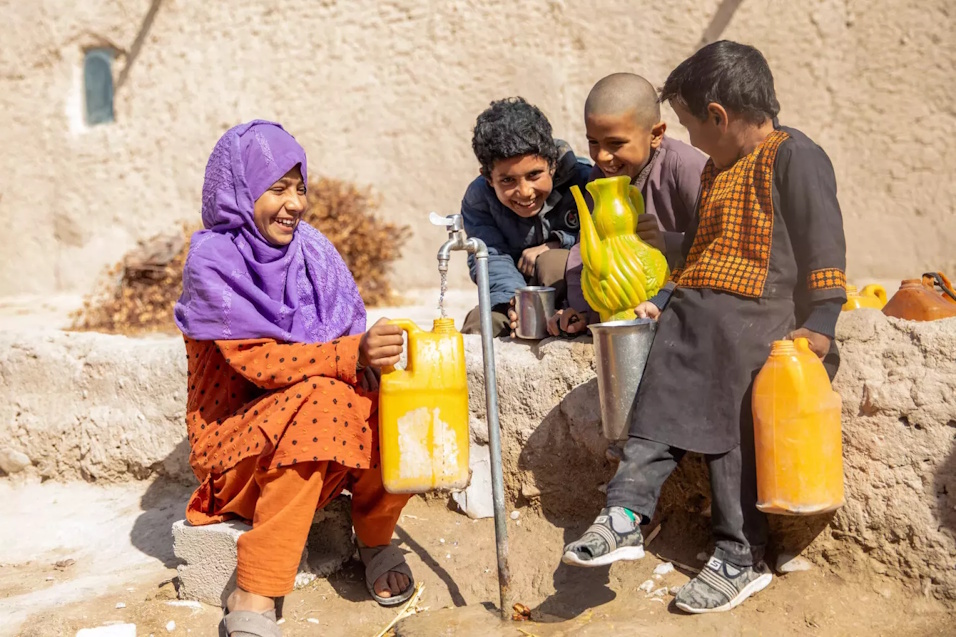
Afghanistan’s capital is confronting a deepening water crisis, with groundwater levels falling sharply and nearly half of the city’s boreholes already dry. The rapid depletion has raised fears that Kabul could become the first modern capital to run out of water by 2030, according to a recent Prosper Global report cited by CNN.
Groundwater levels in Kabul have dropped by approximately 25 to 30 metres over the past decade, while water is being extracted far faster than natural sources can replenish it. The city faces an estimated annual groundwater shortfall of more than 44 million cubic metres, even though groundwater supplies about 80 percent of residents’ water needs. Compounding the problem, only about one-fifth of Kabul’s population has access to piped water, leaving the vast majority reliant on wells, public pumps, or private tankers.
For many residents, the projected “day zero” is already a lived reality. Families without running water spend hours each day collecting water from public pumps or pay increasingly high prices to private tanker companies. Some poorer households are estimated to spend as much as 30 percent of their income on water—far above the roughly 3 percent level considered affordable by the United Nations. This financial burden forces many families to choose between buying water and paying for other essentials such as food, healthcare, and education.
The crisis is being driven by a combination of rapid population growth, uncontrolled groundwater extraction, prolonged drought, and declining snowfall. Kabul’s population has grown from less than one million in 2001 to about six million today, placing enormous strain on limited water resources. Meanwhile, Afghanistan has endured six consecutive years of drought, and snowfall reached a 25-year low at the end of last year, according to UN data cited by CNN. The loss of snowpack is particularly alarming because it historically served as a natural reservoir, slowly releasing meltwater into rivers and aquifers during the dry season.
Water quality is another major concern. Prosper Global estimates that large parts of Kabul’s groundwater are contaminated by sewage, arsenic, and salinity, leaving many families dependent on costly tanker water or unsafe sources. Contaminated water contributes to the spread of waterborne diseases, particularly among children, and exacerbates an already fragile public health situation. Experts have described the situation as approaching “water bankruptcy,” warning that depleted groundwater cannot easily be restored and that some aquifers may never fully recover.
In response, authorities and development partners have proposed projects including the Shah Tout Dam and a pipeline to bring water from the Panjshir River to Kabul. However, these projects face delays, funding constraints, and political obstacles, while experts warn that major infrastructure would take years to complete—well beyond the 2030 deadline. Even if construction began immediately, the scale of investment and technical challenges involved make it unlikely that such projects could avert a crisis in the near term.
The worsening shortage is therefore not only an environmental problem but also a growing humanitarian and economic threat. UN reporting has previously warned that acute groundwater depletion and limited access to water are already severely affecting Kabul residents, particularly women and children, who often bear the burden of collecting water for their households. Without urgent and coordinated action including sustainable groundwater management, investment in alternative water sources, and measures to curb uncontrolled extraction Kabul risks becoming a stark warning of what awaits other rapidly growing cities in water-stressed regions around the world.
Our Pashto-Dari Website

Support Dawat Media Center
If there were ever a time to join us, it is now. Every contribution, however big or small, powers our journalism and sustains our future. Support the Dawat Media Center from as little as $/€10 – it only takes a minute. If you can, please consider supporting us with a regular amount each month. Thank you
DNB Bank AC # 0530 2294668
Account for international payments: NO15 0530 2294 668
Vipps: #557320

Comments are closed.