

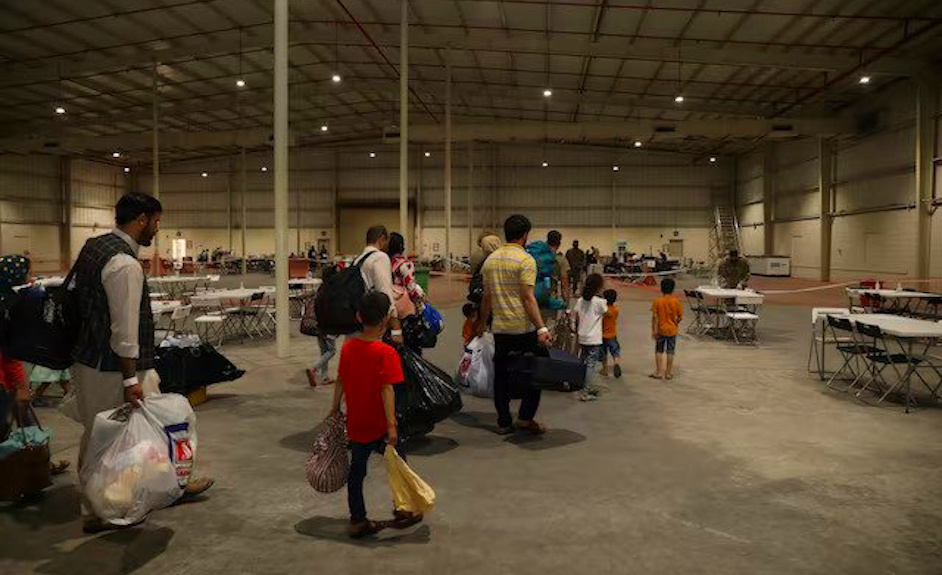
Kabul responds to reports of possible U.S.-linked relocation of Afghan evacuees from Qatar to the Democratic Republic of the Congo.
KABUL — The Taliban-led Ministry of Foreign Affairs in Afghanistan has responded to mounting reports that Afghan nationals stranded in Qatar may be relocated to the Democratic Republic of the Congo (DRC) as part of arrangements linked to the United States.
On Saturday, the ministry stated that Afghans currently residing in Qatar can return home without fear, emphasizing that there is no security threat to citizens in Afghanistan. Spokesman Abdul Qahar Balkhi confirmed that Afghan authorities are aware of claims that approximately 1,100 Afghans many awaiting U.S. visa processing have been asked to choose between returning to Afghanistan or transferring to a third country.
“Afghanistan remains the shared homeland of all citizens,” Balkhi said, encouraging voluntary return and assuring that returnees can come back with “full confidence and peace of mind.” The ministry reiterated that the country’s doors remain open and that no one is compelled to leave due to security concerns.
For those Afghans wishing to travel onward to other nations, the ministry advised doing so only through “legal and dignified channels,” adding that the Islamic Emirate of Afghanistan (IEA) is ready to cooperate with all countries within the framework of bilateral consular relations to protect the rights of Afghan citizens abroad.
The statement follows a report by The New York Times last week, which noted that former U.S. President Donald Trump was in talks to transfer as many as 1,100 Afghans from Qatar to the DRC. The report has drawn sharp criticism from lawmakers and advocacy groups in Washington, who argue that relocating Afghan allies many of whom worked alongside U.S. forces to conflict-affected regions is unacceptable. They are urging more stable and durable resettlement solutions instead.
Ongoing Uncertainty for Evacuees
The situation highlights the persistent limbo facing tens of thousands of Afghan evacuees stranded in transit countries since the chaotic U.S. withdrawal in August 2021. Despite being promised resettlement in Western nations, many remain trapped in third countries like Qatar, the United Arab Emirates, and Kosovo, with their fates tied to diplomatic negotiations that have repeatedly stalled.
Afghanistan’s Worsening Humanitarian and Rights Crisis
While the Taliban government projects an image of safety for returnees, conditions inside Afghanistan remain dire:
-
Women’s rights catastrophe: Restrictions on female education remain among the most severe globally. Girls are banned from secondary school and universities, and women are largely excluded from employment and public life. According to UN assessments, nearly 80% of young Afghan women are not in education, employment, or training a dramatic collapse that threatens long-term economic and social decline.
-
Growing influx of returnees from Iran and Pakistan: Afghanistan is simultaneously facing a mounting humanitarian challenge as hundreds of thousands of Afghans are expelled or pressured to leave neighboring countries. Many returnees disproportionately women and children arrive without shelter, income, or access to basic services. The UN warns that they face heightened risks of poverty, exploitation, and secondary displacement, further straining already overstretched local communities.
-
Broader economic collapse and hunger: High unemployment, economic freefall, and deep cuts to international aid have left millions dependent on emergency assistance. UN agencies report that hunger, lack of healthcare, and limited livelihood opportunities continue to expand across the country.
-
Political repression and fear: Reports continue to surface of reprisals, arbitrary arrests, and restrictions targeting individuals linked to the former government or international organizations. Advocacy groups warn that this atmosphere of fear has sharply reduced civic space and contributed to ongoing instability.
Our Pashto-Dari Website

Support Dawat Media Center
If there were ever a time to join us, it is now. Every contribution, however big or small, powers our journalism and sustains our future. Support the Dawat Media Center from as little as $/€10 – it only takes a minute. If you can, please consider supporting us with a regular amount each month. Thank you
DNB Bank AC # 0530 2294668
Account for international payments: NO15 0530 2294 668
Vipps: #557320

Comments are closed.