

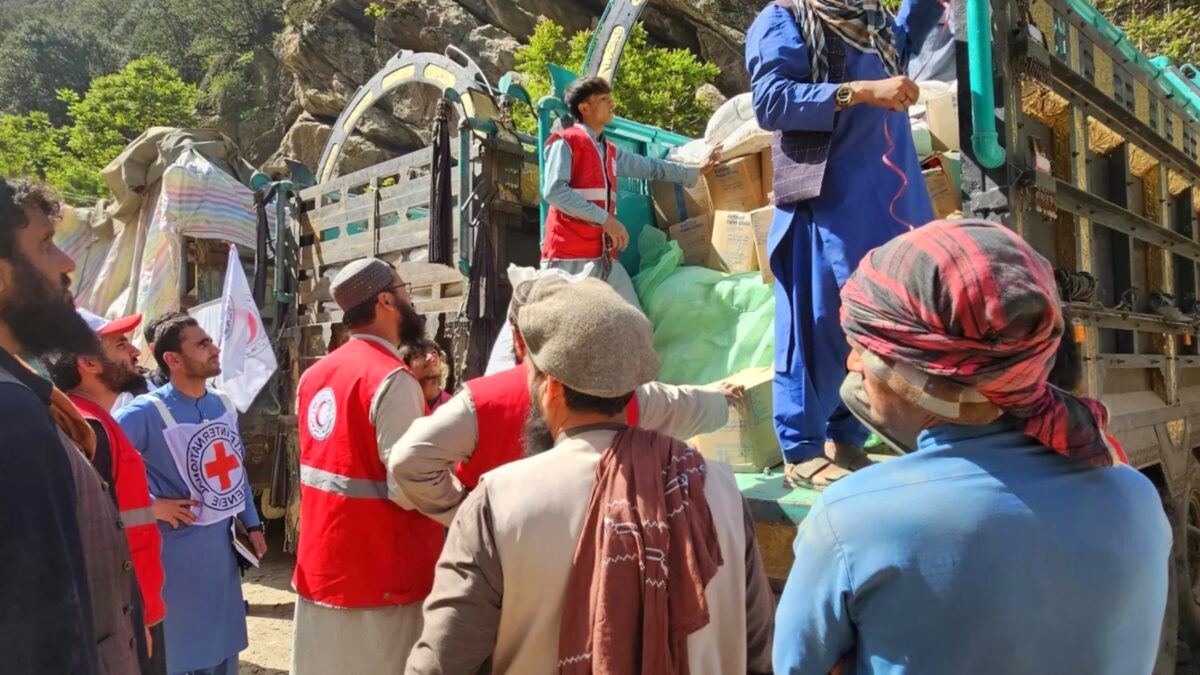
Approximately 136,000 people in eastern Afghanistan were left without access to food, health care, and other essential services for weeks after border tensions with Pakistan blocked a key transit route, prompting a major humanitarian response, the International Committee of the Red Cross (ICRC) reported.
The crisis followed an escalation of hostilities in mid-February that closed the main road connecting the Kamdesh and Barg-i-Matal districts in Nuristan province for nearly two months. The closure isolated remote mountain communities already vulnerable due to poverty and harsh winter conditions.
Citing figures from local authorities and the United Nations Office for the Coordination of Humanitarian Affairs (OCHA), the ICRC said around 17,000 households were affected, leaving families unable to access local markets, medical care, or basic supplies such as cooking gas and animal feed. Many communities rely entirely on the now-blocked route for trade and travel.
A joint humanitarian response led by the ICRC, the Afghan Red Crescent Society, and the World Food Program began on April 21, following weeks of negotiations with parties to the conflict to secure safe and neutral access. The ICRC emphasized that securing humanitarian corridors was particularly challenging due to ongoing hostilities and the rugged terrain.
During the isolation period, the humanitarian situation in the two districts became severe, the agency said. Communities faced acute shortages of food, fuel, medicines, and other basic services. Movement restrictions also prevented patients from reaching referral hospitals, leading to preventable deterioration of chronic illnesses and untreated injuries.
Local health facilities came under significant strain, with limited supplies of essential medicines and equipment. The pressure was further intensified by an influx of conflict-related injuries and internal displacement, as families fled sporadic shelling and ground clashes near the border.
The ICRC said the response relied heavily on coordination with local volunteers and community-based networks to reach isolated populations particularly in high-altitude areas where snow and damaged roads continue to hinder access.
The clashes between Taliban forces and Pakistani border troops, which began in late February, have resulted in the closure of all official border crossings for both passengers and trade in the region. The fighting has also left dozens of civilians dead across eastern Afghan provinces, according to local officials, raising further concerns about the protection of non-combatants under international humanitarian law.
As of late April, while the main road has been partially reopened for humanitarian convoys, the ICRC warned that lasting recovery will require sustained ceasefire agreements and renewed cross-border cooperation.
Our Pashto-Dari Website
Support Dawat Media Center
If there were ever a time to join us, it is now. Every contribution, however big or small, powers our journalism and sustains our future. Support the Dawat Media Center from as little as $/€10 – it only takes a minute. If you can, please consider supporting us with a regular amount each month. Thank you
DNB Bank AC # 0530 2294668
Account for international payments: NO15 0530 2294 668
Vipps: #557320

Comments are closed.