
Kabul’s Omid-e-Sabz Township Declared State Property; Thousands of Homeowners Face Eviction

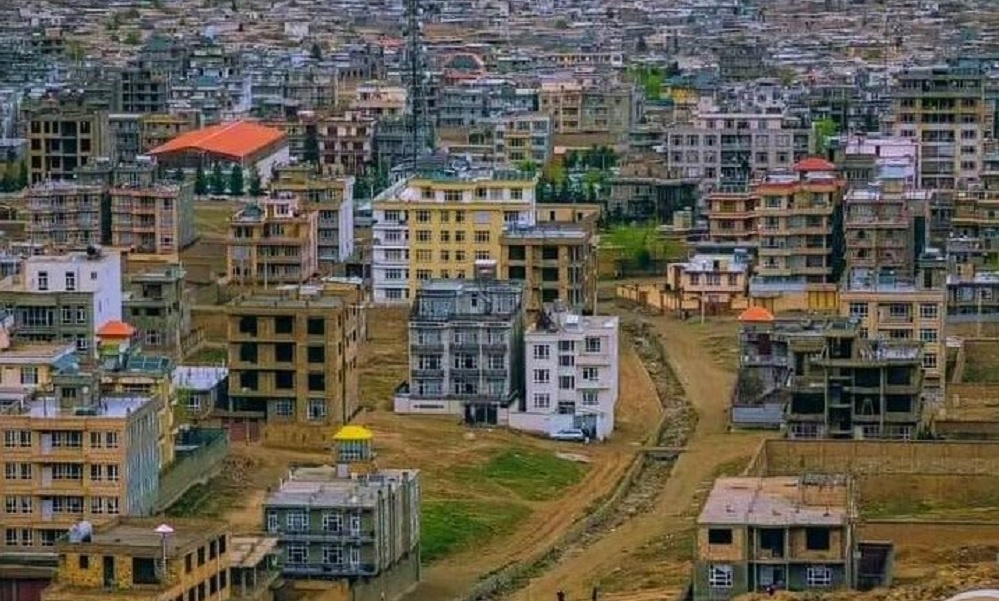
KABUL — In a landmark ruling with far-reaching consequences for thousands of families, Afghanistan’s Ministry of Justice has declared that more than 1,500 jeribs (approximately 300 hectares) of land in Kabul’s Omid-e-Sabz Township also known as Haji Nabi Township are legally owned by the state. The decision, announced on Monday, orders current occupants to seek restitution exclusively from the private sellers who sold them the properties, rather than from the Taliban administration.
The ruling, issued by the Taliban’s Special Court for State Land Grabbing Cases, represents one of the most significant land adjudications since the group returned to power in August 2021. It directly affects one of Kabul’s largest residential developments, a sprawling township in the western districts of the capital that has housed families for nearly two decades.
Legal Basis and Court Order
Barakatullah Rasouli, spokesperson for the Ministry of Justice, confirmed that the court determined the land spanning 1,507.49 jeribs across five distinct cadastral plots in Kabul’s Districts 6 and 13 has been officially registered and surveyed in the state’s name. According to the ministry’s statement, the land was never legally transferred to any individual or legal entity, rendering all subsequent private sales invalid under the court’s interpretation of Afghan property law.
The court issued its final decision on April 20, after what it described as a thorough review of cadastral records and land registration documents. The ruling stipulates that the property must be handed over to the Taliban’s Commission for the Prevention of Land Grabbing and the Restitution of Grabbed Land, which has been tasked with enforcing the evacuation and reclamation of the area.
“The commission is legally bound to implement this ruling without delay,” Rasouli said, emphasizing that all decisions by the special court concerning state-owned land are final and immediately enforceable.
Impact on Residents
Omid-e-Sabz Township, situated in the western fringes of Kabul, is home to an estimated several thousand families, the vast majority of whom belong to Afghanistan’s Hazara ethnic minority. Many residents purchased plots or completed homes between 2005 and 2020, relying on private contracts, notary services, and what they believed were legitimate title deeds. For many, the township represented a hard-won foothold in the capital after decades of displacement and conflict.
The township has long been associated with Mohammad Nabi Khalili, the brother of former Vice President Mohammad Karim Khalili, a prominent Hazara leader. Previous investigative reports identified Khalili as one of the principal shareholders in the original development project, though he has not publicly commented on the latest ruling. The case now raises difficult questions about the extent to which political figures facilitated land sales that the current administration deems unlawful.
Residents, speaking on condition of anonymity for fear of reprisal, expressed shock and despair. “We paid our life savings for these homes,” said one father of six, who has lived in the township since 2012. “We have contracts, we have receipts. Now we are told we are squatters on our own land. Where do we go? Who will compensate us?”
The Taliban’s Broader Land Reclamation Campaign
The Omid-e-Sabz decision is part of a sweeping national initiative launched by the Taliban to review and reclaim what they characterize as illegally occupied or fraudulently sold public lands. The Commission for the Prevention of Land Grabbing has conducted similar reviews in provinces including Nangarhar, Herat, and Balkh, targeting large agricultural tracts, commercial plots, and urban residential developments.
Taliban officials argue that successive previous governments from the Soviet-backed administrations to the Islamic Republic allowed widespread land usurpation, often facilitated by powerful warlords, bureaucrats, and intermediaries. The current campaign, they maintain, is an effort to restore state assets and enforce the rule of law.
However, the campaign has sparked growing unease among legal experts, property owners, and international observers. Critics point to the lack of a clear, transparent appeals process for affected parties, as well as the absence of independent judicial oversight. Human rights organizations have previously raised concerns that the Taliban’s land courts operate without meaningful due process, leaving civilians with limited recourse.
A History of Fragmented Records and Competing Claims
Afghanistan’s property sector has long been plagued by overlapping claims, inconsistent registration systems, and fragmented cadastral records a legacy of decades of war, regime change, and institutional collapse. Ownership documents were often issued by multiple authorities, with little coordination or central digitization. Land grabs, forged deeds, and informal sales further complicated the landscape.
Legal observers note that while the Taliban’s intent to clarify land ownership may be administratively defensible, the execution risks creating a humanitarian crisis in densely populated urban areas. “The problem is not whether the land belonged to the state in 1978 or 2001 it’s that people bought homes in good faith under a system that the state itself recognized at the time,” said a Kabul-based lawyer who requested anonymity. “Retroactively invalidating those transactions without a compensation mechanism is both legally dubious and socially explosive.”
Implications and Unanswered Questions
As news of the ruling spreads, anxiety is mounting among Omid-e-Sabz residents, many of whom have no alternative housing. The Taliban administration has not yet detailed a timeline for evictions, nor has it announced whether any form of financial assistance or relocation support will be offered to displaced families.
The Ministry of Justice has insisted that the burden of compensation falls entirely on the original sellers a directive that legal experts say may be impossible to enforce, given that many sellers are either deceased, inaccessible, or lack the resources to repay hundreds or thousands of buyers.
The ruling also raises broader questions about property rights and investment in Afghanistan. If the state can retroactively nullify large-scale real estate transactions without compensation, future domestic and foreign investment in the housing sector could be severely chilled, exacerbating the country’s already acute housing shortage.
Looking Ahead
The decision on Omid-e-Sabz Township is likely to serve as a test case for the Taliban’s approach to property governance and its willingness to balance fiscal and administrative goals against social stability. As the commission prepares to implement the court’s order, all eyes will be on how the administration navigates the delicate intersection of law, politics, and human welfare.
For now, thousands of families remain in limbo clinging to their homes, their documents, and the faint hope that a path to justice may still emerge from a process that, so far, has offered them no voice and no recourse.
Our Pashto-Dari Website

Support Dawat Media Center
If there were ever a time to join us, it is now. Every contribution, however big or small, powers our journalism and sustains our future. Support the Dawat Media Center from as little as $/€10 – it only takes a minute. If you can, please consider supporting us with a regular amount each month. Thank you
DNB Bank AC # 0530 2294668
Account for international payments: NO15 0530 2294 668
Vipps: #557320

Comments are closed.