
Pakistan has once again committed another crime in Afghanistan through an airstrike

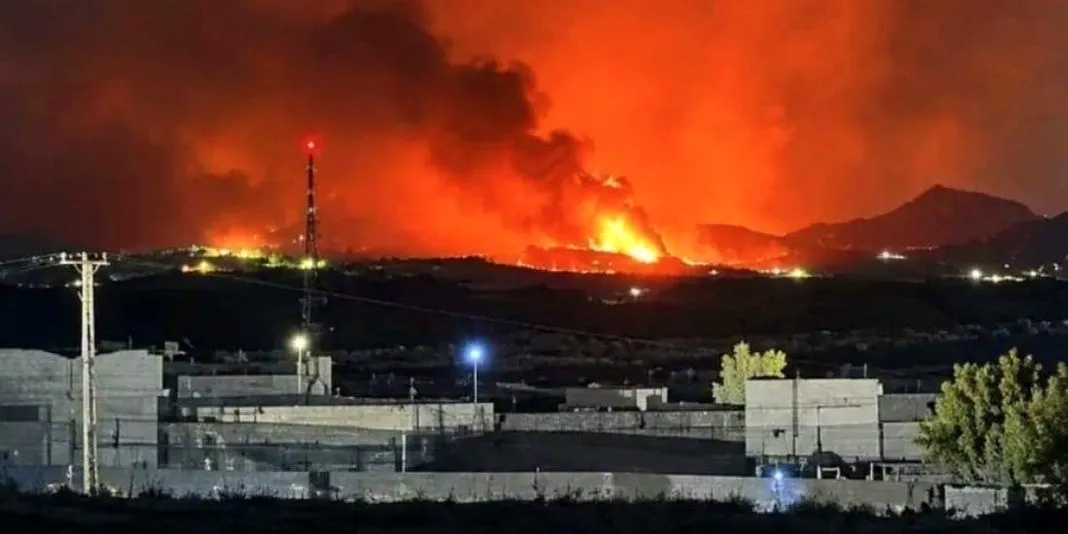
Pakistan has once again carried out air and drone strikes inside Afghanistan, marking another sharp escalation in already deteriorating relations between Islamabad and the Taliban administration in Kabul.
The latest operation, which Pakistani officials said targeted 10 locations across Afghanistan, came after Islamabad accused militants operating from Afghan territory of launching drone attacks against Pakistan a day earlier. Pakistani authorities described the strikes as an act of self-defense, while Taliban officials condemned the operation as a violation of Afghanistan’s sovereignty.
Pakistan’s Information Minister Attaullah Tarar said Islamabad had exercised what it described as its right to defend itself against attacks originating from Afghan territory. In a statement posted on X, Tarar characterized the operation as “deliberate, precise, calculated and proportionate,” and said the strikes were directed at military targets allegedly connected to planned attacks inside Pakistan.
However, the Taliban administration rejected Pakistan’s justification and accused Islamabad of violating Afghan territorial integrity. Afghan officials said Pakistani aircraft carried out overnight strikes in several areas, including parts of Khost and Kandahar provinces.
According to Taliban officials, the strikes began at approximately 3:30 a.m. local time on Thursday, September 24. Mustaghfar Garbaz, spokesperson for the Taliban governor in Khost, said Pakistani aircraft struck Camp Golan in Gurbaz district, areas near Khost city, as well as parts of Ismail Khel and Mandozai districts.
Taliban-controlled media also reported an airstrike on a desert area in District 9 of Kandahar city.
Afghan officials said the reported strikes did not result in casualties or significant damage, although those claims have not been independently verified. Pakistan has not publicly released a comprehensive list of the locations it targeted or provided detailed information about the results of the operation.
The competing accounts highlight the increasingly dangerous security environment along the Afghanistan-Pakistan border, where both governments have repeatedly accused one another of failing to prevent armed groups from operating across the frontier.
Pakistan Cites Self-Defense
Islamabad says the latest operation was a direct response to attacks originating from Afghan territory.
Tarar accused the authorities in Kabul of allowing militants to use Afghan territory as a base for attacks against Pakistan and warned that Islamabad would not tolerate continued cross-border attacks.
Pakistan has repeatedly accused the Tehrik-e-Taliban Pakistan (TTP), an armed group separate from Afghanistan’s Taliban administration, of maintaining sanctuaries inside Afghanistan and using them to plan and conduct attacks against Pakistan.
Pakistani officials have argued that the presence of TTP fighters across the border represents a direct national-security threat and that repeated diplomatic efforts have failed to stop attacks against Pakistani territory.
Islamabad maintains that its military operations are aimed at armed groups and military infrastructure rather than civilians.
The Taliban administration, however, has consistently rejected Pakistan’s accusations that Afghanistan is being used as a launching ground for attacks against Pakistan. Taliban officials have said they will not allow Afghan territory to be used against neighboring countries, while simultaneously objecting to Pakistani military operations inside Afghanistan.
Afghan Authorities Condemn the Strikes
The Taliban administration has described Pakistan’s latest attacks as a violation of Afghanistan’s sovereignty and territorial integrity.
Afghan officials have repeatedly warned that continued Pakistani airstrikes could further destabilize relations between the two countries and increase the possibility of wider military confrontation.
The latest strikes reportedly affected areas in Khost and Kandahar, while previous Pakistani operations have also targeted parts of eastern Afghanistan.
Afghanistan’s eastern provinces have long been particularly sensitive because of their proximity to Pakistan and the presence of armed groups operating in the broader border region.
The Durand Line, the internationally disputed and politically sensitive frontier between Afghanistan and Pakistan, has also been a longstanding source of tension. Afghan governments, including the Taliban administration, have historically objected to aspects of Pakistan’s treatment of the border, while Islamabad regards the Durand Line as its internationally recognized border.
Escalation Following Earlier Strikes
The latest operation follows a series of military incidents between the two countries.
Just days earlier, Pakistani fighter jets reportedly carried out strikes in Afghanistan’s eastern provinces of Paktia and Kunar. Pakistani officials said those attacks were directed against militant infrastructure, while Afghan authorities reported casualties and condemned the strikes.
The incidents have contributed to a cycle of accusations and retaliatory actions.
Pakistan says attacks launched from Afghanistan have increased its security concerns and argues that it has the right to take action when it believes an imminent threat cannot be addressed through diplomatic channels.
The Taliban administration has taken a different position, arguing that military strikes inside Afghanistan are unacceptable and that security disputes should be resolved through dialogue.
The increasingly confrontational relationship represents a significant change from the expectations that followed the Taliban’s return to power in 2021. Pakistan had historically maintained close ties with elements of the Afghan Taliban and was among the countries that had significant influence over the Afghan conflict.
Since the Taliban returned to Kabul, however, relations between Islamabad and the new Afghan authorities have deteriorated considerably.
TTP Remains at the Center of the Dispute
At the heart of the dispute is the Tehrik-e-Taliban Pakistan, or TTP.
Pakistan considers the TTP a major security threat and has repeatedly accused the group of using bases and safe havens inside Afghanistan. Islamabad has demanded that the Taliban administration take stronger action against TTP members and prevent them from launching attacks across the border.
The Taliban administration has denied allowing Afghan territory to be used to attack Pakistan and has disputed Islamabad’s characterization of the security situation.
The disagreement has created repeated diplomatic crises.
Pakistan has previously pressured Kabul to take action against militant groups, while Afghan officials have criticized Islamabad for conducting military operations without Afghan authorization.
The situation has become particularly complicated because the Afghan Taliban and the TTP share historical, ideological and tribal connections, although they are separate organizations with distinct political and military structures.
Border Tensions Continue to Grow
Security tensions have also been accompanied by disputes over the border itself.
Pakistan has constructed extensive fencing along much of the Afghanistan-Pakistan frontier, arguing that the barrier is necessary to prevent militants, weapons and other unauthorized crossings.
Afghan authorities and local communities have periodically objected to the fencing and to Pakistan’s interpretation of the border.
These disputes have occasionally resulted in armed confrontations between Pakistani and Afghan forces.
Border crossings have also been closed during periods of heightened tension, disrupting trade, transportation and the movement of civilians who depend on routes connecting the two countries.
The combination of militant activity, border disputes and military retaliation has therefore created a broader security crisis extending beyond individual airstrikes.
Risk of Further Confrontation
The latest strikes raise concerns that the confrontation could develop into a broader and more sustained military crisis.
Both sides have previously called for dialogue and greater security cooperation, but diplomatic efforts have repeatedly been undermined by new attacks and accusations.
Pakistan is under domestic pressure to prevent militant attacks against its territory, while the Taliban administration faces pressure to defend Afghanistan’s sovereignty and prevent foreign military operations on Afghan soil.
The danger is that repeated retaliatory strikes could create a cycle in which each side regards its actions as defensive while the other side views them as aggression.
For civilians living near the border, the consequences can include displacement, disruption of trade, restrictions on movement and the risk of being caught in fighting between armed forces and militant groups.
The situation is also significant for the wider region. Continued confrontation between Pakistan and Afghanistan could complicate efforts to combat militant organizations, disrupt regional trade and further destabilize an already fragile security environment.
For now, Islamabad maintains that its latest strikes were a necessary response to attacks originating from Afghanistan, while the Taliban administration insists that Pakistan violated Afghan sovereignty.
With both governments continuing to reject the other side’s accusations, the latest exchange underscores how deeply relations between the two neighboring countries have deteriorated and how difficult it may be to prevent further military escalation along their long and heavily contested border.
Our Pashto-Dari Website

Support Dawat Media Center
If there were ever a time to join us, it is now. Every contribution, however big or small, powers our journalism and sustains our future. Support the Dawat Media Center from as little as $/€10 – it only takes a minute. If you can, please consider supporting us with a regular amount each month. Thank you
DNB Bank AC # 0530 2294668
Account for international payments: NO15 0530 2294 668
Vipps: #557320

Comments are closed.