

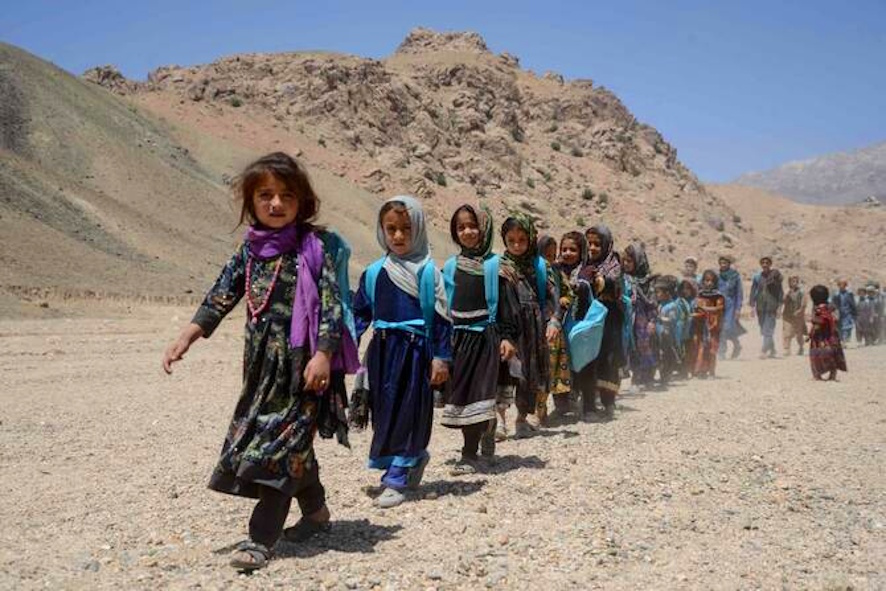
United Nations Praises Educators Amid Worsening Crisis
The United Nations has praised Afghan teachers for their dedication to educating the country’s next generation, while UNICEF renewed its urgent call for the immediate restoration of secondary and higher education for girls and women. The dual message came as Afghanistan remains the only country in the world where secondary and higher education is effectively closed to girls and women—a restriction that threatens to reshape the nation’s future for decades to come.
World Teachers’ Day Recognition
Marking World Teachers’ Day on October 5, the UN expressed deep appreciation for teachers across Afghanistan, particularly those working in rural areas despite difficult conditions, limited resources, and growing security concerns. The UN emphasized that teachers remain essential at a time when education systems worldwide are facing mounting challenges from digital technology, misinformation, displacement, and other pressures.
World Teachers’ Day has been observed annually on October 5 since 1994, celebrating the vital role educators play in shaping societies. This year’s commemoration carried particular weight for Afghanistan, where teachers continue to serve their communities under some of the most challenging circumstances in the world.
The Scale of the Crisis
UNICEF reported that more than 2.6 million girls have been denied secondary education since the ban was imposed in September 2021. The agency stressed that the right of Afghan girls to secondary and higher education must be restored without delay, describing the situation as a fundamental violation of their basic human rights.
The restrictions have created a dual crisis: Afghanistan is losing its existing female professionals while simultaneously preventing a new generation from replacing them. According to a UNICEF analysis published in April, the country risks losing up to 20,000 female teachers and 5,400 female health workers by 2030 if restrictions on girls’ education and women’s employment continue.
Alarming Attrition Rates
The number of female teachers in basic education has already fallen by more than 9 percent, from nearly 73,000 in 2022 to approximately 66,000 in 2024. This decline reflects both the departure of trained professionals and the inability to recruit and train new female educators.
UNICEF explained that the impact extends far beyond the girls currently excluded from classrooms. As trained women leave the teaching and health sectors through retirement or other forms of attrition, girls who are barred from continuing their education are also prevented from becoming the teachers, doctors, nurses, and other professionals needed to replace them. This creates a self-perpetuating cycle of exclusion that will affect Afghan society for generations.
UNESCO’s Warning
UNESCO has similarly warned that Afghanistan’s education crisis threatens an entire generation. Its latest figures project that approximately 2.4 million girls will be excluded from secondary education by 2026. The organization describes Afghanistan as the only country that formally prohibits girls and women from education beyond the primary level a distinction that carries profound consequences for the nation’s development.
UNESCO has called for continued learning opportunities, including community-based education, literacy programs, and vocational skills training, to mitigate the damage caused by the restrictions.
Timeline of Restrictions
The restrictions on girls’ education began with the suspension of secondary schooling for girls above Grade 6 in September 2021. This was followed by a ban on women attending universities in December 2022. Together, these measures have systematically dismantled educational pathways for Afghan women and girls, reversing decades of progress in female education and workforce participation.
International Appeals
UNICEF and UNESCO have repeatedly urged the de facto authorities to reverse the restrictions and restore girls’ and women’s right to education. These appeals have been joined by international organizations, foreign governments, and human rights groups, all emphasizing that education is a fundamental human right and essential for Afghanistan’s peaceful and prosperous future.
Long-Term Consequences
The UN’s message comes as Afghan teachers continue working under difficult circumstances, demonstrating remarkable resilience in the face of adversity. Yet the country faces a widening education crisis that could have lasting consequences for its workforce, health system, and social development.
Without educated women, Afghanistan will struggle to address critical shortages in healthcare, education, and other essential sectors. The loss of female teachers and health workers will disproportionately affect women and girls, who may be unable to access services from male providers due to cultural norms. Moreover, the exclusion of women from education and employment deprives the country of half its talent and potential at a time when it desperately needs both.
The international community continues to watch closely, urging a reversal of policies that threaten to isolate Afghanistan and undermine its prospects for stability and growth. For now, Afghan teachers many of them women working at great personal risk remain on the frontlines of this crisis, determined to educate the next generation despite the obstacles placed in their path.

Support Dawat Media Center
If there were ever a time to join us, it is now. Every contribution, however big or small, powers our journalism and sustains our future. Support the Dawat Media Center from as little as $/€10 – it only takes a minute. If you can, please consider supporting us with a regular amount each month. Thank you
DNB Bank AC # 0530 2294668
Account for international payments: NO15 0530 2294 668
Vipps: #557320

Comments are closed.