

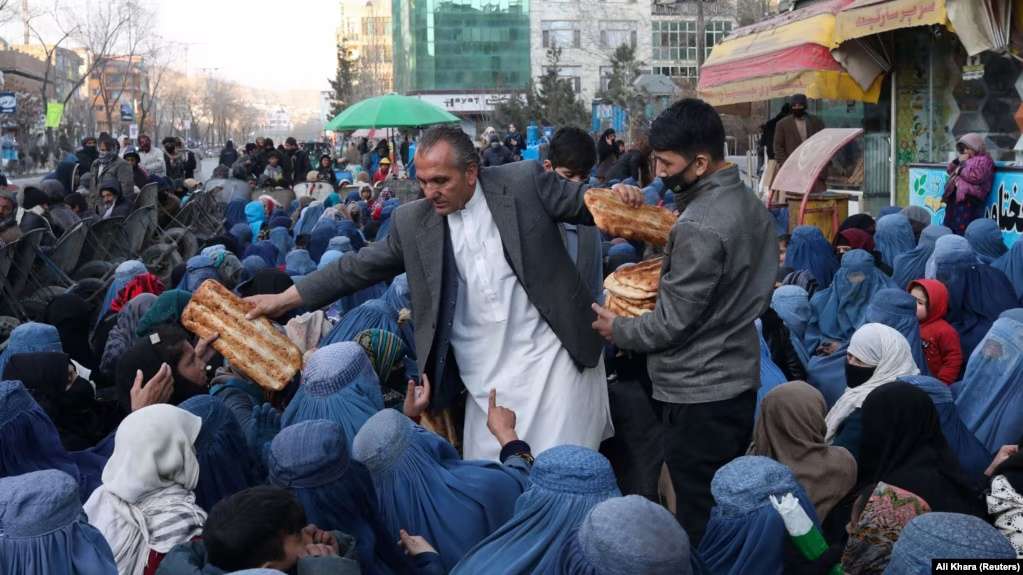
The United Nations Development Programme (UNDP) reported on Wednesday that 74% of Afghanistan’s population approximately 30 million people faced food insecurity in 2025, highlighting the deepening humanitarian and economic crisis more than three years after the Taliban’s return to power.
In a newly released assessment of Afghanistan’s economy under Taliban rule, the UNDP noted that while the country’s economic growth reached 1.9% in 2025, this rate remains insufficient to keep up with rapid population growth (estimated at over 2% annually) and persistently high living costs. The report emphasizes that even modest growth has failed to translate into tangible improvements for most households.
The UNDP attributed the sluggish recovery to a combination of structural restrictions, limited job opportunities especially for women a widening trade deficit, and a sharp decline in international aid. These factors have collectively stifled economic activity, leaving countless families unable to afford basic food, fuel, and medicine.
According to the report, rural communities, women-headed households, Afghan returnees from neighboring countries, and regions affected by recurrent drought have endured the most severe pressures. Rising household debt, shrinking livelihoods, worsening water shortages, and reduced access to healthcare have further increased vulnerability across the country. Many families have resorted to coping mechanisms such as skipping meals, pulling children out of school, or marrying off daughters at an early age in exchange for dowries.
In response, the UNDP called for urgent and sustained international support. Its recommendations include continued humanitarian assistance, investment in private sector development (particularly in agriculture and small-scale manufacturing), the expansion of social protection programs, and the removal of restrictions that bar women and girls from education and employment.
The findings come just days after a separate United Nations warning that more than 13.8 million people in Afghanistan are facing acute food insecurity (IPC Phase 3 or higher), while nearly five million children and pregnant or breastfeeding women are suffering from malnutrition a condition that can lead to lifelong developmental and health consequences.
Earlier UN assessments also indicated that around 17.4 million Afghans are living below the national poverty line, with millions more facing emergency-level humanitarian conditions following years of economic collapse, severe drought, and a drastic reduction in foreign assistance after the Taliban’s takeover in August 2021.
International aid agencies have repeatedly warned that the Taliban’s restrictions on women’s employment and education continue to deepen Afghanistan’s economic isolation. These policies not only violate basic rights but also severely undermine long-term recovery prospects, especially in sectors such as health, education, and humanitarian operations where female staff are essential for reaching half the population.
With winter approaching and funding for UN-led relief programs falling short of targets, the UNDP and other agencies fear that food insecurity and malnutrition rates could worsen further in 2026 unless the international community urgently steps up both financial support and diplomatic engagement.
Our Pashto-Dari Website

Support Dawat Media Center
If there were ever a time to join us, it is now. Every contribution, however big or small, powers our journalism and sustains our future. Support the Dawat Media Center from as little as $/€10 – it only takes a minute. If you can, please consider supporting us with a regular amount each month. Thank you
DNB Bank AC # 0530 2294668
Account for international payments: NO15 0530 2294 668
Vipps: #557320

Comments are closed.