

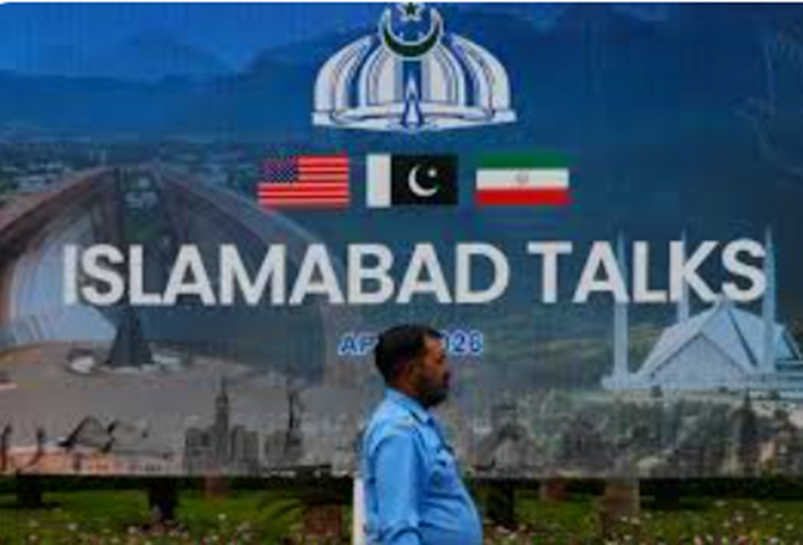
Pakistan’s renewed effort to cast itself as an “honest broker” in the wake of the U.S.–Israel war against Iran collapses under even modest scrutiny. Mediation is not a title a state can simply assume when convenient. It is a function of credibility, and credibility is built on consistency under pressure. Pakistan’s record, especially in this most recent crisis, points in the opposite direction.
During the height of the conflict, when Iran was launching missile and drone strikes against Saudi Arabia, the expectation from any state claiming a defense partnership was straightforward. Act, deter, or at the very least meaningfully reinforce. Pakistan did none of these. It issued statements. It expressed concern. It spoke the language of solidarity while carefully avoiding the substance of it. This was not ambiguity forced by circumstance. It was a deliberate choice to remain passive while a declared partner absorbed direct attacks.
The timing of what followed only deepens the contradiction. Once a ceasefire framework took hold, once escalation risks had receded and the costs of involvement dropped, Pakistan moved to deploy forces to Saudi Arabia. That sequencing is not incidental. It reflects a pattern of risk aversion paired with reputational opportunism, stepping in when visibility is high but exposure is low. A country that calibrates its commitments this way is not signaling reliability. It is signaling calculation.
This behavior is not an isolated lapse. It aligns with a longer strategic pattern that has repeatedly eroded Pakistan’s credibility in the eyes of both allies and adversaries. The discovery of Osama bin Laden in Abbottabad, within proximity of core military infrastructure, remains one of the most damaging counterterrorism failures of the modern era. Whether interpreted as complicity or institutional blindness, the outcome was the same. It exposed a state structure either unwilling or unable to align its internal realities with its external commitments.
Similarly, throughout the U.S. war in Afghanistan, Pakistan accepted vast financial and military support from United States while it is now documented and acknowledged by senior Pakistani officials that the state supported and trained the Taliban even as they were fighting U.S. forces in Afghanistan. This was not a subtle contradiction. It was a direct strategic double game, extracting resources from Washington while enabling the very insurgency those resources were meant to defeat.
Now layer onto this an equally constraining reality: Pakistan’s deep economic fragility. The country is burdened by chronic balance-of-payments crises, persistent fiscal deficits, and a cycle of external borrowing that has left it heavily indebted. Its economic stability is not self-sustaining. It is managed through recurring interventions, often involving the International Monetary Fund and bilateral lenders. This matters because economic dependence shapes strategic autonomy. A state under financial strain has less room to maneuver and greater incentive to hedge.
Within that context, Pakistan’s expanding relationship with China becomes central. Through initiatives like the China–Pakistan Economic Corridor, Beijing has entrenched itself as a primary economic and strategic partner. Infrastructure financing, energy projects, and debt exposure have tied Pakistan’s long-term economic trajectory closely to Chinese interests. This is not merely a development partnership. It is a structural alignment.
That alignment inevitably shapes Pakistan’s external posture. China’s rivalry with the United States is not peripheral to global politics. It is the defining axis of it. A country deeply embedded in China’s economic orbit cannot plausibly claim to be a neutral intermediary in conflicts where U.S. interests are directly engaged. Even if Pakistan seeks to present itself as balanced, the perception of alignment alone is enough to undermine confidence. In diplomacy, perception is not secondary. It is decisive.
What emerges, when these elements are considered together, is a coherent pattern. Pakistan avoids high-risk commitments when they matter most, as seen in its inaction while Saudi Arabia was under direct attack. It engages when conditions are safer, as seen in its post-ceasefire deployments. It maintains parallel relationships with competing actors, extracting advantage while diluting trust. And it operates under significant economic constraints that tether its strategic choices to external patrons, particularly China.
Against that backdrop, the claim to be an “honest broker” is not just weak. It is structurally implausible. Mediation requires more than access or ambition. It requires a track record of reliability under pressure, independence from conflicting obligations, and a demonstrated willingness to incur costs in defense of stated principles.
Pakistan, at present, offers the opposite profile. A state that hedges in war, that times its commitments to minimize risk, and that is economically and strategically entangled with major power competition cannot convincingly arbitrate peace. Until those underlying contradictions are addressed in a sustained and verifiable way, its diplomatic aspirations will continue to be met not with trust, but with justified skepticism.
From Panama to Malacca: Inside America’s Emerging Strategy to Contain China
Our Pashto-Dari Website

Support Dawat Media Center
If there were ever a time to join us, it is now. Every contribution, however big or small, powers our journalism and sustains our future. Support the Dawat Media Center from as little as $/€10 – it only takes a minute. If you can, please consider supporting us with a regular amount each month. Thank you
DNB Bank AC # 0530 2294668
Account for international payments: NO15 0530 2294 668
Vipps: #557320

Comments are closed.