
Locating Khorasan in Al-Mashriq: Harmonizing the Hadith of Khorasan with the Narrative of Al-Jassasah
Mohammad Daoud

Abstract
Topic: In Islamic eschatology, al-Mashriq (the East) is a region profoundly associated with the emergence of trials (fitan), peaking with the appearance of the Masīḥ al-Dajjāl. Prophetic traditions indicate his emergence from al-Mashriq, specifically from a land called Khorasan. Traditionally, this is identified with the historical region of Greater Khorasan in Central Asia.
Objectives: This paper challenges the traditional view by re-examining aḥādīth in conjunction with classical geography and linguistic analysis. It aims to identify the “prophetic Mashriq” as the Anatolian peninsula and reconcile this finding with narrations mentioning Isfahan by positing a multi-stage khurūj (emergence) campaign.
Methodology: The study utilizes a qualitative synthesis of ḥadīth collections, classical Muslim geographical texts, and etymological analysis. It specifically harmonizes the landlocked “Khorasan” traditions with the maritime narrative of Tamīm al-Dārī.
Findings: The research finds that “Khorasan” is used etymologically as “the land of the rising sun,” making it the Arabic equivalent of the Greek-derived “Anatolia.” This resolves the geographical impossibility of a Mediterranean island release (per Tamīm al-Dārī) leading to a Central Asian origin. Furthermore, the study establishes a linear, four-stage trajectory: (1) Release in Anatolia, (2) Initial trial in the Khallah (Al-Jazīrah), (3) Military mobilization in Isfahan, and (4) The final march toward Medina and Al-Shām. This framework provides a unified eschatological map that resolves previously perceived contradictions in the prophetic corpus.
Keywords: Dajjal, al-Mashriq, Khorasan, Anatolia, Al-Jassasah, Isfahan, Islamic Eschatology.
Introduction
The study of fitan (tribulations) and ashrāṭ al-sāʿah (the portents of the Hour) constitutes a significant branch of Islamic theology, rooted in the eschatological warnings and prophecies found in the Qur’an and the Sunnah. Among these portents, the emergence of a false messiah, al-Masīḥ al-Dajjāl, is considered the greatest trial to befall humanity.[1] The Prophet Muḥammad (ﷺ) warned his followers about him extensively, describing his attributes, his powers, and the location from which his great tribulation would emanate.[2]
The prophetic traditions consistently identify this direction as al-Mashriq (the East).[3] A specific hadith further narrows this down to a territory called Khurāsān.[4] For centuries, Muslim scholars and laypeople have largely identified this with the historical Greater Khorasan, a vast province of past Islamic empires located around Iran and today’s Afghanistan, with four key areas: Nīshāpūr, Herat, Balkh, and Merv.[5]
The Research Problem
The central research problem arises from a geographical paradox within the prophetic narrations. The hadith of Abu Bakr specifies that the Dajjal will emerge from “Khorasan,” a land that must lie within the prophetic ‘al-Mashriq’—the vast region east and northeast of Medina. However, the traditional identification of this with the landlocked historical Greater Khorasan is directly contradicted by the detailed account of the companion Tamīm al-Dārī. [6] The hadith of Tamīm’s journey specifies that his voyage to the Dajjal’s island was confined entirely to the Mediterranean Sea (Baḥr al-Shām) [7], making a destination in the landlocked historical Khorasan—thousands of kilometres away geographically impossible, a critical inconsistency that this paper seeks to resolve
Importance of the Research
The significance of this research lies in its attempt to harmonize foundational prophetic narrations concerning one of the greatest portents of the end times. By resolving this long-standing topographical and textual conundrum, this study offers a new paradigm for understanding the geography of a major eschatological event, contributing to a more precise and coherent map of the fitan literature.
Research Objectives
This paper aims to achieve the following objectives:
- To resolve the apparent contradiction between the narrations specifying the Dajjal’s emergence from Khorasan and the account of Tamīm al-Dārī.
- To propose a revised cartography of the prophetic Mashriq by examining the interchangeable use of the terms al-Mashriq, Najd, and ʿIrāq in the hadith literature.
- To argue, through linguistic and historical analysis, that the term Khurāsān in this context refers to Anatolia, “the land of the rising sun,” rather than the Central Asian region.
- To reconcile this finding with other narrations mentioning Isfahan, positing a multi-stage khuruj (emergence).
Methodology and Plan
This study adopts a multi-disciplinary approach, synthesizing evidence from hadith literature, classical hadith commentaries (shurūḥ), medieval Islamic geography, and linguistic etymology[8]. The paper will first define the prophetic scope of al-Mashriq by analyzing narrations about it and the lands of the Rabīʿah and Muḍar tribes. [9] It will then establish the geographical constraints of Tamīm al-Dārī’s journey. Finally, it will present the linguistic argument for equating Khurāsān with Anatolia[10], demonstrating that this location resolves all apparent contradictions in the source texts.
First: Defining ‘Al-Mashriq’ in the Prophetic Traditions
The concept of al-Mashriq in Islamic eschatology is not merely a cardinal direction but a locus of profound and ominous significance. The aḥādīth of the Prophet Muḥammad (ﷺ) repeatedly point to the East as the epicentre of future tribulations, chaos, and disbelief. A precise understanding of what this term geographically entails is foundational to locating the Dajjal.
- The East as the Source of Tribulation
Numerous authentic narrations record the Prophet (ﷺ) physically gesturing towards the East while warning of impending fitan. The most famous of these are narrated from ʿAbdullāh ibn ʿUmar, who heard the Prophet (ﷺ) say while facing East: “Lo! Verily, the tribulation is over there, from where the horn of Satan rises”.[11] This statement, or variations of it, was delivered on multiple occasions—from alongside the pulpit (minbar), and while standing at the door of his wives Ḥafṣah and ʿĀʾishah.[12] In the narration from ʿĀʾishah’s house, the wording is even starker: “The head of disbelief is from this direction, from where the horn of Satan rises,” with the narrator clarifying this meant al-Mashriq.[13]
The consistency of these narrations, recorded in the most authoritative collections such as Ṣaḥīḥ al-Bukhārī, Ṣaḥīḥ Muslim, and Musnad Aḥmad, establishes an undeniable link between the East and the gravest spiritual dangers. The imagery of qarn al-Shayṭān (the horn of Satan) rising with the sun signifies that this region would be a breeding ground for ideologies and movements antithetical to faith.[14] Another hadith transmitted by Jābir ibn ʿAbdullāh reinforces this, stating, “Hardness of hearts and callousness are in the East, and faith is in the land of the Ḥijāz”.[15]
1.2 The Emergence of the Dajjal as the Peak of Eastern Tribulations
The prophetic warnings regarding al-Mashriq do not describe a static event, but rather a progressive intensification of fitna (tribulation). While the previous section established the East as the general source of trials and the “horn of Satan,” the aḥādīth specifically identify the Masīḥ al-Dajjāl as the final and most devastating manifestation of these Eastern phenomena. As argued throughout this paper, the prophetic Mashriq is not merely a reference to the physical sunrise relative to Medina, but a specific topographical and eschatological locus defined by where “Satan rises his horn”. This is explicitly linked to the emergence of the Dajjal through several authentic traditions:
- The Prophetic Confirmation of the East: Following the account of Tamīm al-Dārī, the Prophet (ﷺ) struck his pulpit and confirmed the Dajjal’s location with a threefold emphasis: “He is in the direction of the East. He is in the direction of the East. He is in the direction of the East,” while physically gesturing toward that region[16]. This gesture aligns with the warnings of fitna discussed in Section 1.1, identifying the same epicenter for the greatest trial.
- The “Remnant” Theory of Emergence: The connection between continuous Eastern tribulations and the Dajjal is solidified in the narration of ʿAbdullāh ibn ʿAmr. He reported the Prophet (ﷺ) describing a recurring group from the East who would lack deep understanding of the faith, stating that whenever one generation of them is cut off, another rises, until the Dajjal emerges among their remnants[17]. This suggests that the Dajjal appears as the final product of a long-standing environment of Eastern callousness and deviation.
- Geographical Trajectory: Abu Hurayrah (ra) narrated that the Prophet (ﷺ) said: “The Masīḥ (Dajjal) will come from the direction of the East, intending to reach Medina, until he encamps behind Uhud. Then the angels will divert his face toward Sham, and there he will perish”[18]. This movement from the far East toward the sacred centers illustrates the “overflow” of Eastern tribulation into the rest of the Islamic world.
- Specific Toponymy: Khorasan: Consistent with the identification of al-Mashriq, the Prophet (ﷺ) further specified the territory of origin: “The Dajjal will emerge from a land in the East called Khorasan”[19]. As will be examined in Part Four, this “Khorasan” is a descriptive toponym for the “land of the rising sun,” pointing directly to Anatolia rather than landlocked Central Asia.
By framing the Dajjal’s emergence as the culmination of the “horn of Satan” trials, the geographical links between Iraq, the northern Mesopotamian homelands of Rabīʿah and Muḍar, and the prophesied Khorasan (Anatolia) form a coherent eschatological map.
- The Interchangeability of ‘Al-Mashriq’, ‘Najd’, and ‘ʿIrāq’
While al-Mashriq is the most general term, other toponyms appear in parallel contexts, creating a triangle of meaning that helps delineate the region more clearly. The key to this is the famous hadith where the Prophet (ﷺ) prayed for divine blessings (barakah). Ibn ʿUmar narrates that the Prophet (ﷺ) said, “O Allah, bless us in our Shām! O Allah, bless us in our Yemen!” The people present said, “And in our Najd, O Messenger of Allah?” He repeated his prayer for Shām and Yemen, and when they again interjected about Najd, he said on the third occasion, “There will occur earthquakes and tribulations, and from there the horn of Satan will rise”.[20]
This hadith is crucial because variant narrations substitute the word Najd with al-Mashriq and ʿIrāq. In a version found in Musnad Aḥmad, a man asks, “And in our Mashriq, O Messenger of Allah?” The Prophet (ﷺ) replies, “From there the horn of Satan rises, and in it is nine-tenths of evil”.[21] In another narration from Ibn ʿAbbās, related by al-Ṭabarānī, a man asks, “And in our Iraq?” to which the Prophet (ﷺ) replies, “Verily, from there is the horn of Satan, and tribulations will be stirred up, and callousness is in the East”.[22]
The use of these three terms for the same unblessed region has led some to confusion, but classical scholars resolved this by defining Najd not as a specific, limited province (as is the case with modern Saudi Arabia’s Najd), but as a topographical descriptor. Ibn Ḥajar al-ʿAsqalānī, quoting the earlier authority al-Khaṭṭābī, clarifies this point authoritatively in his commentary on Ṣaḥīḥ al-Bukhārī:
“Al-Khaṭṭābī said: ‘Najd is in the direction of the east. For one who is in Medina, their Najd would be the desert of Iraq and its environs, which is to the east of the people of Medina. The root meaning of Najd is what is elevated from the earth, in contrast to al-Ghawr, which is what is depressed… With this, the error of al-Dāwūdī, who said Najd is in the direction of Iraq, becomes apparent, for he imagined Najd to be a specific place, which it is not. Rather, everything that is elevated in relation to what is next to it is called Najd, and what is low is called Ghawr.’”[23]
This definition, which refutes the notion of Najd as a single, fixed location and identifies it as the elevated lands to the east of Medina, including Iraq, is the key to harmonization. It is supported by a host of other classical lexicographers and commentators, including Ibn al-Athīr, who states that Najd is elevated land and is a name specifically for the regions beyond the Hejaz that lie towards Iraq.[24] Modern scholars like Shaykh Ḥammūd al-Tuwayjirī concur, stating that the intended land is Iraq and the parts of the East adjacent to it.[25]
This interchangeability is powerfully demonstrated by an authentic mawqūf narration from Abu Bakr al-Ṣiddīq. It directly parallels the famous prophetic hadith, “The Dajjal will emerge from a land in al-Mashriq called Khorasan,” but explicitly substitutes the word Iraq for al-Mashriq. It is narrated that Abu Bakr asked, “‘Is there a land in Iraq called Khorasan?’ They said, ‘Yes.’ He said, ‘Verily, the Dajjal will emerge from it.'”[26] By replacing al-Mashriq with Iraq in this context, the narration provides compelling evidence that in early eschatological discourse, “Iraq” was used to denote the broader prophetic Mashriq. This narration, whose chain of narrators meets the standard of Bukhārī, therefore confirms that the terms were used interchangeably to refer to the same vast, ominous region to the east.
This usage is analogous to how ancient mariners referred to the Indian Ocean by different names depending on the coast they were nearest—Baḥr al-Fārs (Persian Sea), Baḥr al-Hind (Indian Sea), or Baḥr al-Yaman (Yemeni Sea)—though it was all one body of water.[27] Similarly, ʿIrāq, being the most prominent part of the Mashriq for the early Muslims of Medina, could be used to refer to the entire eastern direction of tribulation. This is further substantiated by a narration from Sālim ibn ʿAbdullāh ibn ʿUmar, who, addressing the people of Iraq directly, said, “I heard my father… say: ‘I heard the Messenger of Allah (ﷺ) say, “Verily, the tribulation will come from this direction”—and he pointed with his hand towards the East—“from where the horns of Satan rise”’”.[28] Another powerful narration in Musnad Aḥmad states that Ibn ʿUmar saw the Prophet (ﷺ) “pointing with his hand towards Iraq [saying], ‘Lo! The tribulation is over there,’ three times, ‘from where the horn of Satan rises’”.[29] Some scholars have considered this narration a direct interpretation (mufassir) of all other hadiths that simply point east.[30] Thus, the prophetic Mashriq is firmly established as being northeast of Medina, with Iraq as its frequently mentioned component. However, the evidence also suggests that its boundaries are not limited to Iraq alone.
Second: Expanding the Borders of Al-Mashriq: The Lands of Rabīʿah and Muḍar
The prophetic corpus provides further geographical clues that extend the map of al-Mashriq northwards from Iraq. The aim is not simply to locate a place where the sun physically rises from Medina’s perspective, but to identify the location that the hadith specifies as the place from where “Satan rises its horn.” In that sense, a series of hadiths links the source of tribulation not just to a direction, but to the dwelling places of specific Arab tribes: Rabīʿah and Muḍar.
2.1 The Hadith of the ‘Faddādīn’
In a hadith narrated by Ibn Masʿūd and recorded by Bukhārī and Muslim, the Prophet (ﷺ), when he was in Tabuk, pointed towards Yemen (i.e., Mecca and Medina) and praised its people for their faith. He then contrasted this with the East, saying, “…and verily, harshness and hardness of hearts are among the faddādīn (loud-voiced owners of camels and cattle), near the roots of the tails of the camels, where the two horns of Satan rise: in Rabīʿah and Muḍar”.[31]
The scholars of hadith explain that the phrase “where the two horns of Satan rise” is a clear metaphor for the East (al-Mashriq).[32] This is because Satan is said to position himself to face the rising sun, so that sun-worshippers prostrate towards him.[33] The direct naming of the tribes of Rabīʿah and Muḍar as the inhabitants of this ominous land is a critical piece of information. The link is made undeniable by variant narrations where the names of the tribes are replaced by the word al-Mashriq itself. For example, a narration in Musnad Aḥmad with a sound chain states, “Faith is Yemeni (i.e., Ḥijāzī) and wisdom is Yemenite… and coarseness is among the faddādīn, the people of camel-hair tents,” and the narrator adds, “and he pointed with his hand towards the East”.[34] Another version explicitly states, “Faith is among the people of the Ḥijāz, and hardness of hearts and coarseness are among the faddādīn among the people of the East”.[35] A hadith from Abū Yaʿlā, authenticated by Ḥusayn Salīm Asad, combines both, stating, “Harshness and hardness of hearts are in the direction of the East, in Rabīʿah and Muḍar, and faith is in the people of the Ḥijāz”.[36]
2.2 Locating Diyār Rabīʿah and Diyār Muḍar
The tribes of Rabīʿah and Muḍar were large, nomadic Arab confederations descended from ʿAdnān.[37] While their ancestral lands were in the Arabian Peninsula, they expanded and migrated over time in search of pasture and influence. The great scholar Ibn Taymīyah notes their expansion, stating that they “spread throughout the land, and they took control over the lands of al-Shām, al-Jazīrah, Egypt, Iraq, and others, to the extent that they settled in al-Jazīrah between the Euphrates [and the Tigris]”.[38]
This region, al-Jazīrah (literally ‘the island’), also known as al-Jazīrah al-Furātiyyah (the Euphratean Island) or Upper Mesopotamia, is the key to locating these tribes.[39] Medieval Muslim geographers are unanimous on this point. The famed 10th-century geographer Ibn Ḥawqal writes in his Ṣūrat al-Arḍ (“The Face of the Earth”): “As for the island that lies between the Tigris and the Euphrates, it comprises the homelands (diyār) of Rabīʿah and Muḍar”.[40] This statement is echoed by a multitude of other prominent geographers and historians, including al-Iṣṭakhrī, Ibn Faqīh, al-Idrīsī, and Yāqūt al-Ḥamawī, making it a geographical certainty of that era.[41]
The lands of these two tribes formed distinct districts within al-Jazīrah. According to sources like Ibn Faqīh and Yāqūt al-Ḥamawī, Diyār Rabīʿah included cities such as Mosul, Nasībīn, Āmid (modern Diyarbakır), Mardin, and Sinjar.[42] Diyār Muḍar included cities like Ḥarrān, al-Ruhā (Edessa, modern Şanlıurfa), Sumaysāṭ (Samosata), and al-Raqqah.[43]
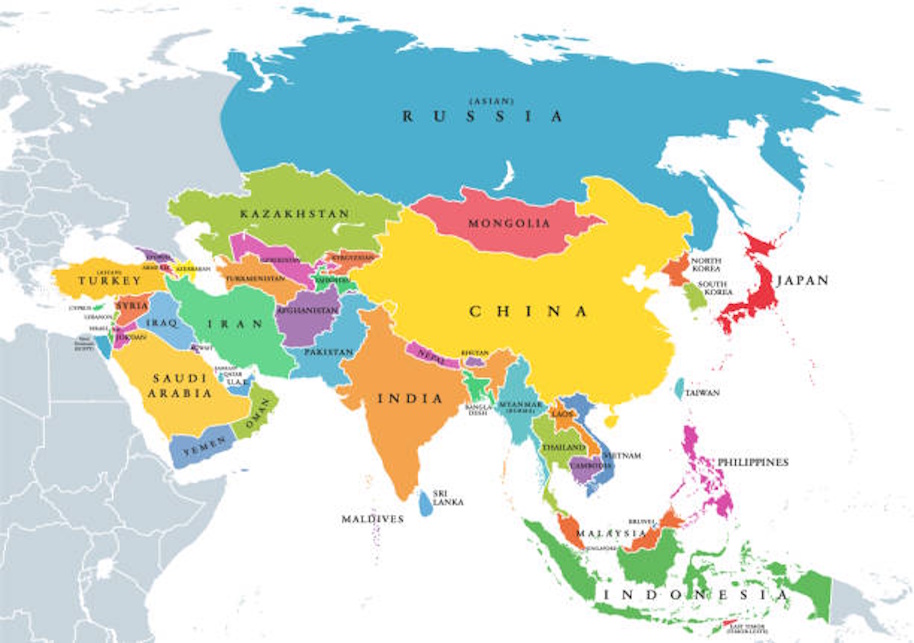
The critical implication of this data is that the prophetic Mashriq, the land of the “horn of Satan,” extends significantly north of what is considered modern Iraq. A large number of the cities of Diyār Rabīʿah and Diyār Muḍar—such as Diyarbakır (Āmid), Şanlıurfa (al-Ruhā), Ḥarrān, Mardin, and Sumaysāṭ—are located within the borders of modern-day Türkiye. This establishes an unbreakable geographical link between the eschatological Mashriq and the Anatolian peninsula. This expanded definition is vital for understanding the final piece of the puzzle: the journey of Tamīm al-Dārī.
Third: The Hadith of Tamīm al-Dārī and the Sea Voyage
The most detailed eyewitness account of the Dajjal comes from the hadith of Fāṭimah bint Qays, who related the story she heard directly from the Prophet (ﷺ), who in turn heard it from Tamīm al-Dārī. This narration provides precise geographical constraints that are indispensable for correctly identifying the Dajjal’s location.
3.1 The Narrative of the Journey
The authentic hadith, recorded in Ṣaḥīḥ Muslim and many other collections, recounts that Tamīm al-Dārī, a Christian from Palestine who later converted to Islam, was a merchant who often travelled by sea.[44] On one such voyage, he set sail with thirty men from the Arab tribes of Lakhm and Judhām.[45] A fierce storm tossed their ship about for an entire month, exhausting their sense of direction, until they were cast ashore on an island at sunset.[46] There, they encountered a strange, hairy beast called al-Jassāsah (the Spy), which led them to a man of immense size, chained in a monastery (al-Dayr), who identified himself as the Dajjal.[47]
When Tamīm eventually reached Medina and accepted Islam, he recounted this story to the Prophet (ﷺ), who was delighted and gathered the people to share it, as it confirmed what he himself had been telling them.[48] The crucial part of the Prophet’s confirmation was his statement on the Dajjal’s location. After telling Tamīm’s story, he struck the pulpit with his staff and said:
“Lo! He is in the Sea of Shām (Baḥr al-Shām) or the Sea of Yemen (Baḥr al-Yaman). Nay, on the contrary, he is in the direction of the East. He is in the direction of the East. He is in the direction of the East,” and he pointed with his hand towards the East.[49]
The Prophet’s initial mention of the two seas, followed by a firm negation and a threefold confirmation of the East, is profoundly significant. It confirms Tamīm’s account of a sea voyage but corrects the final location to the Mashriq. Furthermore, a narration of this incident recorded by Ibn Ḥibbān with sound chain of narrators specifies that Tamīm’s journey took place “in the Sea of Shām” (fī Baḥr al-Shām), which is the classical Arabic name for the Mediterranean Sea.[50] This detail, combined with the Prophet’s final declaration, means the Dajjal’s island must be in a part of the Mashriq that is accessible via the Mediterranean Sea.
3.2 The Geographical Impossibility of ‘Baḥr al-Yaman’
To appreciate the full weight of this evidence, one must understand the geography of the era. Baḥr al-Shām referred to the Mediterranean, particularly its eastern shores along the Levant.[51] Baḥr al-Yaman was a broader term for the body of water to the south and east of Arabia, encompassing what we now call the Red Sea, the Gulf of Aden, and the Arabian Sea.[52] The port of Medina, al-Jār, and the port of Mecca, Jiddah, were both on the coast of this sea.[53]
Crucially, in the seventh century, and for twelve centuries thereafter, there was no navigable waterway connecting Baḥr al-Shām and Baḥr al-Yaman. The modern Suez Canal, which links the Mediterranean to the Red Sea, was only completed in 1869. Before its existence, a land bridge, a barzakh, separated the two seas. Merchants and travelers sailing from the Mediterranean to India or Persia had to disembark at a port like al-Faramā (near modern Port Said), transport their goods overland for several days to a port on the Red Sea like al-Qulzum (ancient Suez), and then embark on a different ship.[54] Medieval geographers like Ibn Khurdādhbih, al-Iṣṭakhrī, and Yāqūt al-Ḥamawī all describe this overland transit, with estimates for the journey ranging from one to seven days, depending on the route and mode of transport.[55] History also records that several rulers, from the Persian King Darius to the Roman Emperor Trajan, and later the Muslim Caliphs ʿUmar ibn al-Khaṭṭāb and Hārūn al-Rashīd, contemplated or began digging a canal but abandoned the project, often out of fear that it would grant hostile naval powers (like the Byzantines) direct access to the holy cities of the Hejaz.[56]
This geographical reality is an insurmountable obstacle to any theory placing the Dajjal’s island in the Indian Ocean or Persian Gulf. Since Tamīm al-Dārī began his journey in the Mediterranean (Baḥr al-Shām), his ship could not have crossed into the Red Sea (Baḥr al-Yaman) or beyond. His entire voyage, including the month he was lost at sea, must have been confined within the basin of the Mediterranean. Therefore, the island he landed on must be in the Mediterranean, and the Mashriq the Prophet (ﷺ) pointed to must be a region with a Mediterranean coastline.
Fourth: The ‘Khorasan’ of the Dajjal: A Linguistic and Geographical Re-evaluation
With the field of inquiry narrowed to the Eastern Mediterranean, we must address the hadith that seems to contradict this: the prophecy that the Dajjal will emerge from a land in the East called Khurāsān.
4.1 Problematizing the Historical Khorasan
A hadith narrated on the authority of Abū Bakr al-Ṣiddīq states that the Prophet (ﷺ) told them: “The Dajjal will emerge from a land in the East called Khurāsān, followed by a people whose faces are like hammered shields”.[57] This description of the Dajjal’s followers—”faces like hammered shields” (wujūhuhum ka-al-majānn al-muṭraqqah)—is widely understood by commentators to refer to the Turks. This detail itself presents a profound prophetic miracle supporting the Anatolian thesis. At the time of the Prophet (ﷺ), Anatolia was the heartland of the Christian Byzantine (Roman) Empire. The hadith, therefore, prophesied the great historical migration of the Turkic peoples into Anatolia, foretelling that they would be the inhabitants of this land (the prophesied Khurāsān) by the time the Dajjal’s emergence is due. This hadith, deemed authentic by hadith scholars like Shaykh al-Albani, Shaykh Shu’ayb al-Arna’ut, and Shaykh Ahmad Shakir, has been the primary source for the conventional identification of the Dajjal’s origin with the historical province of Greater Khorasan.[58]
However, as established, this location presents a direct contradiction with the geographical constraints of Tamīm al-Dārī’s journey. The historical Khorasan, with its famous cities of Nīshāpūr, Marv, Herat, and Balkh, is entirely landlocked. It has no access to the Mediterranean, nor to any sea that connects to it. The great hadith scholar Ibn Ḥibbān recognized this very problem in the 10th century, stating unequivocally that the Dajjal “is chained on an island among the islands of the sea, as Tamīm al-Dārī informed, and there is no sea or island in Khurāsān”.[59] This stark geographical fact requires us to seek an alternative interpretation of the term Khurāsān in this specific context.
4.2 The Linguistic Equivalence of ‘Khurāsān’ and ‘Anatolia’
The solution to this conundrum lies not in geography, but in etymology. The word Khurāsān is not of Arabic origin; it is a Persian compound. Classical Muslim philologists and geographers explain that it is formed from khur (sun) and āsān (coming, rising), literally meaning “the place where the sun rises,” or more simply, “The East” or “The Orient”.[60]
This linguistic key unlocks the puzzle when compared with the etymology of another major toponym in the region: Anatolia. The name for the vast Asian peninsula of modern Türkiye, Anatolia (Türk: Anadolu), is derived directly from the Greek word Ἀνατολή (Anatolē). This Greek word also means “sunrise” or “the East”.[61] The Greeks of Constantinople (Byzantium) gave the land across the Bosporus this name because it was from over its mountains that they watched the sun rise each morning. Numerous historical and linguistic sources, both classical and modern, confirm this meaning.[62]
Therefore, Khurāsān (Persian) and Anatolia (Greek) are etymological equivalents. Both literally mean “the land of the rising sun” or “the East.”
4.3 Urban Topography and the Christian Roman Context
Beyond the maritime navigation, the internal details of the Al-Jassasah encounter provide specific clues regarding the administrative and religious environment of the island. While the primary narration in Ṣaḥīḥ Muslim focuses on the “monastery” (al-Dayr), a significant variant in Sunan al-Tirmidhi—classified as Ṣaḥīḥ by al-Albānī—adds a vital geographical detail.
In this version, the creature (Al-Jassasah) directs Tamīm al-Dārī and his companions with the following instruction:
“Go to the farthest end of the town (aqṣā al-qaryah), for there is a man there who is eager to hear from you and to give you news.”[63]
The use of the term qaryah (town or village) in conjunction with the Dayr (monastery) mentioned elsewhere strongly suggests a location within the cultural and architectural sphere of the Byzantine Empire (Christian Rome). This “town at the farthest end” with an active monastery is a hallmark of the coastal settlements of the Mediterranean Mashriq (Anatolia and the Levant) during the 7th century.
Specifically, this topography aligns with the outskirts of major Roman centers like Constantinople or its surrounding islands (such as the Princes’ Islands). The identification of the Dajjal’s confinement within a Roman “monastery” at the edge of a “town” makes the landlocked, non-Christian geography of historical Central Asian Khorasan entirely incompatible with the text. Instead, it places the starting point of the Dajjal firmly within the Greco-Roman/Anatolian sphere—the very region this paper identifies as the “Prophetic Khorasan.”
4.4 Synthesizing the Evidence
With this linguistic understanding, the hadith of Abū Bakr can be re-read not as a contradiction, but as a clarification. The Prophet (ﷺ) stated that the Dajjal would emerge from a land in the East “min arḍin bi-l-mashriq” called Khurāsān (the East).”[64] He was using a known synonym for “East” to describe a land within the greater eschatological Mashriq. This avoids a tautology and provides a descriptive name rather than a political one.
Anatolia fits every piece of evidence presented thus far:
- It is in al-Mashriq: It lies to the east and northeast of Medina.
- Its name means “East”: It is the literal “Khurāsān” or “land of the rising sun.”
- It is accessible via Baḥr al-Shām: It has a vast Mediterranean coastline, making it a viable destination for Tamīm al-Dārī’s ship. It contains countless islands where the Dajjal could have been sequestered, just outside the reach of the Byzantine capital of Constantinople.
- It contains the lands of Rabīʿah and Muḍar: As demonstrated, Diyār Muḍar and parts of Diyār Rabīʿah were located in what is now southern and southeastern Türkiye, tying Anatolia directly to the lands of the “horn of Satan.”
This interpretation resolves all the major textual and geographical conflicts. It respects the authenticity of both the hadith of Tamīm al-Dārī and the hadith mentioning Khurāsān, demonstrating that they refer to the same reality when understood through the correct geographical and linguistic lens.
Fifth: Reconciling the Anatolian Emergence with Isfahan Narratives and the Dajjal’s Final Path
A critical aspect of this thesis is to harmonize the identification of the Anatolian Mashriq (the prophetic Khorasan) as the primary point of release with the authentic narrations that prominently feature Asfahan (Isfahan). Some have posited Isfahan as the absolute khuruj (emergence) point, based on the well-known Ṣaḥīḥ Muslim narration from Anas ibn Malik (r.a.) that, “The Dajjal will be followed by 70,000 Jews from Asfahan, wearing Tayalisah (Persian cloaks)”[65].
However, this narration and others like it do not contradict the Anatolian emergence; rather, they describe a subsequent phase of the Dajjal’s campaign. As classical commentators like Imam al-Mubarakpuri have noted, the Ṣaḥīḥ Muslim hadith is not explicit about his emergence from Isfahan, but rather his followers (أتباع) from it[66]. This describes a mobilization of his army, not an origin point.
The khuruj of the Dajjal is best understood as a multi-stage campaign, not a single event. The evidence, when synthesized, points to a clear, linear chronology:
- 1. The Release from Confinement (Anatolia/Khorasan): The Dajjal is initially released from his confinement on a Mediterranean island (per Tamīm al-Dārī) within the Anatolian Mashriq.
- 2. The Primary Public Trial (The Khallah): Moving south from Anatolia, he begins his public emergence on the “path between al-Shām and al-ʿIrāq” (Khallah bayna al-Shām wa-al-ʿIrāq). This is where he makes his first major public claim and “wreaks havoc right and left”. It is in this specific region (Al-Jazīrah / Diyār Rabīʿah wa Muḍar) that he performs his miracles of rain and livestock to deceive the agricultural populations[67].
- 3. The Gathering of Armies (Isfahan): After this initial trial in the northern Mashriq, his path moves south-east towards Iran. This is supported by the Hasan narration in Musnad Aḥmad that the Dajjal will descend upon ‘Khūz and Kirmān’ (regions adjacent to Isfahan) with 70,000 followers, whose “faces are like hammered shields”[68]. It is here, in Isfahan, that he gathers his main army. The Hasan narration from ʿĀʾishah (r.a.), which states he “emerges in (في) the Jewry of Asfahan”[69] , therefore describes this secondary phase of his public campaign—his consolidation of power among his main followers before his final march on the Hijaz.
- 4. The Final Trajectory: This timeline is powerfully reinforced by what the narrations state next. The Dajjal’s path is linear and terminal. From Isfahan, his objective is Medina[70]. When the angels bar his entry, they will turn his face towards Al-Shām (Palestine).
Crucially, the Dajjal does not return to Anatolia or the Khallah. His journey from Medina is his final one. He proceeds to Al-Shām, where he is fated to perish (yahlik) at the gate of Lud at the hands of ʿĪsā ibn Maryam (a.s.).
This linear, one-way trajectory makes the identification of the Anatolian origin essential. The specific trial of “wreaking havoc right and left” must occur in the initial Khallah phase as he travels south from Anatolia, because he never returns to that region. His subsequent campaign in Isfahan is one of military mobilization, and his campaign in Al-Shām is his final confrontation.
Conclusion: A Unified Geographical Map of the Dajjal’s Emergence
This study has re-evaluated the prophetic geography of al-Mashriq and the prophesied emergence of the Masīḥ al-Dajjāl. By applying a synthesis of classical linguistic analysis, historical geography, and textual harmonization of the aḥādīth, it challenges the long-held assumption that the Dajjal’s “Khorasan” refers to the landlocked region of Central Asia. Instead, it concludes that the term is utilized in its literal, etymological sense—”the land of the rising sun”—serving as the Arabic equivalent to the Greek “Anatolia” (modern-day Türkiye).
This geographic re-identification is fundamentally necessitated by the spatial constraints of Tamīm al-Dārī’s voyage. The Dajjal’s confirmed confinement on an island in the Mediterranean (Baḥr al-Shām) renders a primary emergence from historical Greater Khorasan geographically untenable. Only the Anatolian peninsula reconciles the reality of a Mediterranean island release with a subsequent emergence from a northern Mashriq.
Crucially, this framework resolves the apparent contradictions between various authentic narrations by mapping a cohesive, multi-stage campaign of emergence (khurūj):
- The Release: The Dajjal is unleashed from his island confinement within the Anatolian Mashriq (the prophetic Khorasan).
- The Primary Trial: He moves south, initiating his major public deception in the Khallah bayna al-Shām wa-al-ʿIrāq (Al-Jazīrah / Upper Mesopotamia), targeting the agricultural populations (Faddādīn) of Rabīʿah and Muḍar with miracles of rain and vegetation.
- The Military Mobilization: Having passed through the Khallah, he proceeds southeast to Isfahan to consolidate his forces, gathering his core army of 70,000 followers.
- The Final Confrontation: From Iran, he launches his linear, terminal march toward the Hijaz (Medina), ultimately being diverted to Al-Shām, where he is destroyed by ʿĪsā ibn Maryam (a.s.) at the gates of Lud.
By prioritizing classical geographical boundaries over modern political borders and recognizing the khurūj as a progressive military trajectory rather than a static event, this research harmonizes the foundational texts. It provides a comprehensive eschatological map that honors both the textual and the geographical reality of the Prophetic warnings. And Allah knows best.
Bibliography
- Aḥmad ibn Ḥanbal. Musnad al-Imām Aḥmad ibn Ḥanbal. Edited by Shuʿayb al-Arnaʾūṭ, ʿĀdil Murshid, et al. Supervised by ʿAbd Allāh ibn ʿAbd al-Muḥsin al-Turkī. 50 vols. Beirut: Muʾassasat al-Risālah, 1421 AH/2001 CE .
- al-Albānī, Muḥammad Nāṣir al-Dīn. Ṣaḥīḥ al-Jāmiʿ al-Ṣaghīr wa-Ziyādatihi. Beirut: Al-Maktab al-Islāmī, 1988.
- al-Albānī, Muḥammad Nāṣir al-Dīn. Silsilah al-Aḥādīth al-Ṣaḥīḥah. Riyadh: Maktabat al-Maʿārif, 1995.
- al-ʿAsqalānī, Ibn Ḥajar. Fatḥ al-Bārī Sharḥ Ṣaḥīḥ al-Bukhārī. 13 vols. Beirut: Dār al-Maʿrifah, 1379 AH.
- al-Bukhārī, Muḥammad ibn Ismāʿīl. Ṣaḥīḥ al-Bukhārī. Edited by Muḥammad Zuhayr ibn Nāṣir al-Nāṣir. 9 vols. [n.p.]: Dār Ṭawq al-Najāh, 1422 AH .
- al-Ḥamawī, Yāqūt. Muʿjam al-Buldān. 2nd ed. 7 vols. Beirut: Dār Ṣādir, 1995.
- al-Idrīsī, Muḥammad ibn Muḥammad. Nuzhat al-Mushtāq fī Ikhtirāq al-Āfāq. Cairo: Maktabat al-Thaqāfah al-Dīniyyah, 2002.
- al-Iṣṭakhrī, Abū Isḥāq. Al-Masālik wa-l-Mamālik. Edited by M.J. de Goeje. Leiden: Brill, 1927.
- al-Khaṭṭābī, Ḥamd ibn Muḥammad. Maʿālim al-Sunan: Sharḥ Sunan Abī Dāwūd. 4 vols. Aleppo: al-Maṭbaʿah al-ʿIlmiyyah, 1932.
- al-Maqrīzī, Taqī al-Dīn. Al-Mawāʿiẓ wa-l-Iʿtibār bi-Dhikr al-Khiṭaṭ wa-al-Āthār. Edited by Ayman Fuad Sayyid. 4 vols. Beirut: Dār al-Kutub al-ʿIlmiyyah, 1998 .
- al-Mawṣilī, Abū Yaʿlā. Musnad Abī Yaʿlā. Edited by Ḥusayn Salīm Asad. 13 vols. Damascus: Dār al-Maʾmūn lil-Turāth, 1984.
- al-Mubārakpūrī, Muḥammad ʿAbd al-Raḥmān. Tuḥfat al-Aḥwadhī bi-Sharḥ Jāmiʿ al-Tirmidhī. 10 vols. Beirut: Dār al-Kutub al-ʿIlmiyyah, [n.d.].
- al-Nawawī, Yaḥyá ibn Sharaf. Al-Minhāj Sharḥ Ṣaḥīḥ Muslim ibn al-Ḥajjāj. 18 vols. Beirut: Dār Iḥyāʾ al-Turāth al-ʿArabī, 1392 AH.
- al-Samhūdī, Nūr al-Dīn. Wafāʾ al-Wafā bi-Akhbār Dār al-Muṣṭafá. Edited by Muhammad Muhyi al-Din `Abd al-Hamid. 5 vols. Beirut: Dār al-Kutub al-ʿIlmiyyah, 2006 .
- al-Ṭabarānī, Sulaymān ibn Aḥmad. Al-Muʿjam al-Kabīr. Edited by Ḥamdī al-Salafī. 25 vols. Cairo: Maktabat Ibn Taymiyyah, 1994.
- al-Ṭabarānī, Sulaymān ibn Aḥmad. Musnad al-Shāmiyyīn. Edited by Ḥamdī al-Salafī. 4 vols. Beirut: Muʾassasat al-Risālah, 1984.
- al-Ṭabarī, Muḥammad ibn Jarīr. Tārīkh al-Rusul wa-al-Mulūk. Edited by M.J. de Goeje et al. 15 vols. Leiden: Brill, 1879-1901.
- al-Tirmidhī, Abū ʿĪsā. Jāmiʿ al-Tirmidhī. Edited by Bashshār ʿAwwād Maʿrūf. 6 vols. Beirut: Dār al-Gharb al-Islāmī, 1998.
- al-Tuwayjirī, Ḥammūd. Ithāf al-Jamāʿah bimā jāʾa fī al-Fitan wa-al-Malāḥim wa-Ashrāṭ al-Sāʿah. 2nd ed. 3 vols. Riyadh: Dār al-Ṣumayʿī, 1414 AH .
- al-Zabīdī, Murtaḍá. Tāj al-ʿArūs min Jawāhir al-Qāmūs. Edited by Ali Helal. 40 vols. Kuwait: Ministry of Guidance & Information, 1965 .
- Ibn Abī Shaybah. Al-Muṣannaf fī al-Aḥādīth wa-al-Āthār. Edited by Kamāl Yūsuf al-Ḥūt. 7 vols. Riyadh: Maktabat al-Rushd, 1409 AH.
- Ibn al-Athīr, Majd al-Dīn. Al-Nihāyah fī Gharīb al-Ḥadīth. Edited by Ṭāhir Aḥmad al-Zāwī and Maḥmūd Muḥammad al-Ṭanāḥī. 5 vols. Beirut: Al-Maktabah al-ʿIlmiyyah, 1399 AH/1979 CE .
- Ibn al-Faqīh al-Hamadhānī. Kitāb al-Buldān. Edited by Yūsuf al-Hādī. Beirut: ʿĀlam al-Kutub, 1416 AH/1996 CE.
- Ibn Ḥawqal, Muḥammad. Ṣūrat al-Arḍ. 2 vols. Beirut: Dār Ṣādir, 1938.
- Ibn Ḥazm. Jamharat Ansāb al-ʿArab. Edited by `Abd al-Salām Muḥammad Hārūn. Cairo: Dār al-Maʿārif, 1962.
- Ibn Ḥibbān al-Bustī, Muḥammad. Al-Iḥsān fī Taqrīb Ṣaḥīḥ Ibn Ḥibbān. Edited by Shuʿayb al-Arnaʾūṭ. 18 vols. Beirut: Muʾassasat al-Risālah, 1408 AH/1988 CE .
- Ibn Khurdādhbih. Al-Masālik wa-l-Mamālik. Leiden: Brill, 1889.
- Ibn Manẓūr. Lisān al-ʿArab. 15 vols. Beirut: Dār Ṣādir, 1994.
- Ibn Taymīyah, Taqī al-Dīn Aḥmad. Al-Jawāb al-Ṣaḥīḥ li-man Baddala Dīn al-Masīḥ. 2nd ed. Edited by Ali bin Ḥasan, `Abd al-ʿAzīz bin Ibrāhīm, and Ḥamdān bin Muḥammad. 7 vols. Riyadh: Dār al-ʿĀṣimah, 1419 AH/1999 CE .
- Liddell, Henry George, and Robert Scott. A Greek-English Lexicon. 9th ed. Oxford: Clarendon Press, 1940.
- Muslim ibn al-Ḥajjāj. Ṣaḥīḥ Muslim. Edited by Muḥammad Fuʾād ʿAbd al-Bāqī. 5 vols. Beirut: Dār Iḥyāʾ al-Turāth al-ʿArabī, [n.d.].
- Al-Muʿjam al-Wasīṭ. 3rd ed. Cairo: Academy of the Arabic Language, 1998.
- Shākir, Aḥmad Muḥammad. Musnad Aḥmad (Ed.). Cairo: Dār al-Maʿārif, 1954.
- Taylor, Isaac. Words and Places: Or, Etymological Illustrations of History, Ethnology, and Geography. London: Macmillan, 1882.
[1] Muḥammad ibn Ismāʿīl al-Bukhārī, Ṣaḥīḥ al-Bukhārī, ed. Muḥammad Zuhayr ibn Nāṣir al-Nāṣir, 1st ed., 9 vols. ([n.p.]: Dār Ṭawq al-Najāh, 1422 AH), 9:53, hadith 7093.
[2] Ibid
[3] Al-Bukhārī, Ṣaḥīḥ al-Bukhārī, hadith 7092
[4] Abū ʿĪsā al-Tirmidhī, Jāmiʿ al-Tirmidhī, ed. Bashshār ʿAwwād Maʿrūf, 6 vols. (Beirut: Dār al-Gharb al-Islāmī, 1998), hadith 2237.
[5] Yāqūt al-Ḥamawī, Muʿjam al-Buldān, 2nd ed., 7 vols. (Beirut: Dār Ṣādir, 1995), 2:350–52.
[6] Muslim ibn al-Ḥajjāj, Ṣaḥīḥ Muslim, ed. Muḥammad Fuʾād ʿAbd al-Bāqī, 5 vols. (Beirut: Dār Iḥyāʾ al-Turāth al-ʿArabī, [n.d.]), hadith 2942a.
[7] Muḥammad ibn Ḥibbān al-Bustī, Al-Iḥsān fī Taqrīb Ṣaḥīḥ Ibn Ḥibbān, ed. Shuʿayb al-Arnaʾūṭ, 1st ed., 18 vols. (Beirut: Muʾassasat al-Risālah, 1408 AH/1988 CE), hadith 6788; Sulaymān ibn Aḥmad al-Ṭabarānī, Musnad al-Shāmiyyīn, ed. Ḥamdī al-Salafī, 1st ed., 4 vols. (Beirut: Muʾassasat al-Risālah, 1984), hadith 991.
[8] Ibn Manẓūr, Lisān al-ʿArab, 15 vols. (Beirut: Dār Ṣādir, 1994), 4:255; Murtaḍá al-Zabīdī, Tāj al-ʿArūs min Jawāhir al-Qāmūs, ed. Ali Helal, 40 vols. (Kuwait: Ministry of Guidance & Information, 1965), 11:139.
[9] Ibn Ḥawqal, Ṣūrat al-Arḍ, ed. J. H. Kramers, 2 vols. (Leiden: Brill, 1938), 1:191; al-Ḥamawī, Muʿjam al-Buldān, 2:95–98.
[10] Henry George Liddell and Robert Scott, A Greek-English Lexicon, 9th ed. (Oxford: Clarendon Press, 1940), s.v. “Ἀνατολή.”
[11] al-Bukhārī, Ṣaḥīḥ al-Bukhārī, hadith 7092, 7093; Muslim, Ṣaḥīḥ Muslim, hadith 2905a.
[12] al-Bukhārī, Ṣaḥīḥ al-Bukhārī, hadith 3104; Muslim, Ṣaḥīḥ Muslim, hadith 2905b.
[13] Muslim, Ṣaḥīḥ Muslim, hadith 2905c; Aḥmad ibn Ḥanbal, Musnad al-Imām Aḥmad ibn Ḥanbal, ed. Shuʿayb al-Arnaʾūṭ, ʿĀdil Murshid, et al., 1st ed., 50 vols. (Beirut: Muʾassasat al-Risālah, 1421 AH/2001 CE), hadith 6302.
[14] Ibn Ḥajar al-ʿAsqalānī, Fatḥ al-Bārī Sharḥ Ṣaḥīḥ al-Bukhārī, 13 vols. (Beirut: Dār al-Maʿrifah, 1379 AH), 13:18.
[15] Ibn Ḥibbān, Ṣaḥīḥ Ibn Ḥibbān, hadith 7300; Ibn Ḥanbal, Musnad Aḥmad, hadith 14631.
[16] Ṣaḥīḥ Muslim, hadith 2942a; Musnad Aḥmad, hadith 9166.
[17] al-Ḥākim, al-Mustadrak, 4:556. Classified as Ṣaḥīḥ according to the criteria of al-Bukhārī and Muslim.
[18] Aḥmad, Musnad, hadith 9166; Ṣaḥīḥ Muslim, hadith 1380.
[19] al-Tirmidhī, Jāmiʿ al-Tirmidhī, hadith 2237; Ibn Mājah, Sunan Ibn Mājah, hadith 4072. Classified as Ṣaḥīḥ by al-Ḥākim and al-Dhahabī.
[20] al-Bukhārī, Ṣaḥīḥ al-Bukhārī, hadith 1037, 7094; al-Tirmidhī, Jāmiʿ al-Tirmidhī, hadith 3953; Ibn Ḥanbal, Musnad Aḥmad, hadith 5988.
[21] Ibn Ḥanbal, Musnad Aḥmad, hadith 6302.
[22] Sulaymān ibn Aḥmad al-Ṭabarānī, Al-Muʿjam al-Kabīr, ed. Ḥamdī al-Salafī, 25 vols. (Cairo: Maktabat Ibn Taymiyyah, 1994), hadith 13422.
[23] Al-ʿAsqalānī, Fatḥ al-Bārī, 13:59.
[24] Majd al-Dīn Ibn al-Athīr, Al-Nihāyah fī Gharīb al-Ḥadīth, ed. Ṭāhir Aḥmad al-Zāwī and Maḥmūd Muḥammad al-Ṭanāḥī, 5 vols. (Beirut: Al-Maktabah al-ʿIlmiyyah, 1399 AH/1979 CE), 5:19.
[25] Ḥammūd al-Tuwayjirī, Ithāf al-Jamāʿah bimā jāʾa fī al-Fitan wa-al-Malāḥim wa-Ashrāṭ al-Sāʿah, 2nd ed., 3 vols. (Riyadh: Dār al-Ṣumayʿī, 1414 AH), 1:328.
[26] Ibn Abī Shaybah, Al-Muṣannaf fī al-Aḥādīth wa-al-Āthār, ed. Kamāl Yūsuf al-Ḥūt, 7 vols. (Riyadh: Maktabat al-Rushd, 1409 AH), hadith 38626.
[27] al-Ḥamawī, Muʿjam al-Buldān, 1:335.
[28] Muslim, Ṣaḥīḥ Muslim, hadith 2905d.
[29] Ibn Ḥanbal, Musnad Aḥmad, hadith 5937.
[30] al-Tuwayjirī, Ithāf al-Jamāʿah, 1:329.
[31] al-Bukhārī, Ṣaḥīḥ al-Bukhārī, hadith 3302, 4387; Muslim, Ṣaḥīḥ Muslim, hadith 52b.
[32] Yaḥyá ibn Sharaf al-Nawawī, Al-Minhāj Sharḥ Ṣaḥīḥ Muslim ibn al-Ḥajjāj, 18 vols. (Beirut: Dār Iḥyāʾ al-Turāth al-ʿArabī, 1392 AH), 2:33.
[33] Ibid.
[34] Ibn Ḥanbal, Musnad Aḥmad, hadith 7942.
[35] Ibid., hadith 10959.
[36] Abū Yaʿlā al-Mawṣilī, Musnad Abī Yaʿlā, ed. Ḥusayn Salīm Asad, 13 vols. (Damascus: Dār al-Maʾmūn lil-Turāth, 1984), hadith 5271.
[37] Ibn Ḥazm, Jamharat Ansāb al-ʿArab, ed. `Abd al-Salām Muḥammad Hārūn (Cairo: Dār al-Maʿārif, 1962), 291, 309.
[38] Taqī al-Dīn Aḥmad Ibn Taymīyah, Al-Jawāb al-Ṣaḥīḥ li-man Baddala Dīn al-Masīḥ, 2nd ed., ed. Ali bin Ḥasan, `Abd al-ʿAzīz bin Ibrāhīm, and Ḥamdān bin Muḥammad, 7 vols. (Riyadh: Dār al-ʿĀṣimah, 1419 AH/1999 CE), 2:359.
[39] al-Ḥamawī, Muʿjam al-Buldān, 2:134.
[40] Ibn Ḥawqal, Ṣūrat al-Arḍ, 1:208.
[41] Abū Isḥāq al-Iṣṭakhrī, Al-Masālik wa-l-Mamālik, ed. M.J. de Goeje (Leiden: Brill, 1927), 71; Ibn al-Faqīh al-Hamadhānī, Kitāb al-Buldān, ed. Yūsuf al-Hādī (Beirut: ʿĀlam al-Kutub, 1416 AH/1996 CE), 129.
[42] Ibn al-Faqīh, Kitāb al-Buldān, 135; al-Ḥamawī, Muʿjam al-Buldān, 2:494–96.
[43] al-Ḥamawī, Muʿjam al-Buldān, 4:443.
[44] al-Bukhārī, Ṣaḥīḥ al-Bukhārī, hadith 2780
[45] Muslim, Ṣaḥīḥ Muslim, hadith 2942a.
[46] Ibid
[47] Ibid
[48] Ibid
[49] Ibid
[50] Ibn Ḥibbān, Ṣaḥīḥ Ibn Ḥibbān, hadith 6788.
[51] al-Ḥamawī, Muʿjam al-Buldān, 1:338.
[52] Ibid., 1:340.
[53] Nūr al-Dīn al-Samhūdī, Wafāʾ al-Wafā bi-Akhbār Dār al-Muṣṭafá, ed. Muhammad Muhyi al-Din `Abd al-Hamid, 5 vols. (Beirut: Dār al-Kutub al-ʿIlmiyyah, 2006), 4:1271; al-Ḥamawī, Muʿjam al-Buldān, 2:145.
[54] Ibn Khurdādhbih, Al-Masālik wa-l-Mamālik, ed. M.J. de Goeje (Leiden: Brill, 1889), 153.
[55] Ibid.; Ibn Ḥawqal, Ṣūrat al-Arḍ, 1:143; al-Ḥamawī, Muʿjam al-Buldān, 4:325.
[56] Taqī al-Dīn al-Maqrīzī, Al-Mawāʿiẓ wa-l-Iʿtibār bi-Dhikr al-Khiṭaṭ wa-al-Āthār, ed. Ayman Fuad Sayyid, 4 vols. (Beirut: Dār al-Kutub al-ʿIlmiyyah, 1998), 1:38; Muḥammad ibn Jarīr al-Ṭabarī, Tārīkh al-Rusul wa-al-Mulūk, ed. M.J. de Goeje et al., 15 vols. (Leiden: Brill, 1879-1901), 10:97.
[57] al-Tirmidhī, Jāmiʿ al-Tirmidhī, hadith 2237; Ibn Ḥanbal, Musnad Aḥmad, hadith 12.
[58] Muḥammad Nāṣir al-Dīn al-Albānī, Ṣaḥīḥ al-Jāmiʿ al-Ṣaghīr wa-Ziyādatihi (Beirut: Al-Maktab al-Islāmī, 1988), no. 7875; Ibn Ḥanbal, Musnad Aḥmad (Tahqīq Arnaʾūṭ), 1:11.
[59] Ibn Ḥibbān, Ṣaḥīḥ Ibn Ḥibbān, 15:199 (commentary by Ibn Ḥibbān).
[60] Ibn Manẓūr, Lisān al-ʿArab, 4:255; Al-Muʿjam al-Wasīṭ, 3rd ed. (Cairo: Academy of the Arabic Language, 1998), 1:247.
[61] Liddell and Scott, A Greek-English Lexicon, s.v. “Ἀνατολή.”
[62] Isaac Taylor, Words and Places: Or, Etymological Illustrations of History, Ethnology, and Geography (London: Macmillan, 1882), 260.
[63] Sunan al-Tirmidhī, Hadith 2253. Al-Albānī graded this variant as Ṣaḥīḥ in Ṣaḥīḥ al-Tirmidhī.
[64] al-Mawṣilī, Musnad Abī Yaʿlā, hadith 4.
[65] Ṣaḥīḥ Muslim, Kitab al-Fitan wa Ashrat al-Sa’ah, Hadith 2944.
[66] Al-Mubarakpuri, Tuhfat al-Ahwadhi bi Sharh Jami’ al-Tirmidhi.
[67] Ṣaḥīḥ Muslim, Kitab al-Fitan wa Ashrat al-Sa’ah, Hadith 2937.
[68] Musnad Aḥmad. Graded Hasan by Hamoud al-Tuwaijri and Sahih by Ahmad Shakir.
[69] Musnad Aḥmad. Graded Hasan by Shu’ayb al-Arna’ut.
[70] Musnad Aḥmad (Hadith of Aisha).
Our Pashto-Dari Website

Support Dawat Media Center
If there were ever a time to join us, it is now. Every contribution, however big or small, powers our journalism and sustains our future. Support the Dawat Media Center from as little as $/€10 – it only takes a minute. If you can, please consider supporting us with a regular amount each month. Thank you
DNB Bank AC # 0530 2294668
Account for international payments: NO15 0530 2294 668
Vipps: #557320

Comments are closed.