
Amnesty International Calls for Investigation into Pakistan Airstrike on Kabul Rehabilitation Centre

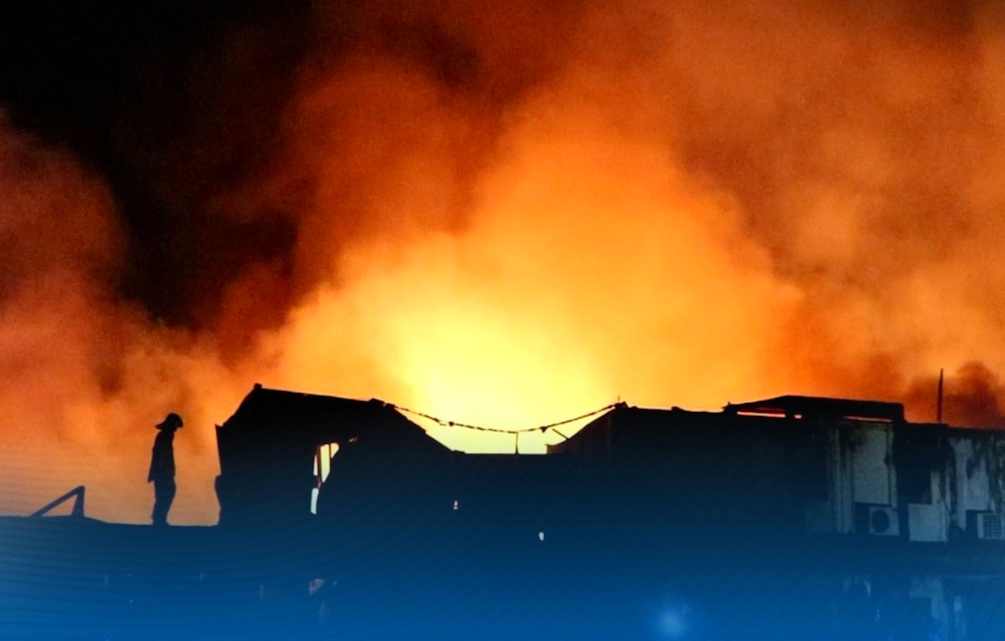
Amnesty International has called for an independent, transparent investigation into Pakistan’s airstrike on Kabul’s Omid Rehabilitation and Treatment Centre in March this year, asserting that the attack should be examined as a possible war crime after it killed at least 269 civilians and wounded more than 120 others. The strike, which occurred on 16 March, has drawn widespread international condemnation and raised urgent questions about adherence to international humanitarian law in the escalating cross-border conflict between Pakistan and Afghanistan’s de facto authorities, the Islamic Emirate.
In a detailed report released four months after the attack, the human rights organization said it had found no credible evidence to support Pakistan’s claim that the rehabilitation centre was being used to store weapons, ammunition, or was serving any military purpose at the time of the strike. Amnesty’s investigation, which included analysis of over 60 photographs and videos, more than 30 satellite images, and interviews with 11 witnesses including employees, former staff members, relatives of victims, and individuals involved in rescue efforts concluded that the facility was clearly identifiable as a civilian medical institution and should have been afforded special protection under international law.
According to Amnesty, the airstrike breached the distinct protections granted to medical facilities under the Geneva Conventions and violated the fundamental principles of distinction, precaution, and proportionality cornerstones of international humanitarian law designed to shield civilians and civilian infrastructure from the effects of armed conflict. The organization emphasized that even if a medical facility is suspected of being misused for military purposes, an attacking force must issue a clear and effective warning before striking, and such an attack may only proceed if the facility continues to be used for acts harmful to the enemy conditions that, Amnesty argues, were not met in this case.
“The attack on the Omid Centre constitutes a serious violation of international humanitarian law possibly amounting to a war crime,” said Isabelle Lassee, Amnesty International’s Acting Regional Director for South Asia. “Striking a clearly marked medical facility with no evidence of military use, without prior warning, and with such devastating civilian casualties, demands nothing less than a full, independent, and impartial investigation. Pakistan must be held accountable for its actions and ensure that justice is served for the victims and their families.”
Lassee further called on Pakistan to conduct a transparent and thorough investigation that extends beyond the tactical execution of the strike to include the decision-making process at every level from intelligence gathering to the final authorization of the attack. She urged Pakistani authorities to make their findings fully public and to cooperate with international mechanisms, including the International Criminal Court, should evidence of war crimes emerge.
Amnesty also noted that it had formally written to Pakistan’s Ministry of Foreign Affairs on 9 July, requesting details of any internal or external investigation into the attack, as well as any evidence supporting the claim that the Omid Centre was a legitimate military target. As of the report’s publication, the organization said it had not received any response a silence it described as deeply troubling and indicative of a lack of accountability.
The Omid Rehabilitation and Treatment Centre, originally established in 2016 on the site of a former NATO base, was significantly expanded into a 2,000-bed drug treatment facility after the Islamic Emirate returned to power in 2021. The adjacent Ibn-e-Sina Hospital also provided critical healthcare services to patients at the centre, further underscoring its civilian and humanitarian function. Amnesty argued that publicly available information including media reports, satellite imagery, and visible signboards identifying the site as a rehabilitation facility should have made its civilian purpose unmistakably clear to Pakistani military planners.
Pakistan has previously maintained that the airstrike targeted military infrastructure and ammunition storage facilities in Kabul, and officials released videos following the strike that they claimed showed weapons and ammunition at the site. However, Amnesty’s weapons experts reviewed the footage and found no conclusive evidence to support those claims. They also noted that there was no indication of secondary explosions a phenomenon that would normally be expected if large stockpiles of munitions had been struck casting further doubt on Pakistan’s justification.
The 16 March strike was one of several cross-border attacks carried out by Pakistan following a sharp escalation in hostilities with the Islamic Emirate in late 2025, triggered by mutual accusations of supporting militant groups operating along the porous border. The broader context of the conflict has already exacted a heavy toll on Afghan civilians. According to the UN Assistance Mission in Afghanistan (UNAMA), more than 750 civilians were killed or injured in Afghanistan between January and March 2026 alone. UNAMA has independently verified that at least 269 civilians were killed and 122 others wounded in the Omid Centre strike, making it one of the deadliest single attacks in the country in recent years.
Amnesty warned that the failure to investigate the Omid Centre attack seriously risks entrenching a culture of impunity, emboldening both state and non-state actors to disregard civilian protections in future operations. The organization stressed that without accountability, the likelihood of further unlawful attacks against civilians and protected infrastructure will only increase, perpetuating a cycle of violence that has already devastated countless Afghan families. It called on the international community, including the UN Security Council and states with influence in the region, to press Pakistan to comply with its obligations under international law and to support independent fact-finding mechanisms to ensure that justice is served.
“The world cannot look away,” Lassee added. “If we allow attacks on hospitals and clinics to go unpunished, we betray the very principles that underpin the rules of war. Pakistan must answer for its actions, and the victims of the Omid Centre deserve more than silence they deserve truth, accountability, and reparations.”
Our Pashto-Dari Website
Support Dawat Media Center
If there were ever a time to join us, it is now. Every contribution, however big or small, powers our journalism and sustains our future. Support the Dawat Media Center from as little as $/€10 – it only takes a minute. If you can, please consider supporting us with a regular amount each month. Thank you
DNB Bank AC # 0530 2294668
Account for international payments: NO15 0530 2294 668
Vipps: #557320

Comments are closed.