

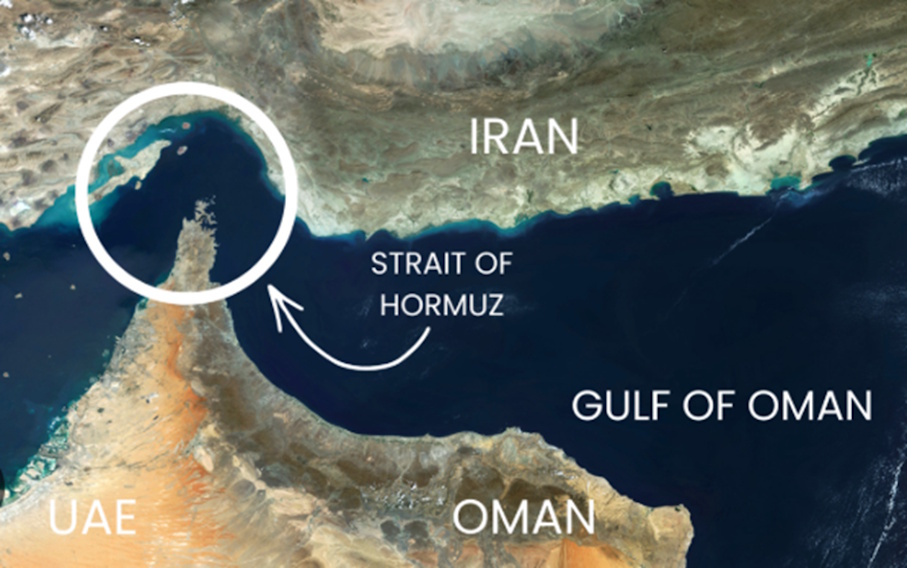
Shipping activity through the Strait of Hormuz continued to decelerate this week, according to maritime data released Wednesday, as most shipowners remain wary of re-entering the strategic waterway amid a lack of clear diplomatic signals regarding its status following a blockade imposed during the ongoing Iran conflict.
Data compiled by Kpler and reported by Reuters showed that only six commodity-carrying vessels transited the strait on Tuesday, down from nine the previous day and well below the 10-day rolling average of 11 crossings. The decline underscores persistent caution among operators, even as political statements from Washington suggest a return to normalcy.
Among the inbound traffic, an empty very large crude carrier (VLCC) was observed hugging the Omani side of the strait a route often chosen to minimize exposure to Iranian territorial waters alongside two tankers, one of medium-range and another of intermediate size. Outbound movements were equally subdued, with only two medium-range fuel tankers and a single post-Panamax vessel recorded exiting the waterway.
The slowdown comes amid conflicting public assertions between Tehran and Washington. On Tuesday, U.S. President Donald Trump stated that no negotiations were currently underway with Iran and flatly declared that the Strait of Hormuz remained open to international shipping a direct contradiction of Iran’s official position that the strait remains effectively closed to commercial traffic. The absence of a coordinated reopening framework has left insurers and charterers in a precarious position, with many opting to delay or reroute shipments rather than assume unquantified risk.
Before the conflict erupted, the Strait of Hormuz served as a critical artery for global energy markets, handling approximately one-fifth of the world’s seaborne crude oil and liquefied natural gas trade. Its partial closure has already begun to ripple through supply chains, particularly affecting Asia’s largest economies.
In response to escalating security concerns, two major Chinese shipping conglomerates which collectively transported roughly half of China’s pre-war Middle Eastern crude imports have kept their tanker fleets clear of both the Strait of Hormuz and the Bab al-Mandeb strait since late July, according to tanker tracker Vortexa and an unnamed ship broker. The prolonged avoidance by these key players signals that even tentative returns to the strait remain unlikely without firmer guarantees of safe passage.
Meanwhile, traffic through the Bab el-Mandeb strait, another chokepoint along the Red Sea, has shown a different trend. Kpler data recorded 30 commodity vessel transits over the past weekend, a notable increase from 19 in the previous week. Analysts suggest this uptick may reflect rerouting efforts as some operators seek alternative corridors, though whether this marks a lasting shift or a temporary adjustment remains to be seen.
As the standoff continues, the global shipping industry finds itself navigating a fog of geopolitical uncertainty, with each transit decision weighed against rising insurance premiums, crew safety, and the fragile pulse of international diplomacy. Until a unified reopening protocol emerges backed by both military de-escalation and formal maritime guarantees the Strait of Hormuz is likely to remain a high-risk passage, throttling the lifeblood of global energy flows.
Our Pashto-Dari Website

Support Dawat Media Center
If there were ever a time to join us, it is now. Every contribution, however big or small, powers our journalism and sustains our future. Support the Dawat Media Center from as little as $/€10 – it only takes a minute. If you can, please consider supporting us with a regular amount each month. Thank you
DNB Bank AC # 0530 2294668
Account for international payments: NO15 0530 2294 668
Vipps: #557320

Comments are closed.