
Iran Dismisses Trump’s Claims of U.S. Control Over Strait of Hormuz as ‘Lies’ Amid Escalating Tensions

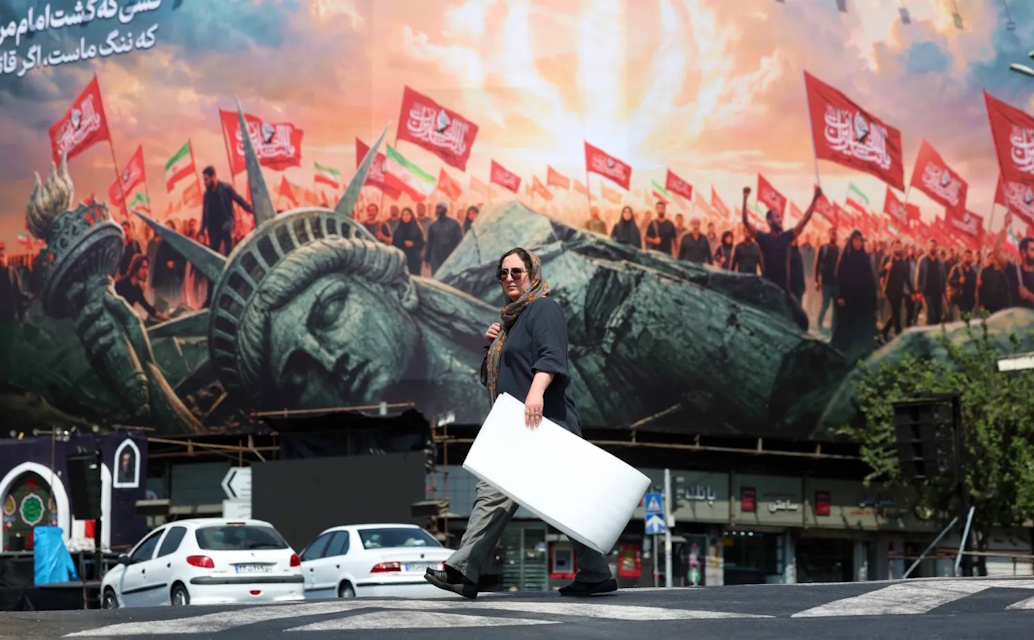
Tehran — Iran’s military vehemently rejected U.S. President Donald Trump’s assertions that Washington has seized control of the strategic Strait of Hormuz, dismissing the remarks on Thursday as baseless fabrications while reaffirming that Tehran maintains full command over the crucial maritime chokepoint.
Brigadier General Ebrahim Zolfaghari, spokesperson for Iran’s central military command known as Khatam-al Anbiya directly refuted Trump’s claims in a televised address. “The false claims of the United States that ships are passing through the Strait of Hormuz normally … are nothing more than lies and fabrications,” Zolfaghari stated, according to footage broadcast by state television. He underscored that the waterway remains “under the complete management and control of the Islamic Republic of Iran,” adding that “no commercial ship or tanker without the permission and supervision of the powerful Iranian armed forces has had and will have the possibility of safe passage through this strait.”
The Strait of Hormuz, a narrow passage connecting the Persian Gulf to the open ocean, is one of the world’s most vital energy arteries, through which roughly one-fifth of global oil supply transits. Iran has asserted operational dominance over the strait since the outbreak of regional hostilities on February 28, enforcing a system that requires all vessels to secure prior authorization and pay transit fees before navigating the waterway.
The war of words escalated on Wednesday when President Trump took to his Truth Social platform to declare that the U.S. “has total control over the Strait of Hormuz. I THINK WE WILL KEEP IT!” He further boasted of a naval blockade, describing it as being called by all sides “A WALL OF STEEL,” and added defiantly, “there is nothing Iran can do about it.” These remarks marked a sharp rhetorical escalation, though the U.S. has not publicly detailed the scale or scope of any such blockade.
On Thursday, Iran’s hardline rhetoric found further backing from the Islamic Revolutionary Guard Corps (IRGC). Hossein Taeb, the head of the IRGC’s paramilitary Basij forces, echoed Zolfaghari’s stance, telling state television, “Today, you see that the Strait of Hormuz is under the management and control of the Islamic Republic, and our country continues on its path in complete security.” His comments signalled unified resistance across Iran’s military hierarchy against any perceived U.S. encroachment.
Iran’s top diplomat, Foreign Minister Abbas Araghchi, also weighed in, framing the U.S. position as the product of repeated intelligence failures. “The U.S. has long miscalculated due to intelligence failures. Case in point: The war on Iran. Now, an even bigger miscalculation on the Strait of Hormuz,” Araghchi posted on X, implying that Washington underestimates Iran’s capacity to defend its maritime interests.
Hardening the stance further, Behnam Saeedi, a conservative parliamentarian and member of Iran’s National Security and Foreign Policy Commission, declared that the strait would remain entirely closed to American and Israeli vessels. In remarks to state TV, Saeedi proclaimed, “Ships belonging to the Zionist regime will not have the right to pass through the Strait of Hormuz under any circumstances, whether in war or peacetime.” He added that “U.S. military ships will also be barred from passing through the strait,” signalling that any direct naval confrontation could trigger a wider crisis.
Amid the escalating tensions, diplomatic back-channels remain active. Iran and Oman have been engaged in ongoing negotiations to establish an alternative maritime route through the strait, potentially offering a parallel corridor for commercial shipping. However, Tehran has signaled that these talks have yet to yield a final agreement. More critically, Iranian officials stress that even if a new route is established, it would not automatically reopen the waterway to unrestricted traffic unless the United States first meets a series of unspecified Iranian demands likely including sanctions relief or security guarantees.
As both sides trade increasingly bellicose statements, the Strait of Hormuz remains a flashpoint where geopolitical brinkmanship and global energy security intersect. Any miscalculation whether in Tehran or Washington could rapidly destabilize one of the world’s most sensitive maritime corridors, with far-reaching consequences for international oil markets and regional stability.
Our Pashto-Dari Website

Support Dawat Media Center
If there were ever a time to join us, it is now. Every contribution, however big or small, powers our journalism and sustains our future. Support the Dawat Media Center from as little as $/€10 – it only takes a minute. If you can, please consider supporting us with a regular amount each month. Thank you
DNB Bank AC # 0530 2294668
Account for international payments: NO15 0530 2294 668
Vipps: #557320

Comments are closed.