

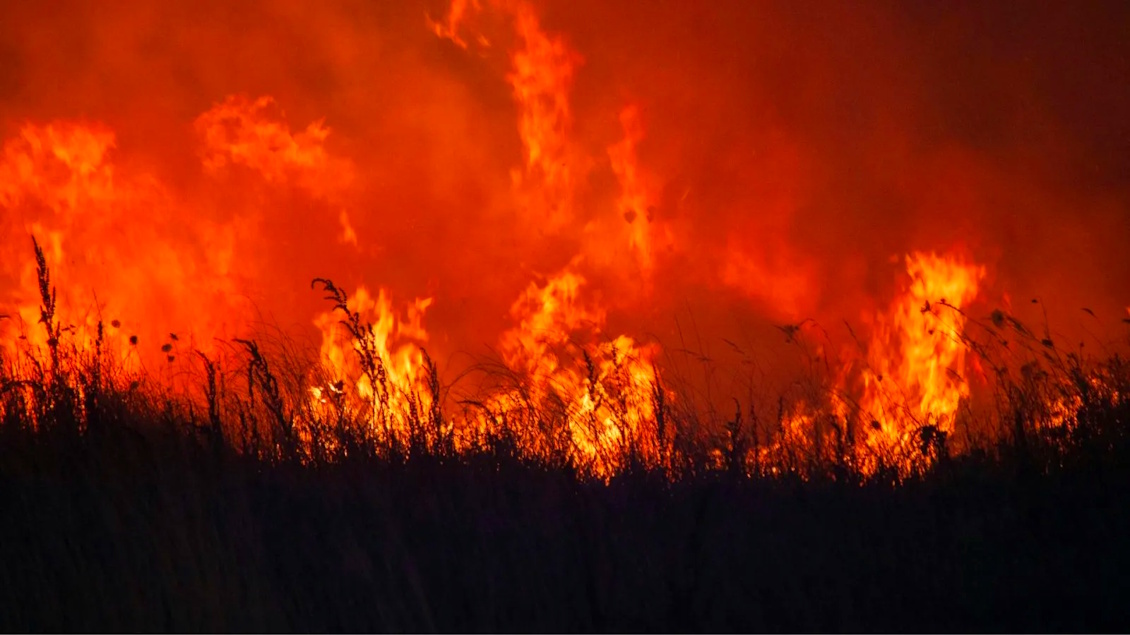
Wildfires in northern Japan have entered their fourth day, scorching hundreds of hectares and forcing mass evacuations as firefighters struggle to contain rapidly spreading flames near residential areas in Iwate Prefecture.
More than 1,200 firefighters have been deployed to battle the escalating blazes, which first broke out on Wednesday in the region’s mountainous terrain. Two separate fires are currently active, including one dangerously close to residential neighborhoods in the coastal town of Ōtsuchi, where flames have been advancing toward homes, triggering urgent safety warnings.
Local authorities have ordered the evacuation of roughly one-third of Ōtsuchi’s population. According to official reports, approximately 3,200 residents from over 1,500 households have been displaced as the fires continue to spread. Evacuation centers have been set up in nearby schools and community halls, with local volunteers and officials coordinating food, water, and medical aid.
As of Saturday, the fires have consumed more than 730 hectares of forest, according to Reuters. Several buildings have been destroyed, though no casualties or major injuries have been reported so far. Authorities cautioned, however, that the situation remains volatile, especially if winds shift or temperatures rise further.
Japan has faced increasing wildfire risks in recent years, driven by rising temperatures, prolonged dry spells, and changing climate patterns that have left forests more susceptible to ignition and rapid spread. This incident is now being described by officials as one of the largest wildfires ever recorded in the country, underscoring growing environmental and disaster management challenges.
Emergency response efforts rely heavily on coordinated ground crews and aerial firefighting assets, including water-dropping helicopters, to contain large-scale fires in remote and rugged terrain. Despite round-the-clock operations, firefighters continue to face difficult conditions. Weather forecasts predict no rainfall in the coming days, which is expected to complicate containment efforts and prolong the threat to local communities.
Residents have been urged to remain on high alert and follow evacuation orders promptly. Meanwhile, national and prefectural governments are assessing the need for additional resources, including possible support from the Japan Self-Defense Forces if the situation deteriorates further.
Our Pashto-Dari Website

Support Dawat Media Center
If there were ever a time to join us, it is now. Every contribution, however big or small, powers our journalism and sustains our future. Support the Dawat Media Center from as little as $/€10 – it only takes a minute. If you can, please consider supporting us with a regular amount each month. Thank you
DNB Bank AC # 0530 2294668
Account for international payments: NO15 0530 2294 668
Vipps: #557320

Comments are closed.