

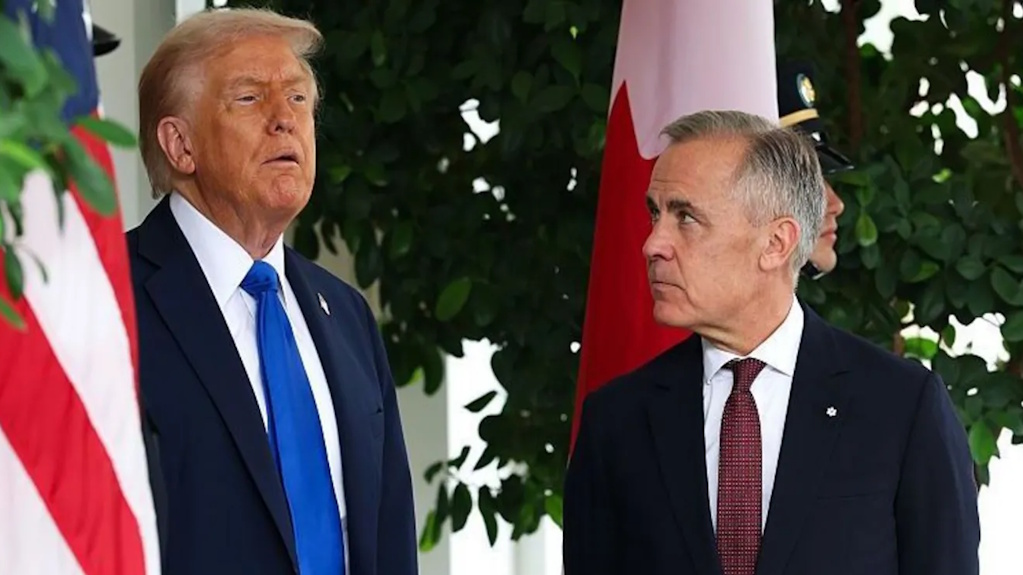
In a dramatic escalation of the ongoing trade conflict between the United States and Canada, the White House has announced a sweeping ban on a wide range of Canadian products, including alcoholic spirits, dairy goods, and motorbikes. The move comes as Canada’s retaliatory tariffs on American goods officially took effect, deepening tensions between the two historically close neighbors and trading partners.
Executive Orders Target “Discriminatory” Practices
On Tuesday, President Donald Trump signed a series of executive orders accusing Canada of “discriminating” against U.S. businesses. The import bans, set to begin on September 29, target not only consumer goods but also industrial and agricultural products. The White House specifically cited Canada’s restrictive trade practices, such as supply management systems for dairy, poultry, and eggs, which limit foreign competition and maintain high domestic prices.
“Canada has long benefited from access to our markets while erecting barriers to ours,” a senior administration official said in a statement. “These measures are necessary to restore fairness and protect American workers.”
Canada Responds with Counter-Tariffs
Earlier on Tuesday, Canadian Prime Minister Mark Carney addressed the nation in a video statement, acknowledging that his government’s decision to push back against U.S. trade aggression would carry economic consequences. “There’s always a cost to action,” Carney said. “But it doesn’t come close to the cost of standing still.”
Canada’s retaliatory tariffs, which took effect just after midnight Tuesday, match the U.S. dollar-for-dollar on a range of American products, including steel, clothing, and furniture. The Canadian government has also signaled it may expand its list of targeted U.S. goods if the U.S. continues to escalate.
Both countries have expressed a desire to return to the negotiating table, but no new talks have been scheduled since bilateral trade discussions collapsed in late August. The BBC has reached out to Prime Minister Carney’s office for further comment.
A Trade War with Deep Roots
The new sanctions represent the latest chapter in a months-long trade war that has rattled businesses and consumers on both sides of the border. Historically, the U.S. and Canada have been among each other’s most vital economic partners. More than two-thirds of Canada’s total exports go to the United States, while Canada is the second-largest trading partner of the U.S., trailing only Mexico. However, U.S. exports are far more diversified, giving Canada a stronger incentive to de-escalate but also a greater vulnerability to U.S. pressure.
Last month, the White House imposed 50% tariffs on approximately $20 billion (£14.8 billion) worth of Canadian goods, hitting industries such as furniture, wine, and sporting equipment. Canada responded in kind, and the latest U.S. import ban adds another layer of punitive measures.
New Bans and Tariff Hikes
The newly prohibited products include:
-
Dairy products such as whey
-
Cane molasses
-
Non-alcoholic beer
-
A wide array of wines, rums, and vodkas
-
Malt beer
-
Motorbikes and mopeds
In addition, the U.S. has raised tariffs on several other categories, including:
-
Various types of cheese
-
Raw hides and skins
-
Paper products
-
Furniture and mattresses
-
Aluminum, iron, and other metals
-
Motorboats, golf carts, and fishing rod parts
-
Electrical switchboards
Economic and Political Fallout
Economics lecturer Scott French from the University of New South Wales in Australia noted that Washington has deliberately targeted “significant industries” for Canada, including its politically powerful dairy sector. “The U.S. is applying pressure where it hurts most not just economically, but politically,” French said.
President Trump has long criticized Canada’s dairy supply management system, which uses production quotas and import limits to protect domestic farmers. He has argued that these policies are unfair to U.S. agricultural producers, and the new bans are widely seen as an attempt to force concessions.
Trade expert Deborah Elms, from the Hinrich Foundation, told the BBC that while the immediate financial impact of the ban may be modest affecting roughly $1 billion worth of goods the symbolic and strategic consequences could be significant. “For any Canadian business with U.S. buyers, this will have a strong chilling effect,” she said. “The bigger question is what it will take for the two sides to sit back down together. The language in these proclamations isn’t helpful in getting to the negotiating table.”
Consumer Pain and Political Pressure
Business owners on both sides of the border have expressed growing anxiety over the trade war’s fallout. Many expect rising prices, reduced customer demand, and supply chain disruptions. Consumers, French warned, will ultimately be “the biggest losers” due to the deep integration of the North American economy.
In Canada, public sentiment has shifted sharply against the U.S. Since Trump launched his global tariff campaign last year, many Canadians have organized a massive boycott of American products. U.S.-made alcohol, in particular, has disappeared from the shelves of some retailers, and patriotic buying campaigns have gained traction on social media.
Beyond Tariffs: A Growing Rift
Tensions between the two nations have now spilled beyond trade policy. In August, President Trump ordered that Lake Ontario be officially renamed “Lake America” a move that sparked outrage among Canadians and even drew criticism from some U.S. politicians. While largely symbolic, the order highlighted the increasingly combative tone of bilateral relations.
On Monday, Trump escalated further by warning Canadian aircraft manufacturer Bombardier that it would no longer be permitted to sell its products in the U.S. unless it relocated manufacturing operations to American soil. The threat has raised concerns about the future of cross-border investment and industrial collaboration.
What Comes Next?
For now, Canada appears prepared to “hold course,” according to Elms, and may adjust its domestic business support programs to cushion the impact of the new U.S. measures. However, the longer the trade war continues, the greater the risk of permanent damage to the relationship and to the economic well-being of both nations.
As Prime Minister Carney put it, standing still is not an option. But with both sides entrenched and no new talks on the horizon, the path forward remains uncertain and fraught with risk for businesses, workers, and consumers alike.
Our Pashto-Dari Website

Support Dawat Media Center
If there were ever a time to join us, it is now. Every contribution, however big or small, powers our journalism and sustains our future. Support the Dawat Media Center from as little as $/€10 – it only takes a minute. If you can, please consider supporting us with a regular amount each month. Thank you
DNB Bank AC # 0530 2294668
Account for international payments: NO15 0530 2294 668
Vipps: #557320

Comments are closed.