

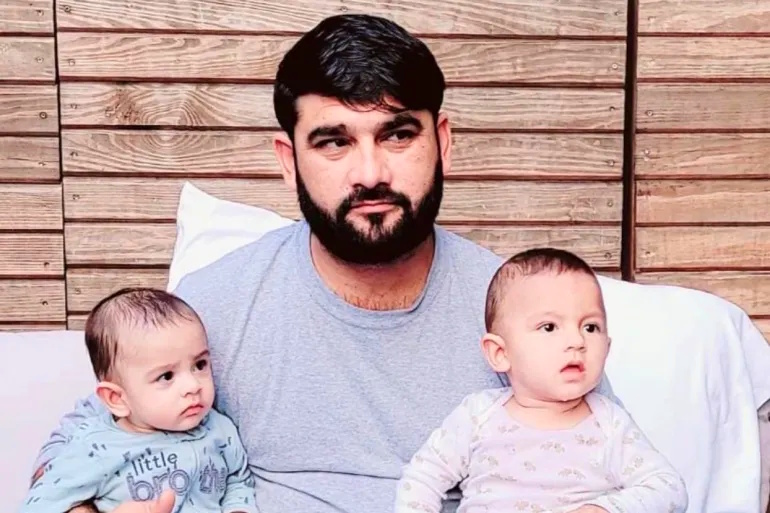
Family and advocates demand a full investigation after Mohommad Nazeer Paktyawal, a 41-year-old father of six, dies less than 24 hours after being detained in Texas.
Washington, DC – A wave of outrage and grief is sweeping through advocacy circles and the Afghan-American community following the death of an Afghan asylum seeker who died in U.S. Immigration and Customs Enforcement (ICE) custody less than a day after his arrest.
The death of 41-year-old Mohommad Nazeer Paktyawal, a former Afghan special forces soldier who worked alongside U.S. Army troops for over a decade, has intensified scrutiny of the Trump administration’s sweeping immigration enforcement crackdown. His case highlights the perilous situation faced by thousands of Afghans who were evacuated to the U.S. after the 2021 withdrawal, only to find themselves ensnared in the country’s hardline immigration policies.
A Family’s Nightmare: From School Run to Hospital
According to a statement released through the advocacy group AfghanEvac, Paktyawal was detained on the morning of March 13 in Richardson, Texas, as he was leaving his home to drop his six children off at school. In a haunting detail that underscores the trauma inflicted on his family, his children witnessed their father being surrounded and taken away by ICE agents.
“That moment will stay with them forever,” the family’s statement read, describing Paktyawal as a “loving husband and father” who worked at a local halal market and bakery.
Less than 24 hours later, the family received the devastating news that he had been rushed to a hospital, where he was pronounced dead. The shock and disbelief are palpable in their words: “We cannot understand how this happened. He was only 41 years old and was a strong and healthy man. His children keep asking when he’ll come home.”
ICE’s Account and the ‘Criminal’ Label
In a statement, ICE confirmed Paktyawal’s death, providing a timeline of events. The agency said Paktyawal, also known as Mohammad Nazeer Paktiawal, complained of shortness of breath and chest pains while being processed. He was transported to Parkland Hospital, where he received care. The following morning, ICE stated that medical staff observed his tongue swelling, and despite multiple life-saving attempts, he was declared deceased at 9:10 a.m.
In its statement, ICE referred to Paktyawal as a “criminal illegal alien,” citing prior arrests by local authorities for alleged fraud and theft related to benefits from the Supplemental Nutrition Assistance Program (SNAP).
However, Shawn VanDiver, founder of AfghanEvac, vehemently rejected this characterization, calling it a deliberate attempt to deflect responsibility. VanDiver pointed out a crucial omission: Paktyawal was never charged, let alone convicted, for the alleged offenses.
“They don’t say that he was never charged, they don’t say that he was never convicted,” VanDiver told Al Jazeera. “It is not normal for an otherwise healthy, 41-year-old man to die within 24 hours of being brought into custody. His death is indicative of an abdication of the duty of care.” The implication is that the stress of detention and potential medical neglect, rather than pre-existing criminality, may have led to the tragic outcome.
A Legacy of Service and a Desperate Flight
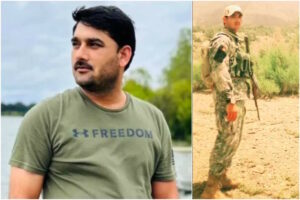
Paktyawal’s story is not one of a criminal, but of an ally. AfghanEvac detailed his history as a soldier in the Afghan special forces beginning in 2005, where he fought alongside U.S. Army special forces in Paktika province, a region known for intense militant activity. His service to the U.S. mission made him and his family targets for the Taliban after the American withdrawal.
He was among the estimated 70,000 Afghans evacuated to the U.S. in the chaotic final days of the war, seeking safety from reprisal. Thousands more have since arrived through various legal pathways. For many, the U.S. was meant to be a haven, not a place of peril.
The Afghan-American Foundation echoed this sentiment, demanding a full, transparent investigation. “Whatever one’s views on immigration policy, a man who served alongside US forces for over a decade, who was evacuated to the US with legal status, who was raising his family here, who was living the life of a neighbor and a dad, deserved to be treated with dignity,” the organization stated. “He deserved basic, adequate care. He deserved to survive.”
A Climate of Fear: Hardline Policies and Collective Punishment
Paktyawal’s death is not an isolated incident but a symptom of a broader, more aggressive immigration enforcement climate. Under the Trump administration, ICE detentions have surged dramatically. According to the American Immigration Council, the number of people in ICE custody jumped from around 40,000 to over 73,000 by January 2026.
Rights groups have consistently warned about conditions within detention facilities and the increased targeting of refugees and asylum seekers—individuals who, like Paktyawal, have a legal right to be in the country. For Afghans, this scrutiny has been particularly intense.
The climate worsened significantly after a shooting in Washington, D.C., in November 2025, in which an Afghan national killed a National Guard member and wounded another. In response, the administration imposed a sweeping pause on new visas for Afghans and halted decisions on pending asylum cases—a move advocates decry as “collective punishment” against an entire community fleeing persecution.
Even the Special Immigrant Visa (SIV) program, designed specifically to protect interpreters and others who worked directly with the U.S. military, has been effectively frozen. While a court order mandates its continuation, advocates report the program has ground to a halt. Furthermore, the administration has prioritized white South Africans for refugee status while effectively shutting down Afghan refugee pathways and ending Temporary Protected Status (TPS) for Afghans. The organization Global Refuge estimates that this leaves approximately 11,700 Afghans in the U.S. without legal protection and vulnerable to deportation.
For the family of Mohommad Nazeer Paktyawal, a man who risked his life for American soldiers, the promise of safety has turned into an unthinkable tragedy. As his children wait for a father who will never come home, his death has become a powerful and devastating symbol of the human cost of the nation’s fractured immigration system.
Outrage and Demands for Answers After Former Afghan Soldier Dies in ICE Custody
Our Pashto-Dari Website

Support Dawat Media Center
If there were ever a time to join us, it is now. Every contribution, however big or small, powers our journalism and sustains our future. Support the Dawat Media Center from as little as $/€10 – it only takes a minute. If you can, please consider supporting us with a regular amount each month. Thank you
DNB Bank AC # 0530 2294668
Account for international payments: NO15 0530 2294 668
Vipps: #557320

Comments are closed.