

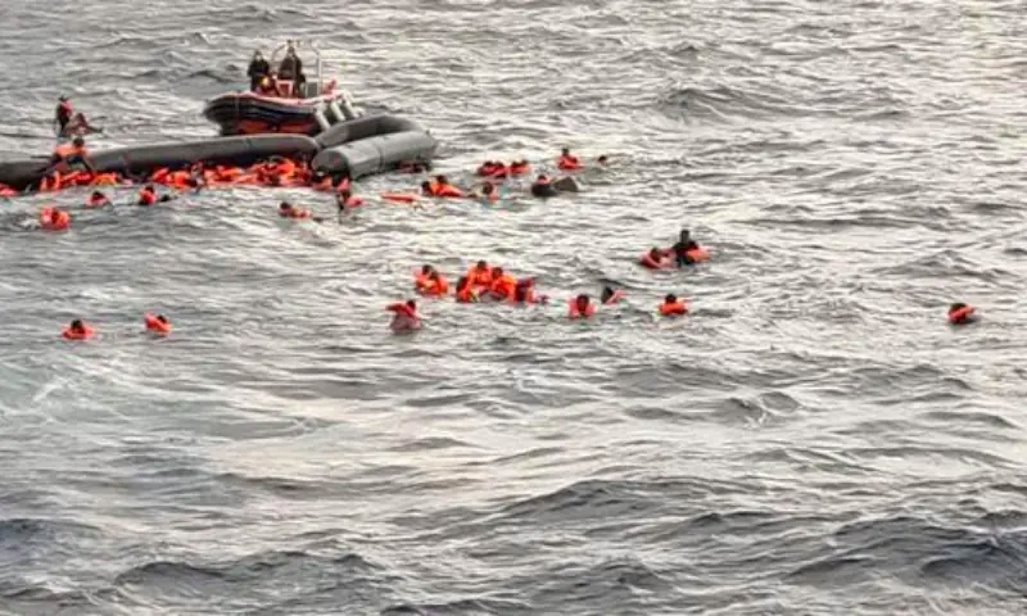
The International Organization for Migration (IOM) has released a harrowing update to its Missing Migrants Project, revealing that nearly 8,000 migrants died or went missing on global migration routes in 2025. This figure underscores a disturbing trend: while total crossings have declined in certain regions due to tightened border policies, the journeys themselves have become significantly more lethal. Since the IOM began systematic tracking in 2014, the total number of documented deaths and disappearances has surpassed 82,000, leaving an estimated 340,000 family members in a state of perpetual grief and uncertainty.
The 2025 data highlights a critical shift in global migration dynamics. IOM Director General Amy Pope noted that migration routes are “shifting rather than easing,” as individuals fleeing conflict, economic collapse, and climate-driven disasters are forced into longer, more fragmented, and hazardous paths to evade detection. The following table provides a breakdown of the most dangerous corridors and the human toll recorded in 2025:
|
Migration Route
|
Deaths/Disappearances (2025)
|
Key Context
|
|
Central Mediterranean
|
2,185+
|
Remains the deadliest maritime route globally.
|
|
Western African Atlantic
|
1,200
|
Routes to the Canary Islands became longer and more dispersed.
|
|
Horn of Africa to Gulf
|
922
|
Driven by movements from East Africa toward Saudi Arabia.
|
|
Bay of Bengal & Andaman Sea
|
~900
|
Deadliest year on record for this route; 40% increase from 2024.
|
|
Afghan Land Routes
|
1,540
|
High fatalities on land routes through Iran and Turkey.
|
The Crisis of the Displaced: Afghans and Rohingya
Among the most vulnerable populations are Afghan and Rohingya migrants, who continue to face extreme risks in their search for safety. Afghanistan’s ongoing humanitarian crisis—fueled by economic stagnation and severe restrictions on livelihoods—has pushed thousands to attempt the perilous overland journey toward Europe via Iran and Turkey. In 2025 alone, 1,540 Afghan citizens were reported dead or missing, making them one of the largest affected groups globally. These individuals often rely on exploitative smuggling networks, facing the dual threats of natural hazards and violent border enforcement.
Similarly, the situation in Southeast Asia reached a breaking point in 2025. The Bay of Bengal and Andaman Sea saw their deadliest year on record, with nearly 900 Rohingya refugees feared dead or missing at sea. Despite the known dangers, over 6,500 Rohingya embarked on these maritime journeys from Bangladesh and Myanmar during the year. The 40% increase in fatalities on this route compared to 2024 highlights a catastrophic failure of regional search-and-rescue coordination and a lack of safe, legal alternatives for those fleeing persecution.
“Data is critical to understanding these routes and designing interventions that can reduce risks, save lives and promote safer migration pathways. Behind these numbers are people taking dangerous journeys and families left waiting for news that may never come.” — Amy Pope, IOM Director General [1]
Shifting Paths and Stranded Populations
The IOM warns that declining arrival numbers in regions like the Americas and parts of Europe should not be misinterpreted as a sign of improved conditions. Instead, these “deterrence” policies have often succeeded only in pushing migrants toward more dangerous terrain. For instance, while northbound movements through Central America fell sharply in 2025, those who did travel faced increased risks of kidnapping, extortion, and exhaustion. In Europe, the profile of arrivals shifted significantly; Bangladeshi nationals emerged as the largest group of irregular arrivals in 2025, surpassing Syrians as political and policy shifts altered established patterns.
Furthermore, thousands of migrants remain stranded in harsh conditions at various border bottlenecks. These populations often lack access to basic necessities such as shelter, healthcare, and legal support, placing immense strain on local host communities and increasing the likelihood of further tragedies. The IOM has called for immediate international cooperation ahead of the International Migration Review Forum in May 2026, urging governments to prioritize the preservation of life over restrictive border management.
Conclusion and Call to Action
The 2025 report serves as a stark reminder that the global migration crisis is not fading but evolving into a more clandestine and deadly phenomenon. The IOM emphasizes that saving lives requires a dual approach: the expansion of safe, legal migration pathways and a sustained investment in evidence-based responses that address the root causes of displacement. Without a fundamental shift in international policy, the human cost of migration will continue to rise, leaving thousands more families to wait for news that may never arrive.
References:
[1]: https://www.iom.int/news/nearly-8000-migrant-deaths-recorded-2025-new-iom-data “IOM Press Release: Nearly 8,000 Migrant Deaths Recorded in 2025”
Our Pashto-Dari Website

Support Dawat Media Center
If there were ever a time to join us, it is now. Every contribution, however big or small, powers our journalism and sustains our future. Support the Dawat Media Center from as little as $/€10 – it only takes a minute. If you can, please consider supporting us with a regular amount each month. Thank you
DNB Bank AC # 0530 2294668
Account for international payments: NO15 0530 2294 668
Vipps: #557320

Comments are closed.