

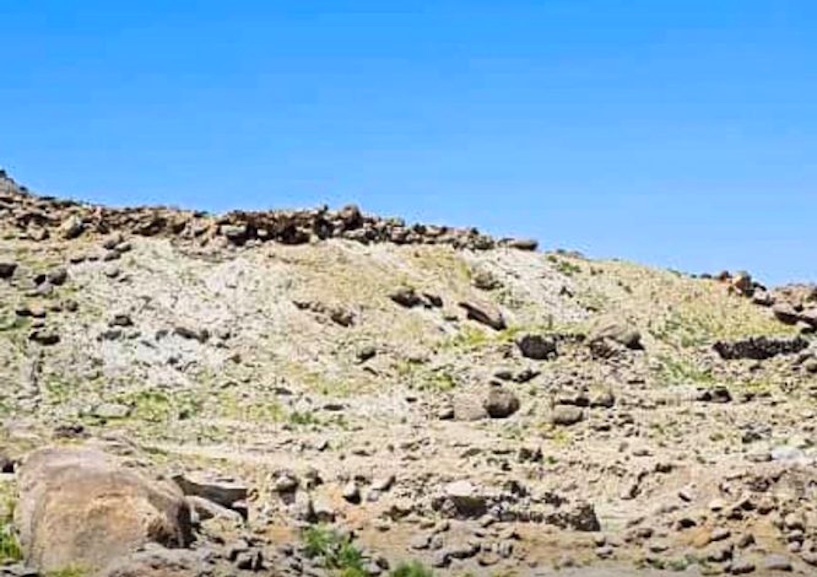
A newly discovered Buddhist-era archaeological site in Afghanistan’s eastern Laghman province features ancient stone carvings, structural remains, and other historical artifacts, officials confirmed Monday.
According to a statement from the Taliban’s Ministry of Information and Culture, the site was identified in the Qarghayi district, located near a permanent migrant settlement along the foothills of the Siyah mountain range. The location contains stone-carved statues, ancient wall structures, niches, and other remnants linked to Afghanistan’s Buddhist past.
The ministry added that approximately 70 historical sites across Afghanistan were surveyed over the past year, with at least 15 new locations officially registered by cultural authorities.
A Crossroads of Civilizations Under Threat
Afghanistan is home to thousands of archaeological and historical sites representing Buddhist, Islamic, and pre-Islamic civilizations. For centuries, the region served as a crucial crossroads along the Silk Road, where diverse cultures, religions, and trade routes converged. However, many of these sites have suffered extensive damage due to decades of war, looting, neglect, and illegal excavations.
Experts warn that the country’s cultural heritage remains acutely vulnerable. International organizations, including UNESCO, have repeatedly emphasized the urgent need to protect these sites, citing ongoing threats from artifact trafficking, unauthorized digging, and security instability.
Taliban’s Contradictory Record on Heritage Preservation
The Taliban’s current efforts to document and register historical sites come despite longstanding international criticism over the group’s destruction of cultural heritage during its first rule in Afghanistan (1996–2001). The most infamous example remains the demolition of the giant Bamiyan Buddha statues in March 2001, which were carved into a cliff face in central Afghanistan’s Bamiyan Valley.
The destruction of the Bamiyan Buddhas once among the world’s largest standing Buddha figures drew global condemnation and is widely regarded as one of modern history’s most devastating attacks on cultural heritage. The act symbolized, for many, a profound threat to Afghanistan’s ancient historical identity and its legacy as a center of Buddhist learning and art.
Looking Ahead
While the recent discovery in Laghman offers a glimpse into Afghanistan’s rich pre-Islamic heritage, preservationists remain cautious. The Taliban government has yet to outline a comprehensive strategy for safeguarding these sites from future damage or exploitation. Without sustained international engagement and local enforcement, experts fear that newly discovered sites could suffer the same fate as many others lost to looting and conflict.
For now, the Laghman site stands as both a remarkable find and a reminder of the fragile line between preservation and loss in one of the world’s most archaeologically significant yet war-torn regions.
Our Pashto-Dari Website

Support Dawat Media Center
If there were ever a time to join us, it is now. Every contribution, however big or small, powers our journalism and sustains our future. Support the Dawat Media Center from as little as $/€10 – it only takes a minute. If you can, please consider supporting us with a regular amount each month. Thank you
DNB Bank AC # 0530 2294668
Account for international payments: NO15 0530 2294 668
Vipps: #557320

Comments are closed.