
India Delivers 5 Tonnes of Essential Medicines to Afghanistan as Healthcare Crisis Deepens

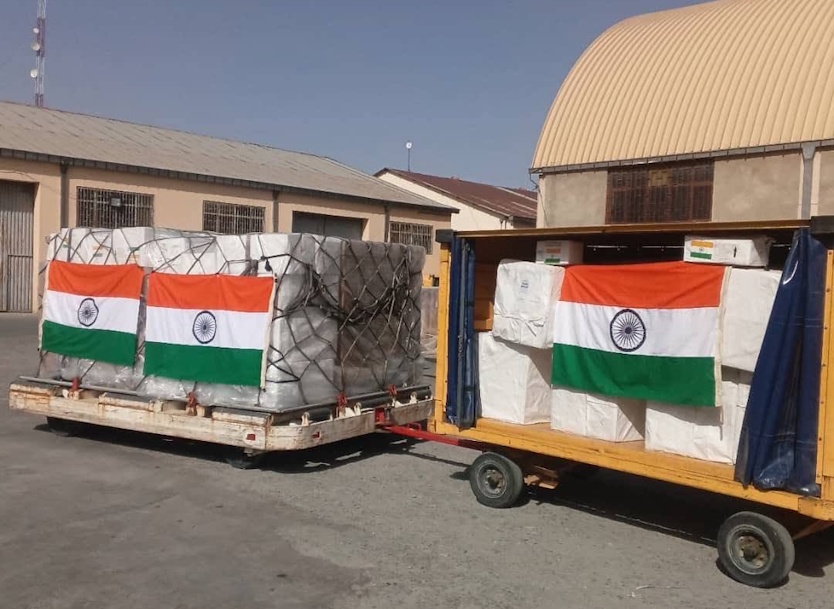
India has dispatched a fresh shipment of 5 tonnes of essential medicines to Kabul, reinforcing its longstanding humanitarian commitment to Afghanistan at a time when the country’s healthcare system is buckling under mounting pressure. The consignment, which includes life-saving drugs and critical medical supplies, arrived in the Afghan capital on Wednesday, June 17, according to India’s Ministry of External Affairs.
“India delivers another 5 tonnes of essential medicines to Kabul, reaffirming its enduring commitment to humanitarian assistance and the well-being of the Afghan people,” stated Randhir Jaiswal, India’s Ministry of External Affairs spokesperson, in a post on X. The delivery marks the latest in a series of aid shipments that New Delhi has sent to Afghanistan since the Taliban’s takeover in August 2021, even as India has stopped short of formally recognizing the de facto administration.
The shipment arrives against a grim backdrop. Afghanistan’s public health infrastructure already fragile after decades of conflict is now facing a severe shortage of pharmaceuticals, compounded by soaring treatment costs and a dwindling supply of foreign aid. Health experts and local doctors have repeatedly warned that limited access to generic and patented drugs is forcing patients to choose between skipping treatments or resorting to expensive black-market alternatives. Rural areas, where up to 80% of the population lives, have been disproportionately affected, with many clinics reporting stockouts of even basic antibiotics and pain relievers.
India has positioned itself as a consistent, if circumspect, humanitarian partner. Since 2021, New Delhi has supplied over 50 tonnes of wheat, multiple batches of COVID-19 vaccines, anti-tuberculosis drugs, and other medical essentials, while keeping diplomatic engagement with Taliban officials at a technical level. In April of this year, India provided 13 tonnes of vaccines and ancillary medical supplies specifically to bolster tuberculosis prevention programmes—a disease that remains endemic in Afghanistan and has seen a resurgence due to disrupted testing and treatment regimens.
The latest consignment also comes at a moment of acute supply-chain fragility. Over recent months, Afghan traders and health-sector sources have reported that new trade restrictions and customs bottlenecks at the Pakistan border have severely hampered the import of Indian and other foreign pharmaceuticals, which previously flowed through the Torkham and Chaman crossings. These barriers, coupled with a depreciating Afghan currency and rising freight costs, have driven up prices of essential drugs by as much as 30–40% in some provincial markets, pushing life-saving medication further out of reach for ordinary families.
International aid agencies, including the WHO and ICRC, have warned that Afghanistan’s health system is now operating at a “breaking point.” A confluence of factors a steep reduction in donor funding following the Taliban takeover, the suspension of many NGO-led health programmes, the exodus of skilled medical professionals, and the lingering effects of natural disasters such as earthquakes and floods has left an estimated 15 million people without adequate access to primary care. Maternal and child health services, in particular, have deteriorated sharply, with Afghanistan now ranking among the highest in the world for maternal mortality.
In response, humanitarian organizations have renewed calls for sustained, unconditional support to prevent a total collapse of health services. They emphasize that vulnerable groups including women, children, internally displaced persons, and ethnic minorities are bearing the brunt of the crisis. While India’s latest contribution has been welcomed by field workers, many stress that it represents only a fraction of the staggering need. “Every tonne matters, but the gap is vast,” said a senior aid coordinator based in Kabul. “What Afghanistan urgently requires is a predictable, multi-year pipeline of medicines, along with investment in local manufacturing and cold-chain logistics.”
For its part, New Delhi has signalled that humanitarian assistance remains a pillar of its Afghanistan policy, decoupled from political recognition. Indian officials have reiterated that their focus is on the Afghan people, not the regime, and have hinted at possible future collaborations in health training and telemedicine areas where India’s expertise could offer longer-term resilience. However, with Afghanistan’s humanitarian appeal for 2026 only 35% funded as of mid-June, according to UN estimates, the road ahead remains perilous.
As the 5-tonne shipment is distributed to hospitals in Kabul and provincial centres, it serves as both a tangible lifeline and a quiet diplomatic signal: India remains engaged, even as the world’s attention oscillates, and even as Afghanistan’s future hangs in a precarious balance between isolation and survival.
Our Pashto-Dari Website

Support Dawat Media Center
If there were ever a time to join us, it is now. Every contribution, however big or small, powers our journalism and sustains our future. Support the Dawat Media Center from as little as $/€10 – it only takes a minute. If you can, please consider supporting us with a regular amount each month. Thank you
DNB Bank AC # 0530 2294668
Account for international payments: NO15 0530 2294 668
Vipps: #557320

Comments are closed.