

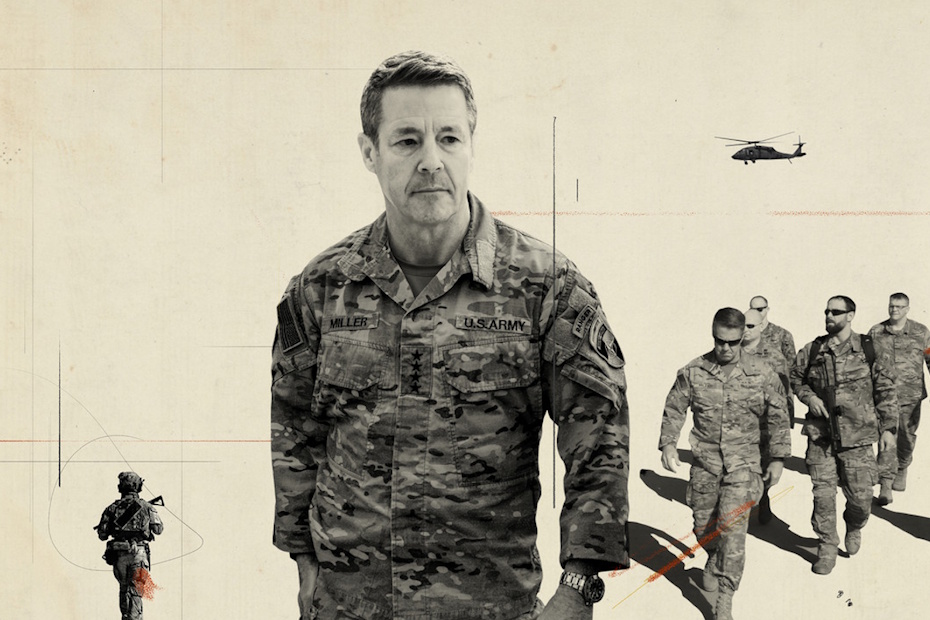
In a candid and emotional interview, retired U.S. four-star General Austin “Scott” Miller the former commander of U.S. and NATO forces in Afghanistan expressed deep dissatisfaction with the conclusion of America’s longest war. Speaking with ABC News, Miller did not hold back his frustration, sorrow, and anger over the chaotic final days of the U.S. mission in Kabul.
“I was quite unhappy with the ending in Afghanistan,” Miller said. “Even if I knew it wasn’t going to be good I knew this could happen I was still angry.”
Miller, who spent years building relationships with Afghan military leaders, tribal elders, and local allies, described the personal toll of delivering the news of the U.S. withdrawal to those who had fought alongside American forces. Some of those partnerships had endured for more than a decade.
“I felt like I had a distasteful task,” he recalled. “I had to tell them I’m leaving. I really am leaving, and this force is leaving.”
He said the reaction from Afghan friends was searingly painful. “The look in their eyes… was almost as if you’re betraying them,” Miller admitted. Though he emphasized that he was simply executing U.S. government policy as a soldier, the moral weight of those farewells has lingered.
‘I Felt Helpless’ – Watching Kabul Fall
As the Islamic Emirate (the Taliban) swiftly seized control of Kabul in August 2021, Miller watched from afar as thousands of Afghans and foreign nationals rushed to Hamid Karzai International Airport in a desperate bid to flee. The scenes of panic and confusion, he said, were deeply distressing.
“I felt helpless,” Miller confessed. “If I could have snuck on an airplane, I would have gone over there.” Despite a burning desire to return and assist with evacuation efforts, he acknowledged that he was no longer in a position of command or authority.
Miller also reflected on the devastating suicide bombing at Abbey Gate, one of the airport’s main entry points, which killed 13 U.S. service members and scores of Afghan civilians. The attack, claimed by ISIS-K, remains one of the deadliest incidents of the entire withdrawal.
“That one almost brought me to my knees. That one hit me in the gut hard,” he said, his voice heavy with emotion.
Echoes of 9/11
For Miller, the imagery of the Kabul evacuation evoked painful memories of September 11, 2001 the very event that triggered the U.S. invasion of Afghanistan. He recalled watching people jump from the burning World Trade Center towers, and he drew a parallel to the haunting footage of Afghans clinging to the fuselage of a departing U.S. military transport plane, some falling to their deaths as the aircraft gained altitude.
“It was traumatic for a lot of people because we do remember how this started. And now, we’re looking at how it’s ending,” Miller said. The symmetry, he suggested, was not lost on those who had served in the conflict from its inception.
What Could Have Been Done Differently?
When asked about alternative approaches, Miller offered a measured but pointed critique. He argued that the growing risks on the ground particularly the rapid deterioration of Afghan security forces and the accelerating Taliban offensive were not fully appreciated in Washington in the months leading up to the withdrawal.
Miller suggested that the U.S. could have significantly reduced the number of at-risk individuals awaiting evacuation long before the crisis reached a boiling point. “I would have liked to have seen some of that come out while we had all the airlift as we were taking the military out,” he said, referring to the period when U.S. troops and equipment were still being systematically withdrawn.
He implied that a more phased and proactive approach to relocating Afghan allies interpreters, soldiers, civil society activists, and their families might have prevented the desperate scenes at the airport and saved more lives.
A Lasting Wound
Miller’s reflections underscore the enduring psychological and strategic scars left by the Afghanistan exit. While he stopped short of assigning blame to any single individual or agency, his words paint a portrait of a mission that, in his view, failed to honor its commitments to those who trusted the United States most.
“Even if I knew it wasn’t going to be good… I was angry,” he repeated. For Miller and many of his fellow veterans, the end of the Afghanistan war will remain not just a military failure, but a profound moral and emotional reckoning one that continues to haunt those who served on the front lines of America’s longest conflict.
Our Pashto-Dari Website

Support Dawat Media Center
If there were ever a time to join us, it is now. Every contribution, however big or small, powers our journalism and sustains our future. Support the Dawat Media Center from as little as $/€10 – it only takes a minute. If you can, please consider supporting us with a regular amount each month. Thank you
DNB Bank AC # 0530 2294668
Account for international payments: NO15 0530 2294 668
Vipps: #557320

Comments are closed.