
Taliban Deputy PM Urges UNAMA to Report Impartially, Citing Economic and Security Gains

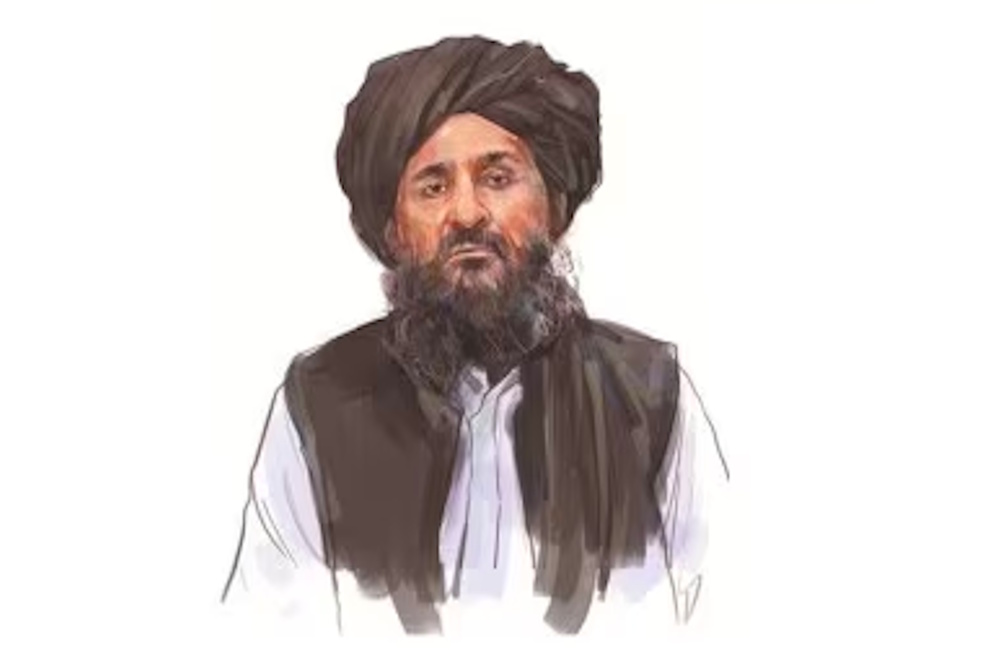
Mullah Abdul Ghani Baradar, the Islamic Emirate of Afghanistan’s Deputy Prime Minister for Economic Affairs, has called on the United Nations Assistance Mission in Afghanistan (UNAMA) to publish its reports on the country impartially and in line with realities on the ground, accusing the mission of overlooking the authorities’ economic and security achievements while concentrating on negative developments.
Speaking on Sunday at a ceremony organized by the Afghan Red Crescent Society (ARCS) to mark a special week dedicated to supporting people in need, Baradar said: “It is not fair for Afghanistan’s economic and security achievements to be ignored in reports, while UNAMA, as an opposing and hostile party, focuses on the negative aspects.” He urged the mission to prepare analytical assessments grounded in objective facts rather than what he characterized as an adversarial approach, and to reflect the realities on the ground in Afghanistan.
The deputy prime minister for economic affairs said many Afghans were facing a severe economic and humanitarian crisis due to recent droughts, seasonal floods, earthquakes and the forced return of thousands of families to the country, stressing that addressing these challenges required serious attention. He called on wealthy individuals, traders, investors, charitable organizations and international humanitarian agencies to provide practical assistance and cooperate with the Afghan Red Crescent Society, noting that helping needy Afghans was not solely the responsibility of the ARCS. He also urged ARCS officials to ensure transparency in the fair distribution of aid and the identification of eligible recipients.
In a message marking the week dedicated to raising assistance for people in need, Prime Minister Mullah Mohammad Hassan Akhund called on all Afghans to help vulnerable people, urging traders, investors, industrialists, religious scholars, community elders, young people and charitable organizations to support the ARCS’s humanitarian activities through donations, alms and cash and in-kind contributions. Such support, he said, would help the society provide humanitarian services to needy people, orphans, widows, patients and disaster victims.
ARCS head Mawlawi Shahabuddin Delawar said the organization had distributed 1.8 billion afghanis in cash assistance over the past year to migrants, war victims, widows, farmers and other people in need. He added that a health complex for treating people with mental health conditions was being built in Kandahar at a cost of 130 million afghanis, with the project expected to be completed within about a year. Delawar said the International Red Cross and Red Crescent Movement, Türkiye, Qatar and several European countries continued to support the ARCS.
Meanwhile, Noorulhaq Anwar, head of the General Directorate of Administrative Affairs, called on Afghanistan’s neighboring countries to stop harassing and suppressing Afghans and depriving them of economic opportunities. Referring to relations between neighbors, Anwar said neighbors should help reduce one another’s difficulties rather than make people’s lives harder through economic pressure. Without naming any specific country, he added that Afghanistan’s neighbors were still harassing and suppressing Afghans and depriving them economically.
Baradar’s criticism comes amid renewed debate over UNAMA’s latest quarterly human rights report, covering July through September 2026. The mission documented 443 arrests and detentions by personnel of the Taliban authorities’ Ministry for the Propagation of Virtue and Prevention of Vice that it characterized as arbitrary, and recorded 97 incidents of alleged ill-treatment involving women and men. According to UNAMA, the arrests were linked to alleged violations of rules governing women’s hijab, men’s beards and hairstyles, attendance at congregational prayers, and restrictions on playing or listening to music. The mission also documented cases involving pressure on media outlets, restrictions affecting women and girls, and arrests and killings involving former Afghan security personnel.
In a separate statement on October 8, UNAMA said it had verified that at least 52 women and one girl were arrested or detained in Kabul and Herat between July and September over alleged dress-code violations or appearing in public without a male guardian. The mission warned that the actual number could be higher because of underreporting linked to protection concerns and social stigma. UNAMA says its human rights monitoring is intended to document credible reports of violations and encourage the de facto authorities to uphold Afghanistan’s international human rights obligations, and its reporting has highlighted both the security situation and continuing concerns over restrictions on women and girls, arbitrary detention and other alleged abuses.
Baradar’s remarks add to the Taliban authorities’ broader criticism of international reporting on Afghanistan. The dispute reflects a continuing divide between the authorities’ emphasis on security and economic developments and UNAMA’s documentation of human rights concerns.
Our Pashto-Dari Website
Support Dawat Media Center
If there were ever a time to join us, it is now. Every contribution, however big or small, powers our journalism and sustains our future. Support the Dawat Media Center from as little as $/€10 – it only takes a minute. If you can, please consider supporting us with a regular amount each month. Thank you
DNB Bank AC # 0530 2294668
Account for international payments: NO15 0530 2294 668
Vipps: #557320

Comments are closed.